Showing posts with label philosophy of religion. Show all posts

Tuesday, May 3, 2016

Quantum Particles Do Not Prove Universe from Nothing


 photo European-lab-Close-to-finding-God-particle-NAN19NH-x-large.jpg


 In response to the debate over the weekend in the comment section of my challenge to atheists. The original person whom I challenged, Martyn Cornell, asserted that QM particles do prove a universe from nothing,  They don't. Here's the article to which I linked.


In light of of Naturalist arguments, are predicated: that QM particles prove something can pop up out of nothing with no cause. Quantum theory seems to confirm the notion that it is possible for the universe to begin with no cause. In terms of the TS argument that would mean that no organizing principle is necessary to explain order.

The second contender for a theory of initial conditions is quantum cosmology, the application of quantum theory to the entire Universe. At first this sounds absurd because typically large systems (such as the Universe) obey classical, not quantum, laws. Einstein's theory of general relativity is a classical theory that accurately describes the evolution of the Universe from the first fraction of a second of its existence to now. However it is known that general relativity is inconsistent with the principles of quantum theory and is therefore not an appropriate description of physical processes that occur at very small length scales or over very short times. To describe such processes one requires a theory of quantum gravity. [1]

This statement is more admission than documentation. It admits that quantum theory might not pertain to the universe as a whole. After all the theory has only been validated under normal conditions of space/time, temperature and the like. We have no idea if it still applies at the big bang expansion where the laws of physics seem to be suspended, temperature and time approach infinity. “What we do know is that massive objects do not exhibit quantum behavior. No one can be sure that a new-born universe would obey quantum theory as we know it..”[2]Moreover the statement admits that the theory requires a theory of quantum gravity in order to apply as a theory of origins. Do we have a theory of quantum gravity that has been validated empirically?

Lawrence Krauss in his book, A Universe from Nothing, [3] argues that quantum theory means that the universe came from nothing based upon the assumption that quantum particles do the same. Krauss argues that the eternal laws of Quantum mechanics produce particles out of nothing when the instability of vacuum states causes quantum fields to shift and produce different kinds of particles. [4] This seems like scientific proof but all it really says is that nothing became unstable and turned into something, no thought as to how that could be. There's a deeper trick, however, in that the terms don't really mean what they seem to mean. David Albert (a Philosopher with Ph.D. in physics) exposed the meaning of terms and exploded the whole project.


Albert first points out that tracing the universe back to some physical property or cause is not an explanation as to why there is something rather than nothing.


What if he were in a position to announce, for instance, that the truth of the quantum-mechanical laws can be traced back to the fact that the world has some other, deeper property X? Wouldn’t we still be in a position to ask why X rather than Y? And is there a last such question? Is there some point at which the possibility of asking any further such questions somehow definitively comes to an end? How would that work? What would that be like?[5]

Secondly, he points out that going back to the enlightenment, science has always assumed that at the “bottom of everything” there is “some basic, elementary, eternally persisting, concrete, physical stuff.” [6] Newton had it that this “stuff” consisted of particles. At the end of the nineteenth century it was particles and electro-magnetic fields. Albert argues that since that time all of physics is basically about “how that elementary stuff is arranged.”[7] The laws don’t tell us where the elementary “stuff” came from, not even laws of quantum mechanics. The laws do not tell us where the fields came from, let alone where the “laws” themselves came from. Moreover, contrary to all previous theories, quantum theory particles are understood as arrangements of fields. Some arrangements correspond to certain numbers and kinds of particles, some correspond to no particles.[8] This latter arrangement, Albert tells us, is what they call “vacuum states.” According to Albert, Krauss is arguing that the laws of relativistic quantum field theories “entail that vacuum states are unstable. And that, in a nutshell, is the account he proposes of why there should be something rather than nothing.”[9]


There is no explanation here. No hint as to how nothing could become something. If nothing comes out of some prior condition we don't know. Krauss is just assuming something from nothing. That's important because prior conditions have to be accounted for. There are problems with this account. First, we have just seen, it assumes laws and fields with no explanation as to where othey came from. Secondly, when physicists say “nothing,” they don’t mean real actual nothing, absence of anything, they really mean vacuum flux; that is the pre existing framework of law and field and the arrangement of these things and the sporadic popping in-and-out of prior existing particles. As Albert says, “Relativistic-quantum-field-theoretical vacuum states — no less than giraffes or refrigerators or solar systems — are particular arrangements of elementary physical stuff..” [10] “Nothing” in terms of no particles does not mean “nothing” in terms of no fields, or no laws. Thus “nothing” doesn’t mean “nothing,” it means something for which we still must account.


The particles doing the popping are “virtual particles,” meaning they are made up of combinations of other particles that come together for a short time then break apart again. “Virtual particles are indeed real particles. Quantum theory predicts that every particle spends some time as a combination of other particles in all possible ways. These predictions are very well understood and tested.”[11]

Quantum mechanics allows, and indeed requires, temporary violations of conservation of energy, so one particle can become a pair of heavier particles (the so-called virtual particles), which quickly rejoin into the original particle as if they had never been there. If that were all that occurred we would still be confident that it was a real effect because it is an intrinsic part of quantum mechanics, which is extremely well tested, and is a complete and tightly woven theory--if any part of it were wrong the whole structure would collapse.

But while the virtual particles are briefly part of our world they can interact with other particles, and that leads to a number of tests of the quantum-mechanical predictions about virtual particles.[12]
Thus it's only said that they are coming from nothing because there's a new combination of particles that only exists for a short time. Yet they are actually coming from other particles. Quantum theory is not the best explanation for the age old question, why are we here where did it all come from? God not only provides an ultimate sources but is also a more elegant solution because one simple idea furnishes both the explanation of origins and also ties up morality and everything else into one neat solution.


Sources


1 CTC op. Cit.

 2 Edgar Andres, “Review: the Grand Design,” Challies'.com, Tim Challies, on line reouce, URL:


http://www.challies.com/book-reviews/the-grand-design acessed 10/4/15


Andres is Emeritus professor University of London. Physicist and an expert on large molecules. Born 1932,


3 Lawrence M. Krauss, A Universe from Nothing: Why There is something Rather Than Nothing. New York, NY: Free press, a division of Simon and Schuster, 2012.

 4 Ibid 189.

 5 David Albert, “On the Origin of Everything ‘a Universe form Nothing’ by Lawrence Krauss,” New York Times Sunday Book Review (March 23, 2012). On line version URL: http://www.nytimes.com/2012/03/25/books ... rauss.html visited June 20, 2012. David Albert also has a Ph.D. in theoretical phsyics.


Albert is Frederick E. Woodbridge Professor of Philosophy at Columbia, and runs a MA program in philosophy and physics.

 6 ibid.

 7 ibid

 8 ibid

 9 ibid

 10 ibid

11 Gordon Kane, “Are Virtual Particles Really Constantly Popping In and Out of existence? Or Are They Merely a Mathematical Bookkeeping Device For Quantum Mechanics?” Scientific American, (Oct. 9, 2006) on line version URL: http://www.scientific american.com/article/are-virtual-particles-rea/ accessed 10/12/15


Kane is director of the Michigan center for theoretical physics at the University of Michigan at Ann Arbor.

12 Ibid.


Tuesday, April 26, 2016

Atheist Farm


 Photobucket


I have noted the Orwellian nature of atheist language. For atheists reading this, George Orwell was a great writer who specialized in political language. One of his greatest achievements was to write an essay which one of the best ever written on the use of language in political ideology: "Politics and the English Language," written in 1946. In that great work he reminds us that:

Political language -- and with variations this is true of all political parties, from Conservatives to Anarchists -- is designed to make lies sound truthful and murder respectable, and to give an appearance of solidity to pure wind.


Never was this so true than in dealing with atheists. In the way atheist are beginning to use speech we can see all tricks Orwell talked about. Of course most of these internet atheists have not read Animal Farm or 1984 so they have no idea. But in their use of certain words they disguise totalitarian leanings one would never suspect. The totalitarian regimes of the Soviet Union refereed to their political dissidents as "mentally ill" and kept putting in mental institutions becuase they felt rejecting the worker's paradise must surely be a form of mental illness.

I've already written about how the atheists use term "delusion." They actually don't use it to mean mental illness. They use the term to merely mean "a wrong idea." But in using a term that everyone knows means a false construct which results from mental illness they are actually calling religious people mentally ill without having to admit that they are doing it. It's like if they said religious people are stupid. The religious person objects but they said "it's a special form of the word that doesn't mean really not bright," but then they keep saying it. We would get the idea. It's like insulting people in ways that are plausibly deniable. why use a special term such as this just to mean "this is idea is wrong?" obviously it's meant to carry a connotation. Now consider the dangers of labeling as mentally ill any one who happens to disagree with your point of view. Atheism as a whole is become more totalitarian all the time and they can't see it because they are so addicted to the charge they get from feeling superior.

Here's the latest example of the Orwellian tendencies. They Dawkies use the term "cult" in relation to all religious belief and groups. Of course they have no knowledge of the true sociological meaning of the term. They think all cults are imposing their will upon brain washed lackies whose live they take over and ruin. An example is the posting by a CARM Dawkie named "Toast"


The title of the therad:" a few questions about cults" so he's just equating religion with cults.

If no one ever told you about your god you would still believe?

if so, would your belief mirror the one you have been indoctrinated into?

if you still would believe even if know one told you these things to
believe would you not just be making things up?


He's trying to say that because you can't come to the same conclusions you do as a Christian on your own with no Bible and no church to guide you then it must be a cult because it's others imposing their will.


another post by Toast:

sorry but everything...a religion is a cult
Photobucket


This is also the same tendency. Everything the other guys value we disvalue so every term they use we must re-think impose our own terms. We can't allow them to name their own things, such as "church" we must name them and stick them with the connotations of our own interpretation. So thus Churches become cults. The irony meter is gong to blaring in a moment.

The really alarming tendency is the almost blatant admittion that ideas which don't stack up to the atheist ideology are "dangerous" and must be controlled. This statement was made on CARM sept 21 2009 by "Mountaineer Elf.


Because some ideas can be dangerous. Not all ideas deserve to be heard if they are dangerous.

Trying to usurp science and reality to stick in your deity is dangerous.


The context he's speaking of is an argument for the existence of God. The idea that a new concept or some concept that he doesn't agree with is "usurping scinece" is quite alarming. What's worse is he's not content for scinece to stay in its own domain it must conquer all and control all reality. Science when are arguemnts for God usurping scinece? That can only be the case if he thinks that science's proper domain is dictating  that we can't believe in God. It's even worse than that, their ideology equates science with reality. His view is so totalizing that it must control all, there can be nothing in existence that is not controlled by his view point.

In defending this other atheoids literally said "O he didn't mean it that way and you know it." How do we know it? How could he mean it in any other way? In what way could God arguments userp scinece and reality without the idea that science is all reality?

Here's the Orwellian rub. In animal farm the Pigs control the farm. There's a revolution the animals have overthrown the farmer and changed the name of the Farm to "animal farm" they are in charge. The pigs are the leaders, they keep putting up posters with slogans telling the other animals what it's all about. But they keep changing the messages until they come around to mean the exact opposite of what they did at first. This is the way totalitarians use language, according to Orwell.

(for a synopsis of the book go here)

Atheist used to call themselves "free thinkers." They wanted us to believe that they were just sticking for the rights of us all to think anything we think and believe anything we believe. Now they begin to define believing things that contradict their ideology add "delusion" and "usurping reality." When I pointed this out Mountaineer Elf redefined the nature of free thinking:


then:

True free thinkers are those that can speak and think with accuracy and honesty. As a scientist, I pride myself on being able to read and understand the natural world and everything it has to offer. Not all of it is 100% right, but I consider the 95% to be good enough.


This is so Orwellian everyone need to see this. He's narrowed the definitive of free thinking to the point where it includes his ideology and nothing more. So free thinkers are people who agree with me. Those are the one's we call "Scientists." The true free thinkers agree with me and nothing more.

But wait he's not done. It get's worse. he goes one better:


The rest of your anti-free thought rant snipped - not worth responding to insults. If you want a discussion, I'm more than willing to discuss. If you want to hurl insults, I can just go back to the Evolution/ID forum and have Creationists assume that I'm stupid for not buying into talking snakes, magic trees, and global floods.

Now he defines opposing his form of totalitarianism is "anti-free thinking." This is just like the communists. If you are dissident you are mentally ill and sanity is defined as obeying the state. If you point out that he's against free thought hense you are anti-free thought because free thought has now been reduced to nothing more than agreement with him. To disagree with him is opposes free thought. So the person who thinks we should all have the right to think for ourselves is now anti-free thought and one who thinks we have to control everything that is not in agreement with the ideology is now the free thinker! Black and just become white, as Orwell said. That is exactly what Orwell said political language does. read it again:


"Political Language...is designed to make lies sound truthful and murder respectable, and to give an appearance of solidity to pure wind.."

Then his cohorts carry it a step further and if you dissent from this truth regeime of the atheists then you are a danger to humanity:


May brick


So Metacrock would be happy for children to be taught that HIV is spread through vaccines and that condoms offer no protection?


You can't get more Orwellian than this. This is exactly right out of 1984 where the state has the right to imposes that dissenters must  accept their view of reality even by forcing them to admit something such as 2 + 2 = 5. In forcing them to accept something they categorically and fundamentally believe to be totally wrong they are eliminating their ability to ever think independently. That is exactly what's happened to many of these atheists and what they are trying to do to religious people.

In brow beating, intimidating, by mocking and ridiculing people they force them to de-convert and in so doing they force them to alter their most basic and cherished beliefs and the fundamental understanding they have of who they are and what reality is. there is nothing more hinus one can do to another person. that is on a par with murder and If thought like they do I should start calling them murderers.

I'm sure they will come back and say they can't force anyone to deconvert against their will, that doesn't stop them from trying and it means they are shutting down reason and thought in discourse, they shut down reasoned discussion and reduce the whole situation to a political escapade. Perhaps this means they are not quite as bad as I think, but only becuase they aren't successful enough in what they are trying to do.

I know they are not all like this. There are may smart freedom loving atheists who don't do this way. There are plenty who do. I just hope it's becuase they don't really understand how what they say implies totalitarian mentality.

Monday, April 4, 2016

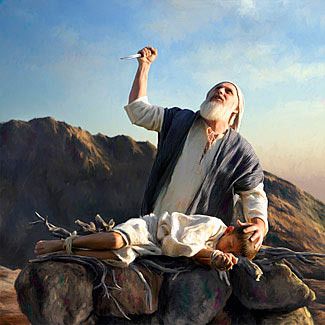
The Euthyphro dilemma and the arbitrariness objection’: Amnswering Wes Morriston

 photo haj1-18L_zpsqhqhno0l.jpg
God commanded Abraham to sacrifice Isaac, had God not
relented would it have been right to kill Isaac since God
commanded it?


Wes Morriston, philosopher from University of Colorado, Boulder, writes an excellent [1] paper against divine command theory and specifically attacking William Lame Craig. The guys over at secular outpost (or as I like to call it, "Kill Bill's ideas) link to that article. Divine command theory in it's simple direct form says that what is good is that which God commands and it is good because God commands it. The paper is very long and covers a lot of ground, I have isolated what I think is one of the  key points and i will deal with just that small but important section: the ground of moral duty as grounded in the divine.

Craig is answwering the Euthyphro dilemma, This is a problem raised by Plato in the from of Socrates question to Euthyphro, " is found in Plato's dialogue Euthyphro, in which Socrates asks Euthyphro, "Is the pious (τὸ ὅσιον) loved by the gods because it is pious, or is it pious because it is loved by the gods?"  [2] The answer Craig takes to it is one I have also argued for years, that the good flows out of God's character so it's neither arbitrary now does it constitute a standard above God.

Morriston takes issue with Craig at the point where he says the good "flows out of God's character.

One might wonder about the phrase ‘flow necessarily from his moral nature’. Does it mean that each divine command is necessitated by God’s moral nature – that God’s moral nature makes it impossible for him not to command what he does in fact command? Or does it mean merely that it is necessary that all divine commands flow from God’s moral nature, where the ‘flow from’ relation is understood in a weaker sense ?Craig doesn’t say.[3]

He's really conflating two different issues here: (1) do all commands flow equally from God's nature (2) could god chose to violate his nature? The question here is still veg because we are talking about Biblical commands? Or, are we talking about the human capacity to be moral itself? The latter is the kjey to the answer. Paul tells us the moral law is written on the heart (Romans 2:6-14). C.S. Lewis shows a great harmony in many Axial age civilizations as far flung as Briton and China. Although there are problems will will bracket them for fn.[4] These similarities of course don't prove divine inspiration but they may indicate that if human moral nature is God given then God's commands must be generally flowing through that basic moral nature and even though filtered through cultural constructs the basic sense of moral goodness grounded in agapic sense of human dignity is possible universally. So the latter "weaker sense" would come closer to the answer, although I would not think of it as "weaker."

But whatever the details, it’s clear that the main point of the claim that God’s commands ‘flow necessarily from his moral nature’ is to head off a familiar objection to the divine command theory. It will be convenient to refer to it as ‘ the arbitrariness objection’. It goes something like this. Either God has good reasons for his commands or he does not. If he does, then those reasons (and not God’s commands) are the ultimate ground of moral obligation. If he does not have good reasons, then his commands are completely arbitrary and may be disregarded. Either way, the divine command theory is false.[5]
That's a fair assessment of the dilemma, and the answer is all moral motions ultimately point to love. God's character is love, thus there is warrant for the assertion that Divine love stands behind morality that God's  commands are neither arbitrary nor are they stemming from a source higher than God. "Those reasons" are bound up in God's character, They are of concern to God because he is love. Obviously they are not "completely arbitrary since they arise out of the same basic aspect of who and what God is. The question about the goodness of reasons is transgression upon the concept of the transcendental signified. Truth is what is and the basis of what is is the ground being ie God). Thus God's reasons are a priori good not because they arbitrarily manufacture good via command but because they stem from the nature of God which is the ground of being. This idea that God's commands are arbitrary ( the "arbitrariness objection") is regarded as an ace in the hole by many skeptical philosopjhers.

Some philosophers think the arbitrariness objection is decisive (Shafer-Landau (2004), 80–81). But Craig thinks his version of the divine command theory is completely untouched by it. To see why, consider the duty to be generous to those in need. On Craig’s account, we can endorse all three of the following claims.

(A) God has a good reason for commanding generosity: generosity is good.

(B) Generosity is good because, and only because, God is (essentially) generous.

(C) Nevertheless, it takes a divine command to turn generosity into a duty for us.
Given (A), it might be thought that there is nothing objectionably arbitrary about God’s commanding generosity. Given (B), the goodness of God’s reason for issuing this command is rooted in his moral nature; it is not therefore independent of God. (C), finally, assures us that it is God’s command, and not merely the goodness of generosity, that raises it to the level of a moral imperative.[6] 
I take issue with the last sentence and with B to which it refers. "Generosity is good because, and only because, God is (essentially) generous." Basically true but it requires some tweaking that zi think matters. It's not just that God is generous so requires that we be generous but that generosity is a of love, it's an expression of love in the agapic sense., The reason It is played that generosity is good only because God is generous is to avoid the prospect of atheists claiming they can be generous without God. Of course that's  begging the question unless it's answering a certain kind of moral argument for God. If God exists it's legitimate to think that goodness flows from God's nature, If there is no God we are just Whistling in the dark anyway. From a purely metaethical standpoint generosity could be grounded in any number of things such as social contract theory, but they would all have a hard time establishing an ought denontologically without going teleological. It would be more certain to assume grounding in God. But switching from answering Euthephro a God argument would change the trajectory of the answers.

"Many questions remain. Could God have failed to command generosity? Could generosity have failed to be a duty ? Just what degree of generosity is required ? And why did God choose to require just that degree of generosity rather than some other ? " If love is the background of the moral universe, as is my assumption, (ala Joseph Fletcher) [7] then the direct proximity of God's will to a specific command might be less important in terms of metaethical theory than understanding the nature of love. In other words, rather than seeking to pin down a list of rules we need to be seeking ways to learn to love people. Of course that doesn't mean it's unimportant that God issues a particular command. Yet the important thing is not keeping rules but internalizing values of the good.

At this point he moves on to a second objection. If God turned around tomorrow and ordered something that is now evil such as eating children would it then become good to do so? Craig says can't happen it's opposed to God's nature.[8] That should be enough for rational people. But if you are an atheist looking to throw a wrench in the works of belief, or a philosopher, no it's not. If you are both well better start looking for that eye of the needle. "Even if such commands are incompatible with God’s nature, isn’t it still true that according to the divine command theory eating our children would be morally obligatory if – per impossible – God commanded it?" It's another version of  can God make a rock so big he can't lift it? The answer I've always given to that is "why should we expect God to do non sense.?"  It's a cleaver question for skeptics to ask because it's a perfect double bind. If we do say "well theoretically if God did command even God would be wrong," we have relativized God's authority. If we say no we relativize his goodness. Either way we make belief in higher power seem silly.

Morriston kind of concedes that the question doesn't make sense and thus it doesn't matter what is said but he still concludes in such a way as to raise doubt with the oblivious:

Remember that for Craig God is, necessarily, a perfect being. If that is understood, then it really doesn’t matter to Craig’s position whether it’s impossible for a perfect being to command such a thing. Why ? Because if a perfect being commanded it, the being would have a morally sufficient reason for doing so; and if – per impossibile, perhaps – a perfect being had a morally sufficient reason for commanding us to eat our children, we should do it. If I am right about this, then Craig’s divine command theory escapes refutation – not for the reason he gives, but rather because the alarming-sounding counterpossibles implied by it turn out to true! 10 What’s so special about being God-like? Given fairly standard assumptions about God’s moral nature, [9]

The real problem is that the skeptics have underrated the scope of God's relation to reality. We are not just talking about the most powerful being. They approach it like the question is "this powerful guy is not like this but what if he was.?" It's not about the will of a powerful guy. It's about the nature of reality and trust and the relationship of that to love itself. Like the rock issue I refuse to believe that truth can be stumped by nonsense. Truth is what is (a simplified version of correspondence theory) and God is Being itself. Love is the background of the moral universe because God is love and God is the basis of reality. Thus if God is love, truth, and being. Thus morality is an extension of the good, and the good is wrapped up with the nature of truth and being. We must understand particular moral codes as best we can having filtered moral motions through culture. There is a reality back there behind it all that can't be cheated by questions like the one about the rock.


[1] Wes Morriston, "God and the ontological foundation of morality," Religious Studies,   Cambridge University Press 2011 (2012) 48, 15–34 f doi:10.1017/S0034412510000740 URL:
http://spot.colorado.edu/~morristo/DoesGodGround.pdf  accessed 2/27/2016.

 WES MORRISTON Department of Philosophy, University of Colorado, Boulder, CO 80309-0232 email: Wes.Morriston@Colorado.EDU

[2]Plat, "Euthephro," Five Dialogues, 10a, or see on line copy, see "Euthephro" by Plato,  Translated by Benjamin Jowet, Internet archieve UROL:http://classics.mit.edu/Plato/euthyfro.html

[3] Morriston, op. cit. 18.

[4] C.S. Lewis, The Abolition of man: With Reflection on Education With Special Reference to The Teaching of English in the Upper Forms of Schools. New York, NY: Harper One, 1971, 83.
The problem with this is that it's limited to a segment of history from a period known as the Axial age, roughly from the 900 to 200 BC. The term is from Karl Jaspers. It excludes new world, Africa, Russian steppes and times before and after. Bit it is probably the best attempt to show universal moral sense. It does at least show large segments of humanity share similar moral motions.

[5] Morriston, op.cit., 18-19

[6] Ibid. 19-20

[7] Joseph Fletcher, Situation Ethics The new Moraloty.Louisville, Lomdon:  Westminster John Knox Press. 1966,    58.
Fletcher discusses the same dilemma but not by the name "Euthephro." He discusses the nominalist position and argues that modern ethical thinking is nominalist and that is what's wrong with it. That's why philosophers ask questions about this dilemma because they can't ground moraloity in love since they are reductionists and can't understand values.

[8] Morriston, op cit.,20-21

[9] Ibid

Wednesday, March 2, 2016

The God Disproving Industry


 photo Aiyana_Willard.png_zps5gkiwxk5.jpeg

A.K. Willard


There is a huge Industry based upon seeking to disprove Christianity,. It's a subset of valid academic research. No it's not a conspiracy but it's atheistic academics taking advantage of the scholarly publication industry to manufacture atheist propaganda. That would be fine except the studies they produce are marked by bad methodology. On Monday we saw a couple of  examples of these bad studies; the methodology of the study by Amitai Shenhav was putrid  ( the one about belief in God is magical thinking). [1]  Another study mentioned in the article  was done by A.K. Willard and A. Norenzayan, I'll be examining that study here along with another one by the same team.Those two are associated with a large body of badly done studies. They themselves specialized in this sort of ideological attempt to disprove the validity of religious belief. For example their study that supposedly finds that a feeling of God;s presence is reducible to a natural psychological survival mechanism.


Some studies have explored questions about brain function and the texture or mechanics of mystical experience. Van Elk et al find that the sensation of supernatural presence is an adaptation from the need to over-detect presences of predictors in the jungle.[2] In other words if one sets out on a jungle trail, and there is darkness, sensing a predictor and turning back from the trek would be helpful. If the sensation was wrong and there was no predictor the mistake of being wrong would be less graven that of being right but ignoring the sense. Thus, the sensation of presence is selected for. This might be used by a skeptic to answer the argument from mystical experience. Elk has five experiments that that seek to explore weather processing concepts about supernatural agents enhances detection in the environment.


Participants were presented with point light stimuli representing kinds of biological motion, or with pictures of faces embedded in a noise mask. Participants were asked to indicate if the stimuli represented a human agent or not. In each case they used three “primes,” one for supernatural, one for human, one for animal. They found that supernatural primes facilitated better agent detection.[3] The argument is that the perceived presence of agents in threatening situations and tendencies to anthropomorphizing leads stronger belief in ghosts, demons, angels, gods and other “supernatural” agency.[4] They point to a body of work consisting of several studies showing that particular paranormal beliefs are a reliable predictor of illusory perceptions of faces and agency detection. These studies include Willard and Norenzayan (2013), Reikki et. al. (2013), and Petrican and Burris (2012).[5] “[Al]...though these studies provide tentative support for the relation between agency detection and supernatural beliefs, the notion that reigious beliefs are a byproduct of perceptual biases to detect patterns and agency has been challenge by several authors...” (Bulbulia, 2004, Lisdorf 2007, and McKay and Efferson, 2010).[6]


While it may be true that some aspects of mystical experience are genetically related, and may be related to agent detection, that is no proof that mystical experience originates wholly within a naturalistic and genetic framework. First, because these studies only demonstrate a correlation between supernatural beliefs and agency detection. There is no attempt to establish the direction of a causal relationship. If there is a connection between supernatural and agent detection it could as easily be that awareness of supernatural concepts makes one more sensitive to agent detection. Secondly, of course just being genetically related doesn't reduce the phenomenon wholly to genetic endowments. Thirdly, there is a lot more to mystical experience than agent detection. Both involve sensing a presence beyond that point the differences are immense. I am not even sure that facial recognition and sensing a predator are similar enough to count for anything. In sensing being observed one is not usually aware of visual ques as one would be in facial recognition. There's no guarantee that the quality of the sensing is the same. Feeling the divine presence is much more august and involves levels and textures. Such an experience is, overall, positive, life changing, transformational (even noetic) but merely feeling one is being observed could be creepy, negative, or even trivial.


Every study I have seen by Ara Norenzayan appears to be an attempt to disprove the validity or Religious belief. He did one called, "Cognitive biases explain religious belief, paranormal belief, and belief in life’s purpose," [7] in which he uses many of the same approaches used in the magical thinking study:
Cognitive theories of religion have postulated several cognitive biases that predispose human minds towards religious belief. However, to date, these hypotheses have not been tested simultaneously and in relation to each other, using an individual difference approach. We used a path model to assess the extent to which several interacting cognitive tendencies, namely mentalizing, mind body dualism, teleological thinking, and anthropomorphism, as well as cultural exposure to religion, predict belief in God, paranormal beliefs and belief in life’s purpose. Our model, based on two independent samples (N = 492 and N = 920) found that the previously known relationship between mentalizing and belief is mediated by individual differences in dualism, and to a lesser extent by teleological thinking. Anthropomorphism was unrelated to religious belief, but was related to paranormal belief. Cultural exposure to religion (mostly Christianity) was negatively related to anthropomorphism, and was unrelated to any of the other cognitive tendencies. These patterns were robust for both men and women, and across at least two ethnic identifications. The data were most consistent with a path model suggesting that mentalizing comes first, which leads to dualism and teleology, which in turn lead to religious, paranormal, and life’s-purpose beliefs. [8]

Intent of disproof seen here:

Religion is an important part of the lives of billions of people around the world, and a cross culturally recurrent aspect of minds and cultures. Over the past decade, several theories have emphasized the natural basis of religious belief and experience, found in cognitive biases that are byproducts of brain functions (Atran & Norenzayan, 2004; Barrett, 2000, 2004; Bloom, 2007; Boyer, 2001, 2008; Kelemen, 2004). These theories converge on suggesting that belief in supernatural agents such as gods and spirits, and related phenomena, emerge from a set of interrelated cognitive biases, such as perceptions of agency and mentalizing, mind-body dualism, and teleological intuitions. Equipped with these cognitive biases, human minds gravitate towards religious and religious-like beliefs and intuitions.[9]
He is treating conceptual philosophical ideas as though they are determined by brain functions with the implication they are glitches. It's not a philosophical idea to be reasoned about but a mistake a misfire a primitive cognitive ability that has grown obsolete. This is just the ideological reaction to counter ideas. Here is the proof. Dualism is a philosophical idea.[10] Here he treats it like primitive cognitive ability:
1.2.2. Dualism Another hypothesized cognitive foundation of religious belief is mind-body dualism, which refers to the intuition that minds are separate from bodies (Bloom, 2005; Damasio, 1994). According to this theory, minds are seen as a non-physical substance that can be related to bodies, but not reliant on bodies, opening up the 380 A.K. Willard, A. Norenzayan / Cognition 129 (2013) 379–391 possibility of minds existing without bodies. In a sense, the ability to think dualistically is a necessary condition for understanding concepts such as ghosts and spirits or any other disembodied supernatural agent (Bloom, 2007). [11]

Here he implies that mind itself is just such a primitive cognitive function."Consistent with this, neuro-imaging studies found that among Christian believers in the US (Kapogiannis et al., 2009) and in Denmark (Schjoedt et al., 2009), thinking about or praying to God, activates brain regions associated with Theory of Mind." Here he is still harping on teleogy as he did in the magical study:


1.2.3. Teleology A third cognitive hypothesis is that religious beliefs are rooted in teleology. Teleology is the tendency to see things in the world as having a purpose and having been made for that purpose (Kelemen, 1999; Kelemen & DiYanni, 2005)." Teleology is a philosophical concept but it is indicative of a belief in higher order. He is against higher order since he's an atheist, this is his ideological bias.[12]


His methodology is based upon students answering surveys. two samples test for replicability, robustness, and generalizability. Sample 1: 492 undergraduate psychology students. Sample 2 "consisted of 920 adult Americans collected though Amazon’s Mechanical Turk.;" Surveys completed online. For several concepts such as teleology they had no standardized scale and had to makeup their own. Of course if we suspect bias we can't trust their scales.

......The Conclusion:

Although our cognitive biases remain predictors of purpose above and beyond the variance predicted by belief in God, belief in God remains the strongest predictor. Further, the model no longer passed the test of fit when we reversed this relationship to have belief in purpose lead to belief in God. This suggests that much of the variance in belief in life’s purpose, is coming from belief in God. The remaining relationships with our cognitive biases could be seen as an intuition towards purpose above and beyond what is encouraged by belief in God, or it could be something left over from growing up in a largely Protestant Christian culture. This interesting question could be answered by going beyond a Christian sample. Regardless, it does not seem to be the case that purpose is another sort of intuition that leads to belief in a supernatural power. Rather, belief in God appears to lead to a greater sense that there is a purpose to life[13]


They have made the astounding discovery that belief in God gives one a motivation to believe in a purpose in life. The non belief in God while laden with a sense of purpose is not necessarily transmute into belief by that sense. This is hardly an anti-religious finding. The problem is they way they treat belief and other aspects of reason that support belief. They even include "1.2.4. Mentalizing All of the above cognitive tendencies have a clear common feature: they require some mentalizing ability. There has been some speculation about the relationship between metalizing and religious belief." "mentalizing means imagining, which is necessary for science as well as religion, and for math and any kind of reasoning. They are treating all uses of the mind as though they are some obsolete function developed for life on savanna. The implication being that belief in God just a throw back to primitive brain function: "Regardless, it does not seem to be the case that purpose is another sort of intuition that leads to belief in a supernatural power. Rather, belief in God appears to lead to a greater sense that there is a purpose to life." In other words purpose does not lead to God, but God to a sense of purpose. The sense of purpose is an illusion based upon the primitive nonsense of belief in God.

Williard and A., Norenzayan are valid academics. they have the credentials, their works are published and they work with good people. Norenzayan has published with R.A.McNamara for whom I have the utmost respect.[14] Do not think I'm attacking his credentials. I am attacking his bias. There has come to be a whole industry fueled this this ideological atheism in science. Nor am I advocating policing science. I am totally for academic freedom. The only thing we can do is get more Christians to study social science.


....


Sources


[1] magical thinking study

Willard is Post doctoral fellow at UT Austin, psychology, received her Ph.D. in Psychology university of British Columbia. She primarily works with Hindu and Muslims. Ara Norenzayan is a graduate student, he is at University British Columbia.


[2] Michiel Elk, Bastiaan T. Rutjens, Joop van der Pligt,& Frenk van Harrveled (2016) Priming of Supernatural agent concepts and agency detection, Religion, Brain and Behavior, 6:1, 4-33, DOL: 10.1080/2153599X.2014.93344

[3] Ibid., 4


[4] Ibid., 5.

[5] Ibid., 5. A.K. Willard and A. Norenzayan, “Cognative Biases Explain Religious Belief and belief in life's purpose,” Cognition 129 (2013), 379-391. T. Reikki, M.Litterman, et. al. “Paranormal and religious believers are more prone to illusary face perception than skeptics and none believers.” applied cognitive psychology 27 (2013) 150-155, and R. Petrican and C.T. Burris, “Am I a Stone? Over attribution of agency and Religious Orientation,” Religion and Spirituality 4 (2012), 312-323.

[6] Ibid., 6. J. Bulbulia, “The Cognitive and Evolutionary Psychology of Religion,” Biology and Philosophy 19, (2004) 655-686, A. Lisdorf, “What's HIDD'n in the HADD,” Journal of Cognition and Culture 7, (2007), 341-353, and R. McKay and C. Efferson, “Subtitles of Error Management,” Evolution and Human Behavior, 31 (5)(2010) 309-319.


[7] Aiyana K. Willard Ara Norenzayan , "Cognitive biases explain religious belief, paranormal belief, and belief in life’s purpose."   Cognition, published by Science dorect, 1 article info Article history: Received 4 March 2013 Revised 25 July 2013 Accepted 27 July 2013 Online PDF format, URL:
http://www2.psych.ubc.ca/~ara/Manuscripts/Willard_Norenzayan_Cognitive_Biases.pdf

[8]

[9]

[10]\

[11]
[12]

[13]


 [14] McNamara, R. A., Norenzayan, A., & Henrich, J. (2016). Supernatural punishment, in-group biases, and material insecurity: Experiments and ethnography from Yasawa, Fiji. Religion, Brain & Behavior, 6, 34-55.pdf

Wednesday, February 13, 2013

Are Atheists Autistic?

New study findings really don't suggest this but there are interesting aspects to the study. The issue is that it seems there may be a connection between the inability to conceptualize what can't be seen and religious bleief, and autism.

Mentalizing Deficits Constrain Belief in a Personal God

 http://www.plosone.org/article/info%3Adoi%2F10.1371%2Fjournal.pone.0036880

  • Ara Norenzayan mail,

  • Will M. Gervais,
  • Kali H. Trzesniewski

Abstract:

Religious believers intuitively conceptualize deities as intentional agents with mental states who anticipate and respond to human beliefs, desires and concerns. It follows that mentalizing deficits, associated with the autistic spectrum and also commonly found in men more than in women, may undermine this intuitive support and reduce belief in a personal God. Autistic adolescents expressed less belief in God than did matched neuro-typical controls (Study 1). In a Canadian student sample (Study 2), and two American national samples that controlled for demographic characteristics and other correlates of autism and religiosity (Study 3 and 4), the autism spectrum predicted reduced belief in God, and mentalizing mediated this relationship. Systemizing (Studies 2 and 3) and two personality dimensions related to religious belief, Conscientiousness and Agreeableness (Study 3), failed as mediators. Mentalizing also explained the robust and well-known, but theoretically debated, gender gap in religious belief wherein men show reduced religious belief (Studies 2–4).
 Methodology:

 They selected 12 subjects and matched them on SES and demographics. Families of autistic children were contacted through organizations. They used registered clinitions to diagnose the autism for the study, "based on DSM-IV criteria and were free of additional diagnoses.."

 Participants rated their agreement (1–7) with four different statements (I believe in God; When I am in trouble, I find myself wanting to ask God for help. Reversed-coded items: When people pray they are only talking to themselves; I don't really spend much time thinking about my religious beliefs). One additional item (“I just don't understand religion”) was dropped, because it correlated poorly with the overall scale in this sample, leaving a four-item Intuitive Belief in God scale (α = .65, M = 5.03, SD = 1.37). (Retaining this item did not significantly alter the overall pattern of results). In previous research [34], this measure correlated very highly with other scales measuring religious devotion, such as the Intrinsic Religiosity Scale [40] (r = .65, p<.001), and the Spiritual Well-Being Scale [41] (r = .82, p<.001). Belief in God was non-normally distributed and negatively skewed (Kolmogorov-Smirnov p = .08, skewness = −.82). Therefore, this variable was median-dichotomized into high believers (60%) and low believers (40%).

 In study 2 they completed a web based questionnaire. There were actually four studies done.

 controls:

We again measured and controlled for age, educational attainment, frequency of religious attendance, and added a 3-item measure of interest in math, science, and engineering (IMSE, α = .69, on a 1–7 scale). IMSE was included to assess the possibility that the relationship between autism and belief in God, or gender and belief in God, are byproducts of greater levels of scientific interest among those high on the autism spectrum.

Conclusions:

In study 1 they intended to compare autism diagnosis with control group vis belief, the small sample size made this "unfeasible." (their word) They then tried to use IQ as an indicator fur found no connection. This may be another study that's that shows no connection bewteen IQ and belief.

Figure 1. Study 2: Mentalizing, but not systemizing, mediated the effects of both autism spectrum (A) and gender (B) on belief in God (N = 327).
†p<.10, *p<.05, **p<.01, ***p<.001. Note. OR = odds ratio; β = standardized beta; b = unstandardized beta. Values in parentheses are mediated effects. Autism Analysis Covariate: Gender. Gender Analysis Covariate: Autism Spectrum.
doi:10.1371/journal.pone.0036880.g001

study 2 used sample of Canadian Children,, measured belief by self reporting compared mentalizing and systematizing with belief. The study 3 used an American sample and did the same.

gure 2. Study 3: Mentalizing, but not systemizing, mediated the effects of both autism spectrum (A) and gender (B) on belief in a personal God (N = 706).
*p<.05, **p<.01, ***p<.001. Note. OR = odds ratio; β = standardized beta; b = unstandardized beta. Agreeableness, or Conscientiousness (not shown) also failed as mediators. Values in parentheses are mediated effects. Autism Analysis Covariates: Gender, Age, Education, Income, Religious attendance. Gender Analysis Covariates: Autism Spectrum, Age, Education, Income, Religious attendance.
doi:10.1371/journal.pone.0036880.g002
study 4 replicated study 3.


The findings suggest that boys don't mentalize (imagine mental iamges0 as well as girls, and tendency to believe less in God than girls. This holds true more so for autism. An alternative hypothesis suggest is that autistic children have less attendance in religious instruction due to their problems of adjustment due to autism. The researchers recognize that the data is not broad enough to draw sweeping conclusions from. They also acknowledge that rejection of religion to brieve is too complex to explain through one factor.

Finally, we emphasize that our data do not suggest that religious disbelief solely arises through mentalizing deficits; multiple psychological and socio-cultural pathways likely lead to a complex and over-determined phenomenon such as disbelief in God or gods. Therefore, mentalizing deficits are one pathway among several to disbelief. Analytic cognitive processing that suppresses or overrides the intuitions that make theism cognitively compelling [34] and exposure to secular cultural contexts lacking cues that one should believe in God or gods [35] also likely promote religious disbelief. In other words, the present results suggest that disbelief can result from mentalizing deficits, but it can also arise from multiple other sources, holding constant mentalizing tendencies.

A complete scientific account of religious belief and disbelief therefore requires consideration of not only cognitive underpinnings such as mentalizing and other core cognitive biases such as dualistic intuitions and teleological or purpose-driven thinking [12], [36]. Equally important in explaining their cultural prevalence, supernatural agent beliefs­once cognitively available-can be co-opted for motivational and social functions, because of both their palliative effects on existential anxieties [1] and their facilitative effects on cooperation in large, anonymous groups in a cultural evolutionary process [37], [38]. Finally, the prevalence and content of supernatural agent beliefs, although constrained by core social cognitive capacities, respond to and fluctuate with socio-demographic conditions across time and cultures [39]. Within this broader theoretical landscape, these studies present new evidence for a social cognitive mechanism underlying one source of individual differences in religious belief.

Yet they do see a possibility that autism spectrum is associated with interest in math, science and engineering which "in turn reduces religious belief." While the data is really pretty useless if one is seeking to learn weather atheists tend to be autistic or not it has a couple of interesting aspects. First, it shows no connection between IQ and belief. There are already plenty of studies that do that but here's anther one. Moreover, it also might lend credence to the idea that different kinds of intelligence are reflected in bleief or unbelief. I already had proposed that if there is an intelligence difference it s in kind and not degree. So in other words believers are no smarter than unbelievers nor or they less smart, but use different types of intelligence. The unbeliever would e math/scinece oriented and the believer might be more verbal. In any case that unbelievers tend to be autistic is a possibility suggested by the data but not a probable one.


Monday, December 10, 2012

Atheist Farm

 Photobucket


I have noted the Orwellian nature of atheist language. For atheists reading this, George Orwell was a great writer who specialized in political language. One of his greatest achievements was to write an essay which one of the best ever written on the use of language in political ideology: "Politics and the English Language," written in 1946. In that great work he reminds us that:

Political language -- and with variations this is true of all political parties, from Conservatives to Anarchists -- is designed to make lies sound truthful and murder respectable, and to give an appearance of solidity to pure wind.


Never was this so true than in dealing with atheists. In the way atheist are beginning to use speech we can see all tricks Orwell talked about. Of course most of these internet atheists have not read Animal Farm or 1984 so they have no idea. But in their use of certain words they disguise totalitarian leanings one would never suspect. The totalitarian regimes of the Soviet Union refereed to their political dissidents as "mentally ill" and kept putting in mental institutions becuase they felt rejecting the worker's paradise must surely be a form of mental illness.

I've already written about how the atheists use term "delusion." They actually don't use it to mean mental illness. They use the term to merely mean "a wrong idea." But in using a term that everyone knows means a false construct which results from mental illness they are actually calling religious people mentally ill without having to admit that they are doing it. It's like if they said religious people are stupid. The religious person objects but they said "it's a special form of the word that doesn't mean really not bright," but then they keep saying it. We would get the idea. It's like insulting people in ways that are plausibly deniable. why use a special term such as this just to mean "this is idea is wrong?" obviously it's meant to carry a connotation. Now consider the dangers of labeling as mentally ill any one who happens to disagree with your point of view. Atheism as a whole is become more totalitarian all the time and they can't see it because they are so addicted to the charge they get from feeling superior.

Here's the latest example of the Orwellian tendencies. They Dawkies use the term "cult" in relation to all religious belief and groups. Of course they have no knowledge of the true sociological meaning of the term. They think all cults are imposing their will upon brain washed lackies whose live they take over and ruin. An example is the posting by a CARM Dawkie named "Toast"


The title of the therad:" a few questions about cults" so he's just equating religion with cults.

If no one ever told you about your god you would still believe?

if so, would your belief mirror the one you have been indoctrinated into?

if you still would believe even if know one told you these things to
believe would you not just be making things up?


He's trying to say that because you can't come to the same conclusions you do as a Christian on your own with no Bible and no church to guide you then it must be a cult because it's others imposing their will.


another post by Toast:

sorry but everything...a religion is a cult
Photobucket


This is also the same tendency. Everything the other guys value we disvalue so every term they use we must re-think impose our own terms. We can't allow them to name their own things, such as "church" we must name them and stick them with the connotations of our own interpretation. So thus Churches become cults. The irony meter is gong to blaring in a moment.

The really alarming tendency is the almost blatant admittion that ideas which don't stack up to the atheist ideology are "dangerous" and must be controlled. This statement was made on CARM sept 21 2009 by "Mountaineer Elf.


Because some ideas can be dangerous. Not all ideas deserve to be heard if they are dangerous.

Trying to usurp science and reality to stick in your deity is dangerous.


The context he's speaking of is an argument for the existence of God. The idea that a new concept or some concept that he doesn't agree with is "usurping scinece" is quite alarming. What's worse is he's not content for scinece to stay in its own domain it must conquer all and control all reality. Science when are arguemnts for God usurping scinece? That can only be the case if he thinks that science's proper domain is dictating  that we can't believe in God. It's even worse than that, their ideology equates science with reality. His view is so totalizing that it must control all, there can be nothing in existence that is not controlled by his view point.

In defending this other atheoids literally said "O he didn't mean it that way and you know it." How do we know it? How could he mean it in any other way? In what way could God arguments userp scinece and reality without the idea that science is all reality?

Here's the Orwellian rub. In animal farm the Pigs control the farm. There's a revolution the animals have overthrown the farmer and changed the name of the Farm to "animal farm" they are in charge. The pigs are the leaders, they keep putting up posters with slogans telling the other animals what it's all about. But they keep changing the messages until they come around to mean the exact opposite of what they did at first. This is the way totalitarians use language, according to Orwell.

(for a synopsis of the book go here)

Atheist used to call themselves "free thinkers." They wanted us to believe that they were just sticking for the rights of us all to think anything we think and believe anything we believe. Now they begin to define believing things that contradict their ideology add "delusion" and "usurping reality." When I pointed this out Mountaineer Elf redefined the nature of free thinking:


then:

True free thinkers are those that can speak and think with accuracy and honesty. As a scientist, I pride myself on being able to read and understand the natural world and everything it has to offer. Not all of it is 100% right, but I consider the 95% to be good enough.


This is so Orwellian everyone need to see this. He's narrowed the definitive of free thinking to the point where it includes his ideology and nothing more. So free thinkers are people who agree with me. Those are the one's we call "Scientists." The true free thinkers agree with me and nothing more.

But wait he's not done. It get's worse. he goes one better:


The rest of your anti-free thought rant snipped - not worth responding to insults. If you want a discussion, I'm more than willing to discuss. If you want to hurl insults, I can just go back to the Evolution/ID forum and have Creationists assume that I'm stupid for not buying into talking snakes, magic trees, and global floods.

Now he defines opposing his form of totalitarianism is "anti-free thinking." This is just like the communists. If you are dissident you are mentally ill and sanity is defined as obeying the state. If you point out that he's against free thought hense you are anti-free thought because free thought has now been reduced to nothing more than agreement with him. To disagree with him is opposes free thought. So the person who thinks we should all have the right to think for ourselves is now anti-free thought and one who thinks we have to control everything that is not in agreement with the ideology is now the free thinker! Black and just become white, as Orwell said. That is exactly what Orwell said political language does. read it again:


"Political Language...is designed to make lies sound truthful and murder respectable, and to give an appearance of solidity to pure wind.."

Then his cohorts carry it a step further and if you dissent from this truth regeime of the atheists then you are a danger to humanity:


May brick


So Metacrock would be happy for children to be taught that HIV is spread through vaccines and that condoms offer no protection?


You can't get more Orwellian than this. This is exactly right out of 1984 where the state has the right to imposes that dissenters must  accept their view of reality even by forcing them to admit something such as 2 + 2 = 5. In forcing them to accept something they categorically and fundamentally believe to be totally wrong they are eliminating their ability to ever think independently. That is exactly what's happened to many of these atheists and what they are trying to do to religious people.

In brow beating, intimidating, by mocking and ridiculing people they force them to de-convert and in so doing they force them to alter their most basic and cherished beliefs and the fundamental understanding they have of who they are and what reality is. there is nothing more hinus one can do to another person. that is on a par with murder and If thought like they do I should start calling them murderers.

I'm sure they will come back and say they can't force anyone to deconvert against their will, that doesn't stop them from trying and it means they are shutting down reason and thought in discourse, they shut down reasoned discussion and reduce the whole situation to a political escapade. Perhaps this means they are not quite as bad as I think, but only becuase they aren't successful enough in what they are trying to do.

I know they are not all like this. There are may smart freedom loving atheists who don't do this way. There are plenty who do. I just hope it's becuase they don't really understand how what they say implies totalitarian mentality.

Wednesday, January 11, 2012

Faith is Not Belief Without Proof

Photobucket


Originally Posted by aussiedave View Post
Faith is a belief and does not require any intellectual basis. An "intellectual belief" is still a belief.
Neither have any facts to substantiate them.

One finds atheists saying things like this all the time. Atheists tend to define faith as "belief of soemthing without any evidence or a valid reason." for support they sometimes turn to Webster's on-line Dicitonary

Definition of FAITH

1
a : allegiance to duty or a person : loyalty b (1) : fidelity to one's promises (2) : sincerity of intentions
2
a (1) : belief and trust in and loyalty to God (2) : belief in the traditional doctrines of a religion b (1) : firm belief in something for which there is no proof (2) : complete trust
3
: something that is believed especially with strong conviction; especially : a system of religious beliefs faith>


Of course it usually doesn't dawn on them that this is three different definitions and not a collective one. The third one can't be taken as indicative of all religious faith. There's another reason not to let them use Wesbter's, not at all. That's because it's only indicative of popular use and not theological teaching. Because they don't use a technological dictionary atheists make a straw man argument. They are not dealing with the way the teaching authority of Christian theology uses the term "faith." They are only reflecting the general conception, or misconception of faith, apart from Christian teaching. The whole idea of their argument is that Christian teaching accepts faith as belief with no evidence, when in reality there is no such dictum in any Christian teaching.

The theological authoritative dictionary for Christian Theology is called Westminster's Dictionary of Christian Theology (ed Alan Richardson and John Bowden SCM pres ltd 1983) (on Amazon). That is to the theology what the Oxford Unabridged Dictionary is to the English language. It's what Black's Law Dictionary is to the Lawyer. Really all Chrsitians should own a copy. There are two volumes one is about theologians the other about doctrines. I will concern myself today only with the latter.


The Westminster dictionary of Christian Theology
has a long article on faith starting on page 207. Believers often use the term faith as a short hand term for those living according to apostolic teaching (207). The Dictionary points out that the only actual Biblical definition of faith is found in Hebrews 11.1 (evidence of things not seen) and that it "does not encapsulate all that the Bible says on the subject."(ibid). Westminster translates Hebrews 11.1 as "the assurance of things hoped for, the conviction of things not seen." This changes certain nuances but reinforces other. I have always liked to point that that faith is a kind of evidence in its own right. That's becuase something has to prompt faith. It's insane to assert that faith is ever held for no reaosn at all. Of cousre the atheist wants to assert that the reason is stupid but that's his burden of proof. What is the stimulus that prompts the response of faith?

Westminster's Dictionary understands faith in many contexts and constructs a complex picture of the term.Faith "...is an obedient confident trust in the reality love of God known through his acts, and awaiting their future consummation." (ibid). The dictionary brings out a variety of nuances from scripture. In OT faith is comparatively rare. When it is used it indicates faithfulness or loyalty rather than passive reliance. Yet dependence upon God and not human powers is important for Issiah (7:9, 30:15). Faith is concieved as Obedient action. (Dud 6:1) Faith as trust is also echoed in the psalms. In the NT belief and trust in Jesus' salvation is referred to as faith.(Mark 2:5, 5:34). Unbelief is hardness of heart, so the opposite of faith, unbelief, involves a refusal of the heart. Again making faith more a matter of some deep relationship than just a passive acceptance of an affirmation. (Mark 6:1).

There's no particular reason to understand this notion of faithfulness as bestowed for no reason. There is no statement about "faithfulness with no proof for no reason." Indeed the whole concept of faith in being about a condition of the heart is removed a step from this idea of accepting an intellectual proposition for no reason. In the Johonine epistles we see doctrinally oriented faith in a credal formula. In that community faith took on doctrinal proportions. Christ came in the flesh, Jesus is he son of God, (20:31, 1 J. 5:1). There is no indication that this is a matter of belief for no reason. NO reason is given but it's obvious the reason is bound up with the faith of the community as a community. One sees the community itself as the witness. The community as a whole testifies "we saw this, we heard this."

In Pauline Theology faith is utter reliance upon God's grace. The person of faith is the one who knows that grace cannot be obtained by works, that justification is only through union with Christ and reliance upon God's grace rather than works or by the law. Faith is not merely assent to an intellectual proposition but a relationship of trust culminating in the acceptance of God's Grace. Grace through faith means reliance upon God's ability to make us holy, nothing of our own effort.

The article points out several tensions that emerge from the centrality of faith to Christian doctrine. This is the kind of subtle theological idea that makes theology interesting and maddening to atheist who can't think subtly. Tension is mistaken for contradiction by skeptics but it's not contradiction. It's a good thing in theology to have tension. As one of my professors at Perkins (school of ethology SMU) put it "if you have no tension on your kite string your kite is not in the air."

One such tension is between weather faith is the response of trust in God or the acceptance of doctrinal propositions.The issues clearly transcend the notion of faith as rule keeping or merely an acceptance of intellectual propositions.

The article winds up with a discussion of Kierkegaard's notion of the leap of faith. This mind tend to make one think that faith means the irrational acceptance of of a proposition with no evidence.SK says faith is irrational and that it's achieved by an irrational leap. Yet one must note that the leap itself is an epistemological ploy, it's an attempt to get over the final chasm which can't be bridged by evidence or logic. The road up to the final gap can be paved with argument and reason. One can make a find philosophical diving board to prepare for the leap. The point at which one makes the leap can be narrowed. The leap is always there. Even in the world view there are epistemic blind alleys from which there are no returns. So in the final analysis there is no basis to the atheist straw man definition of faith as "believing things without evidence."

Thursday, May 5, 2011

Atheist Farm

Photobucket
Photobucket


I have noted the Orwellian nature of atheist language. For atheists reading this, Orwell (George Orwell) was a great writer who specialized political language. One of his greatest achievements was to write an essay which one of the best ever written on the use of language in political ideology: "Politics and the English Language," written in 146. In that great work he reminds us that:

Political language -- and with variations this is true of all political parties, from Conservatives to Anarchists -- is designed to make lies sound truthful and murder respectable, and to give an appearance of solidity to pure wind.


Never was this so true than in dealing with atheists. In the way atheist are beginning to use speech we can see all tricks Orwell talked about. Of course most of these internet atheists have not read Animal Farm or 1984 so they have no idea. But in their use of certain words they disguise totalitarian leanings one would never suspect. The totalitarian regimes of the Soviet Union refereed to their political dissidents as "mentally ill" and kept putting in mental institutions becuase they felt rejecting the worker's paradise must surely be a form of mental illness.

I've already written about how the atheists use term "delusion." They actually don't use it to mean mental illness. They use the term to merely mean "a wrong idea." But in using a term that everyone knows means a false construct which results from mental illness they are actually calling religious people mentally ill without having to admit that they are doing it. It's like if they said religious people are stupid. The religious person objects but they said "it's a special form of the word that doesn't mean really not bright," bu then they keep saying it. We would get the idea. It's like insulting people who plausible deniable. why use a special term such as this just to mean "this is idea is wrong?" obviously it's mean Otto carry a connotation. Now consider the dangers of labeling as mentally ill any hone who happens to disagree with your point of view. Atheism as a whole is become more totalitarian all the time and they can't see it because they are so addicted to the charge they get from feeling superior.

Here's the latest example of the Orwellian tendencies. They Dawkies use the term "cult" in relation to all religious belief and groups. Of course they have no knowledge of the true sociological meaning of the term. They think all cults are imposing their will upon brain washed lackies whose live they take over and ruin. An example is the posting by a CARM Dawkie named "Toast"


The title of the therad:" a few questions about cults" so he's just equating religion with cults.

If no one ever told you about your god you would still believe?

if so, would your belief mirror the one you have been indoctrinated into?

if you still would believe even if know one told you these things to
believe would you not just be making things up?


He's trying to say that because you can't come to the same conclusions you do as a Christain on your own with no Bible and no church to guide you then it must be a cult because it's others imposing their will.


another post by Toast:

sorry but everything...a religion is a cult


This is also the same tendency. Everything the other guys value we disvalue so every term they use we must re-think impose our own terms. We can't allow them to name their own things, such as "chruch" we must name them and stick them whit the connotations of our own interpretation. So thus Churches become cults. The irony meter is gong to blaring in a moment.

The really alarming tendency is the almost blatant admittion that ideas which don't stack up the atheist ideology are "dangerous" and must be controlled. This statement was made on CARM sept 21 2009 by "Mountaineer Elf.


Because some ideas can be dangerous. Not all ideas deserve to be heard if they are dangerous.

Trying to usurp science and reality to stick in your deity is dangerous.


The context he's speaking of is an argument for the existence of God. The idea that a new concept or some concept that he doesn't agree with is "usurping scinece" is quite alarming. What's worse is he's not content for scinece to stay in its own domain it must conquer all and control all reality. Science when is arguemnts for God usurping scinece? That can only be the case if he thinks that science proper domain is dictating to use that we can't believe in God. It's even worse that equates science with reality. His view is so totalizing that it must control all, there can be nothing in existence that is not controlled by his view point.

In defending this other atheoids literally said "O he didn't mean it that way and you know it." How do we know it? How could he mean it in any other way? In what way could God arguments userp scinece and reality without the idea that science is all reality?

Here's the Orwellian rub. In animal farm the Pigs control the farm. There's a revolution the animals have overthrown the farmer and changed the name of the Farm to "animal farm" they are in charge. The pigs are the leaders, they keep putting up posters with slogans telling the other animals what it's all about. But they keep changing the messages until they come around to mean the exact opposite of what they did at first This is the way totalitarians use language, according to Orwell.

(for a synopsis of the book go here)

Atheist used to call themselves "free thinkers." They wanted us to believe that they were just sticking for the rights of us all to think anything we think and believe anything we believe. Now they begin to define believing things that contradict their ideology ad "delusion" and "usurping reality." When I pointed this out Mountaineer Elf redefined the nature of free thinking:


then:

True free thinkers are those that can speak and think with accuracy and honesty. As a scientist, I pride myself on being able to read and understand the natural world and everything it has to offer. Not all of it is 100% right, but I consider the 95% to be good enough.


This is so Orwellian everyone need to see this. He's narrowed the definitive of free thinking to the point where it includes his ideology and nothing more. So free thinkers are people who agree with me. Scientists. The true free thinkers agree with me and nothing more.

But wait he's not done. It get's worse. he goes one better:


The rest of your anti-free thought rant snipped - not worth responding to insults. If you want a discussion, I'm more than willing to discuss. If you want to hurl insults, I can just go back to the Evolution/ID forum and have Creationists assume that I'm stupid for not buying into talking snakes, magic trees, and global floods.


now he defines opposing his form of totalitarianism is "anti-free thinking." This is just like the communists. If you are dissident you are mentally ill and sanity is defined as obeying the state. If you point out that he's against free thought hen you are anti-free thought because free thought has now been reduced to nothing more than agreement with him. To disagree with him is opposes free thought. So the person who thinks we should all have the right to think for ourselves is now anti-free thought and one who thinks we have to control everything that is not in agreement with the ideology is now the free thinker! Black and just become white, as Orwell said. That is exactly what Orwell said political language does. read it again:


"Political Language...is designed to make lies sound truthful and murder respectable, and to give an appearance of solidity to pure wind.."

Then his cohorts carry it a step further and if you dissent from this truth regeime of the atheists then you are a danger to humanity:


May brick


So Metacrock would be happy for children to be taught that HIV is spread through vaccines and that condoms offer no protection?


You can't get more Orwellian than this. This is exactly right out of 1984 where the state has the right to imposes that dissents must must accept their view of reality even by forcing them to admit something such as 2 + 2 = 5. In forcing them to accept something categorically and fundamentally believe to be totally wrong they are eliminating their ability to ever think independently. That is exactly what's happened to many of these atheists and what they are trying to do to religious people.

In brow beating, intimidating, by mocking and ridiculing people they force them to de-convert and in so doing they force them to alter their most based and cherished beliefs and the fundamental understanding they have of who they are and what reality is. there is nothing more hinus one can do to another person. that is on a par with murder and If thought like they do I should start calling them murderers.

I'm sure they will come back and say they can't force anyone to deconvert against their will, that doesn't stop them from trying and it means they are shutting down reason and thought in discourse, they shut down reasoned discussion and reduce the whole situation to a political escapade. Perhaps this means they are not quite as bad as I think, but only becuase they aren't successful enough in what they are trying to do.