Showing posts with label William Lane Craig. Show all posts

Monday, April 4, 2016

The Euthyphro dilemma and the arbitrariness objection’: Amnswering Wes Morriston

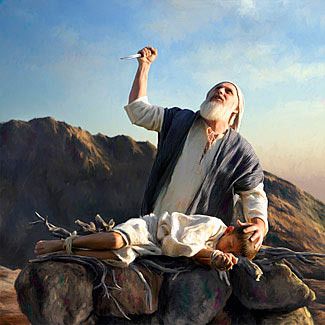
 photo haj1-18L_zpsqhqhno0l.jpg
God commanded Abraham to sacrifice Isaac, had God not
relented would it have been right to kill Isaac since God
commanded it?


Wes Morriston, philosopher from University of Colorado, Boulder, writes an excellent [1] paper against divine command theory and specifically attacking William Lame Craig. The guys over at secular outpost (or as I like to call it, "Kill Bill's ideas) link to that article. Divine command theory in it's simple direct form says that what is good is that which God commands and it is good because God commands it. The paper is very long and covers a lot of ground, I have isolated what I think is one of the  key points and i will deal with just that small but important section: the ground of moral duty as grounded in the divine.

Craig is answwering the Euthyphro dilemma, This is a problem raised by Plato in the from of Socrates question to Euthyphro, " is found in Plato's dialogue Euthyphro, in which Socrates asks Euthyphro, "Is the pious (τὸ ὅσιον) loved by the gods because it is pious, or is it pious because it is loved by the gods?"  [2] The answer Craig takes to it is one I have also argued for years, that the good flows out of God's character so it's neither arbitrary now does it constitute a standard above God.

Morriston takes issue with Craig at the point where he says the good "flows out of God's character.

One might wonder about the phrase ‘flow necessarily from his moral nature’. Does it mean that each divine command is necessitated by God’s moral nature – that God’s moral nature makes it impossible for him not to command what he does in fact command? Or does it mean merely that it is necessary that all divine commands flow from God’s moral nature, where the ‘flow from’ relation is understood in a weaker sense ?Craig doesn’t say.[3]

He's really conflating two different issues here: (1) do all commands flow equally from God's nature (2) could god chose to violate his nature? The question here is still veg because we are talking about Biblical commands? Or, are we talking about the human capacity to be moral itself? The latter is the kjey to the answer. Paul tells us the moral law is written on the heart (Romans 2:6-14). C.S. Lewis shows a great harmony in many Axial age civilizations as far flung as Briton and China. Although there are problems will will bracket them for fn.[4] These similarities of course don't prove divine inspiration but they may indicate that if human moral nature is God given then God's commands must be generally flowing through that basic moral nature and even though filtered through cultural constructs the basic sense of moral goodness grounded in agapic sense of human dignity is possible universally. So the latter "weaker sense" would come closer to the answer, although I would not think of it as "weaker."

But whatever the details, it’s clear that the main point of the claim that God’s commands ‘flow necessarily from his moral nature’ is to head off a familiar objection to the divine command theory. It will be convenient to refer to it as ‘ the arbitrariness objection’. It goes something like this. Either God has good reasons for his commands or he does not. If he does, then those reasons (and not God’s commands) are the ultimate ground of moral obligation. If he does not have good reasons, then his commands are completely arbitrary and may be disregarded. Either way, the divine command theory is false.[5]
That's a fair assessment of the dilemma, and the answer is all moral motions ultimately point to love. God's character is love, thus there is warrant for the assertion that Divine love stands behind morality that God's  commands are neither arbitrary nor are they stemming from a source higher than God. "Those reasons" are bound up in God's character, They are of concern to God because he is love. Obviously they are not "completely arbitrary since they arise out of the same basic aspect of who and what God is. The question about the goodness of reasons is transgression upon the concept of the transcendental signified. Truth is what is and the basis of what is is the ground being ie God). Thus God's reasons are a priori good not because they arbitrarily manufacture good via command but because they stem from the nature of God which is the ground of being. This idea that God's commands are arbitrary ( the "arbitrariness objection") is regarded as an ace in the hole by many skeptical philosopjhers.

Some philosophers think the arbitrariness objection is decisive (Shafer-Landau (2004), 80–81). But Craig thinks his version of the divine command theory is completely untouched by it. To see why, consider the duty to be generous to those in need. On Craig’s account, we can endorse all three of the following claims.

(A) God has a good reason for commanding generosity: generosity is good.

(B) Generosity is good because, and only because, God is (essentially) generous.

(C) Nevertheless, it takes a divine command to turn generosity into a duty for us.
Given (A), it might be thought that there is nothing objectionably arbitrary about God’s commanding generosity. Given (B), the goodness of God’s reason for issuing this command is rooted in his moral nature; it is not therefore independent of God. (C), finally, assures us that it is God’s command, and not merely the goodness of generosity, that raises it to the level of a moral imperative.[6] 
I take issue with the last sentence and with B to which it refers. "Generosity is good because, and only because, God is (essentially) generous." Basically true but it requires some tweaking that zi think matters. It's not just that God is generous so requires that we be generous but that generosity is a of love, it's an expression of love in the agapic sense., The reason It is played that generosity is good only because God is generous is to avoid the prospect of atheists claiming they can be generous without God. Of course that's  begging the question unless it's answering a certain kind of moral argument for God. If God exists it's legitimate to think that goodness flows from God's nature, If there is no God we are just Whistling in the dark anyway. From a purely metaethical standpoint generosity could be grounded in any number of things such as social contract theory, but they would all have a hard time establishing an ought denontologically without going teleological. It would be more certain to assume grounding in God. But switching from answering Euthephro a God argument would change the trajectory of the answers.

"Many questions remain. Could God have failed to command generosity? Could generosity have failed to be a duty ? Just what degree of generosity is required ? And why did God choose to require just that degree of generosity rather than some other ? " If love is the background of the moral universe, as is my assumption, (ala Joseph Fletcher) [7] then the direct proximity of God's will to a specific command might be less important in terms of metaethical theory than understanding the nature of love. In other words, rather than seeking to pin down a list of rules we need to be seeking ways to learn to love people. Of course that doesn't mean it's unimportant that God issues a particular command. Yet the important thing is not keeping rules but internalizing values of the good.

At this point he moves on to a second objection. If God turned around tomorrow and ordered something that is now evil such as eating children would it then become good to do so? Craig says can't happen it's opposed to God's nature.[8] That should be enough for rational people. But if you are an atheist looking to throw a wrench in the works of belief, or a philosopher, no it's not. If you are both well better start looking for that eye of the needle. "Even if such commands are incompatible with God’s nature, isn’t it still true that according to the divine command theory eating our children would be morally obligatory if – per impossible – God commanded it?" It's another version of  can God make a rock so big he can't lift it? The answer I've always given to that is "why should we expect God to do non sense.?"  It's a cleaver question for skeptics to ask because it's a perfect double bind. If we do say "well theoretically if God did command even God would be wrong," we have relativized God's authority. If we say no we relativize his goodness. Either way we make belief in higher power seem silly.

Morriston kind of concedes that the question doesn't make sense and thus it doesn't matter what is said but he still concludes in such a way as to raise doubt with the oblivious:

Remember that for Craig God is, necessarily, a perfect being. If that is understood, then it really doesn’t matter to Craig’s position whether it’s impossible for a perfect being to command such a thing. Why ? Because if a perfect being commanded it, the being would have a morally sufficient reason for doing so; and if – per impossibile, perhaps – a perfect being had a morally sufficient reason for commanding us to eat our children, we should do it. If I am right about this, then Craig’s divine command theory escapes refutation – not for the reason he gives, but rather because the alarming-sounding counterpossibles implied by it turn out to true! 10 What’s so special about being God-like? Given fairly standard assumptions about God’s moral nature, [9]

The real problem is that the skeptics have underrated the scope of God's relation to reality. We are not just talking about the most powerful being. They approach it like the question is "this powerful guy is not like this but what if he was.?" It's not about the will of a powerful guy. It's about the nature of reality and trust and the relationship of that to love itself. Like the rock issue I refuse to believe that truth can be stumped by nonsense. Truth is what is (a simplified version of correspondence theory) and God is Being itself. Love is the background of the moral universe because God is love and God is the basis of reality. Thus if God is love, truth, and being. Thus morality is an extension of the good, and the good is wrapped up with the nature of truth and being. We must understand particular moral codes as best we can having filtered moral motions through culture. There is a reality back there behind it all that can't be cheated by questions like the one about the rock.


[1] Wes Morriston, "God and the ontological foundation of morality," Religious Studies,   Cambridge University Press 2011 (2012) 48, 15–34 f doi:10.1017/S0034412510000740 URL:
http://spot.colorado.edu/~morristo/DoesGodGround.pdf  accessed 2/27/2016.

 WES MORRISTON Department of Philosophy, University of Colorado, Boulder, CO 80309-0232 email: Wes.Morriston@Colorado.EDU

[2]Plat, "Euthephro," Five Dialogues, 10a, or see on line copy, see "Euthephro" by Plato,  Translated by Benjamin Jowet, Internet archieve UROL:http://classics.mit.edu/Plato/euthyfro.html

[3] Morriston, op. cit. 18.

[4] C.S. Lewis, The Abolition of man: With Reflection on Education With Special Reference to The Teaching of English in the Upper Forms of Schools. New York, NY: Harper One, 1971, 83.
The problem with this is that it's limited to a segment of history from a period known as the Axial age, roughly from the 900 to 200 BC. The term is from Karl Jaspers. It excludes new world, Africa, Russian steppes and times before and after. Bit it is probably the best attempt to show universal moral sense. It does at least show large segments of humanity share similar moral motions.

[5] Morriston, op.cit., 18-19

[6] Ibid. 19-20

[7] Joseph Fletcher, Situation Ethics The new Moraloty.Louisville, Lomdon:  Westminster John Knox Press. 1966,    58.
Fletcher discusses the same dilemma but not by the name "Euthephro." He discusses the nominalist position and argues that modern ethical thinking is nominalist and that is what's wrong with it. That's why philosophers ask questions about this dilemma because they can't ground moraloity in love since they are reductionists and can't understand values.

[8] Morriston, op cit.,20-21

[9] Ibid

Thursday, January 31, 2013

Christopher Hallquist's statment: No Good God arguments

 photo filephpavatar38056_1327182210.png
Have theology, Will Argue

Hallquist is a blogger, I can't find any credentials for him but he seems to have the attention of a lot of atheists. His blob is "the Uncredible Hallq." An atheist on my boards put up a file of some kind with an article by him in it, in which he says "there are no good God arguments."

I am unable to copy statements from it except by hand. So I have to just summarize what it says. Therefore I will just present a list of observations going down the page. I wont do all of it now but stop with enough to indicate the basis for this statement and its' debunking.


(1) there are so many and they differ as to which one's are the best.

(the source wont let me copy and paste the quote so you are going to look for statements in the source to back up these observations.

He argues that no matter what arguments you deal with some one will say he didn't deal with the best ones. that's not a valid reason to assert there are none.

(a) nothing about that proves that there are no good arguments, it's just as easily the case that there he's not listening to the best critics.

(b) there are obviously some arguments that have endured, the big five, most all theists will agree are the best. That is a slip shod and "weaselly" way out.

I've explained why where are as many arguments as there are individual believers.  The reason is becasue belief in God is more than just adding the fact of a being to the universe, it's a realization about the nature of being and one's place in it. It's a very personal first order kind of realization it's something you can't prove or argue about but once you have it you can't doubt it. That constitutions a category of knowledge that is totally alien to the atheist and which contracts and directly challenges their ideology of reductionism at it's core. See my essay on the matter.

(2) He quotes other atheist authorities saying the arguemnts are "flimsy (Dennett) but they really say which one's or why.

he quotes Dennett syaing some arguemnts should be laughed at, but ot which ones. that opens the door and gives permission to the atheist movement as a whole to mock and ridicule as they wish becuase any time they do so they can always say "he didn't specify so this one (whichever one he's mocking) must be it." All he's really doing is using argument form incredulity. which as I have pointed out before is the only real argument atheists have.

(3) now we come to the meat, he takes Bill O'Reilly's argument.

wow, we are going for the big guns. the great internationally famous expert on God and talking right-wing head Bill O'Reilly! wow! roll over Aristotle. Of course arguemnt is some drivel about "how could we luck out and come to exist?" Sort of a design argument. He's really taking on the big guns.

where's his criticism of Antiquarians? Where's his critique of Schleiemrmacher? Where is his critique of Hartshorne?

(4) He asserts that God arguments privilege the Hypothesis.

Now I've written endlessly on how atheists privilege their view point. they insist that the atheist assumption has to be the only way to think if you don't accept it then you are stupid you are a creationist and your privileging! this is all he's doing.

His reasoning on this is based upon an attempt to turn the tables and make criticisms of science as incomplete and unable to penetrate the realms of metaphysics into a God of gaps argument. What he has to be saying in orde to make this arguemnt is that if you don't privilege reductions and materialism in the form of scinece that he think thinks gives him the fortress of facts then you are automatically privileging God hypothesis. so faith can never be the standard, it has to be atheist thinking that is the standard then the argument has to disprove it.

that's just backwards reasoning. If he advances scinece as a means of explain away god then he must prove that science explains away all fa cites of reality, he can't assume that all other facets of reality are automatically suspect and only the materialist view is valid. He can't justify beginning from an atheist assumption.

what about starting from a neutral perspective? that seems to be a prospect that totally alludes this guy. Let's look at the biased stupidity with which this guy thinks:

"someone who spends all day thinking about weather the Trinity does or does not exist rather than Allah, or Thor or the flying spaghetti monster is more than half way to Christianity..." In other words Chrsitains are hopelessly stupid and you shouldn't even think about Christian stuff or your brains will rot and you'll be an idiot. Of course it just completely alludes him that someone who spends all day thinking about weather or not the Trinity exists, has thought about it much more than he has and might just have a good reason to think it does.

(5) of course he takes on Argument form design

that's always a popular one to mess with because they have some inherent flaws. I don't even us regular design arguments for that reason. He doesn't deal with any good source of the fine tuning argument.He does admit that writers like Clarke and Aquinas older writers avoid the problem he discusses. The problems he discusses are his own ignorance, such as "approaching something that sounds like God and stopping." this is the work of a man you does not understand the logical concept of identity or the way in which mutual exclusivity can establish identity. He's totally unaware of Spinoza's argument about the triangle or his version of the OA or of the way in which Hartshorne's modal argument establishes God's identity as necessary.

(6) he does try to deal with Ananias.

His major argument against Aquinas and Clarke is that believers today don't use their arguments. This is of cousre nonsense and his own ignorance becuase the work of Craig and Plantinga are based upon those early thinkers in big ways). If it were true that they don't use them it would not prove anything it's merely arguemnt form popularity. His statement was that there are no good God arguments I assume means that retro-actively, he doesn't mean there are none form the past that aren't used any more. He admits these don't have the disadvantages he's talked about they are just not understood by modern believers, which is hog wash. It's also irrelevant Hogwash.

He chalks it up to the idea that their assumptions aren't accepted anymore. That's not true either beaus the school or neo-thomism updated the assumptions of Aquinas and brought them into the 20th century. It has well been established that Thomistic logic could be used in modern thought and it would fit right in, adding certain categories no longer used but not contradicting the core of modern logic. One could could use Thomistic logic and do scinece and go to the moon with it.

When he actually tries to prove that Aquinas makes bad arguemnts it's obvious his standard is that it's a bad argument if it disproves some aspect of reality that he needs to justify atheism. Case in point Ananias' argument agaisnt infinite regress. Aquinas argues that causes which are crucial in the series being removed would mean the series no longer functions becuase the crucial link is missing.Hallquist argues that Aquinas is assuming causes are simultaneous with their effects. That's not really an issue. That has nothing to do with the success or failure of the argument, he does assume this based upon the possibility of an eternal contingency. one must assume eternal contingency (the universe contingent upon God) becuase we have no really knowledge that it's not mountainous with the cause.

For basically Hallquist just deciliters the arguments no good: "how does taking away the first cause in a finite chain prove there's something special about first causes?" Not knowing that odalisques him as having a right to discuss the argumetns. Obviously you have a finite chain and a first cause then removal of first cause would mean nothing would come after it, thus no chain. I think would make it pretty special. His ratioanl for it not being special is that if you remove a cause from the middle of the chain then all the stuff after it goes. that means the middle just as important as the end. Well that's only true if you think half a chain is no better than no chain at all. I would think that since half a chain is soemthing and no chain is nothing half a chain would be more important. But even so that' snot the issue. the issue is do we laud the first with honor becuase it's first? Or does it have a more important place in giving us the reaosn to think there has to be a creator?

From that point he starts attacking William Lane Craig. This is a very courtesy and shallow treatment of Aquinas. He doesn't' even grasp the basics of Thomistic thinking. IN fact he never states the arguments in a coherent way. In connecting it to Craig (who the atheist just love to bad mouth weather they understand him or not) he just creates the notion of guilt by association but of course never points out the crucial difference in Aquinas CA and Crag's which is that th latter is the Kalam arguemnt and the former is not. Thus Aquinas never has to make good on the founding assumption that "whatever begins to exist has to have a cause" and that's why Aquinas assumes cause and effect could be simultaneous (in the case of eternity). This is enough to show that the original statement is crap.

Hallquist's dealing with God argument is childish, shallow, foolish, armature and sloppy. He clearly has no background in the things he discusses. The statements there are no good God arguemnt is pure rubbish.

It's just what I"ve always said that atheist simply do not want to know the truth so they don't listen they just wont listen when we try to explain why we believe. When we beat them in argument they get angry becuase they can't stop it because they refuse to learn. The they just start making declarations which they can't back up bad mouthing arguments they don't understand.

Sunday, May 20, 2012

Dawkins is not a great scientist

Default Dawkins is not a great a sciensit

I am not saying that he is not accomplished and I'm not saying that he doesn't have a Ph.D. Yes he has one, yes knows a lot about biology. Of course more than I do. He is not Galileo, he's not Darwin, he's not Einstein what he had contributed to scinece (if anything) is more in the line of popularizing and PR than real science.

I'm not even saying that he hasn't done real scinece but he's not a big name for work in scinece. His work in "real scinece" is a little better than mediocre.

Before I go into that here's a little something for Hans to ponder. This is the second time I've found a Left publication attacking New Atheism. the other was in the Guardian (the one in New York). How do you figure it Hans? I see totalitarian written over New atheism and in reality the left overs of the left oppose it.

here's the "about" statement form the journal State of nature where I find the anti-Dawkins article:

"State of Nature is a quarterly online journal of the Left. Its focus is on world politics, global economics, history, philosophy, social theory and the arts. It stands opposed to the capitalist economic order and the imperialist ambitions of the world’s great powers. It remains committed to the development of protest movements and the construction of a radical alternative to the status quo."

does that mean Dawkins is status quo?

quote:

"As a whole generation of biologists has been indoctrinated to believe that selfish-gene theory is serious science, we should put the Dawkins-as-intellectual scenario to rest forever."

State of NatureLink


Selfish kinship altruism is a minefield for the Dawkins camp, for they are forced to come up with explanations for numerous processes that don’t fit the model. Dawkins’ rather unconvincing explanation for our kindness to strangers for example, is that this is a “Darwinian mistake”, a useless (in Darwinian terms not his) misdirected extension of our feelings of kinship. [4] This is almost painful; a classic case of making the data fit the theory. Surely we can come up with a better explanation for altruism. Let’s start by examining kin selection, which undoubtedly plays a role in evolution, but which, when presented as being driven by individualism is a fantasy based on a falsehood. The simple reality is that we co-operate with others because we are social beings. We co-operate closely with kin because, well, they’re closest to us! (This really is kindergarten stuff, isn’t it?) Kin altruism can be more simply and believably explained, from a purely biological viewpoint only, as insurance for assistance at a time of future need, which rules out gene influence entirely.

Detailed information about the origin of life is not altogether conjectural; it’s still possible to speculate as to what took place and why. It’s likely that the first spark of life was a singular event, was not repeated. [5] If that’s the case, then all living things are related, for they have a common ancestor, this being confirmed by the presence of DNA in all organisms and the astounding level of genetic material shared among seemingly disparate species. (46% of your genes are found in yeast, 99% in chimps.) This makes a nonsense of kin selection based on selfishness, for when natural selection first kicked in (when the first organism reproduced) all organisms were closely related, there was no basis for differentiation. It’s still nonsense if we look at the situation eons later. High level co-operation with close kin is not mysterious; it has no hidden agenda, no devious ulterior motives. It’s no more than a perfectly natural consequence of varying levels of kinship. Take the example of a sinking ferry. The passengers that are strong swimmers will take their nearest and dearest to safety. If they have energy in reserve they will return to help others. This is not a “Darwinian mistake” as Dawkins would have us believe, for in the final analysis the other passengers are also close kin. Closer that is, than an owl or a toad, for these are also related to humans if we go back far enough. So we don’t need flimsy, unconvincing, manufactured absurdities to explain altruistic behaviour. There’s a perfectly plausible reason for our emotional ties to strangers; we’re all related!


he's also a Meusium curator not a a research scientist. Look at the description of his job in Wiki

"and was the University of Oxford's Professor for Public Understanding of Science from 1995 until 2008.[2]"

that's like saying he's a PR man. "In his scientific works, Dawkins is best known for his popularization of the"

a popularize. a popularizer is not a real scientist.

once when I made this arguemnt they showed me a bunch of stuff from his honorary degrees. honorary degrees are not earned. those are not Ph.D's he does have one but most of his degrees are not Ph.D.'s most honorary doctorates are given in exchange for endowments or speaking at commencement. that is not indicative of great scientific work.

William Lane Craig is closer to being the real thing for philosophy than Dawkins is for science.