Showing posts with label Theology. Show all posts

Monday, April 4, 2016

The Euthyphro dilemma and the arbitrariness objection’: Amnswering Wes Morriston

 photo haj1-18L_zpsqhqhno0l.jpg
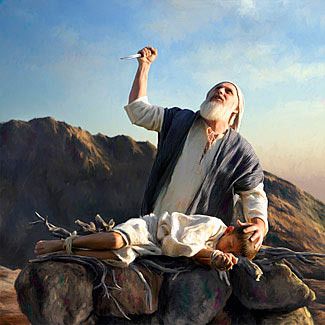
God commanded Abraham to sacrifice Isaac, had God not
relented would it have been right to kill Isaac since God
commanded it?


Wes Morriston, philosopher from University of Colorado, Boulder, writes an excellent [1] paper against divine command theory and specifically attacking William Lame Craig. The guys over at secular outpost (or as I like to call it, "Kill Bill's ideas) link to that article. Divine command theory in it's simple direct form says that what is good is that which God commands and it is good because God commands it. The paper is very long and covers a lot of ground, I have isolated what I think is one of the  key points and i will deal with just that small but important section: the ground of moral duty as grounded in the divine.

Craig is answwering the Euthyphro dilemma, This is a problem raised by Plato in the from of Socrates question to Euthyphro, " is found in Plato's dialogue Euthyphro, in which Socrates asks Euthyphro, "Is the pious (τὸ ὅσιον) loved by the gods because it is pious, or is it pious because it is loved by the gods?"  [2] The answer Craig takes to it is one I have also argued for years, that the good flows out of God's character so it's neither arbitrary now does it constitute a standard above God.

Morriston takes issue with Craig at the point where he says the good "flows out of God's character.

One might wonder about the phrase ‘flow necessarily from his moral nature’. Does it mean that each divine command is necessitated by God’s moral nature – that God’s moral nature makes it impossible for him not to command what he does in fact command? Or does it mean merely that it is necessary that all divine commands flow from God’s moral nature, where the ‘flow from’ relation is understood in a weaker sense ?Craig doesn’t say.[3]

He's really conflating two different issues here: (1) do all commands flow equally from God's nature (2) could god chose to violate his nature? The question here is still veg because we are talking about Biblical commands? Or, are we talking about the human capacity to be moral itself? The latter is the kjey to the answer. Paul tells us the moral law is written on the heart (Romans 2:6-14). C.S. Lewis shows a great harmony in many Axial age civilizations as far flung as Briton and China. Although there are problems will will bracket them for fn.[4] These similarities of course don't prove divine inspiration but they may indicate that if human moral nature is God given then God's commands must be generally flowing through that basic moral nature and even though filtered through cultural constructs the basic sense of moral goodness grounded in agapic sense of human dignity is possible universally. So the latter "weaker sense" would come closer to the answer, although I would not think of it as "weaker."

But whatever the details, it’s clear that the main point of the claim that God’s commands ‘flow necessarily from his moral nature’ is to head off a familiar objection to the divine command theory. It will be convenient to refer to it as ‘ the arbitrariness objection’. It goes something like this. Either God has good reasons for his commands or he does not. If he does, then those reasons (and not God’s commands) are the ultimate ground of moral obligation. If he does not have good reasons, then his commands are completely arbitrary and may be disregarded. Either way, the divine command theory is false.[5]
That's a fair assessment of the dilemma, and the answer is all moral motions ultimately point to love. God's character is love, thus there is warrant for the assertion that Divine love stands behind morality that God's  commands are neither arbitrary nor are they stemming from a source higher than God. "Those reasons" are bound up in God's character, They are of concern to God because he is love. Obviously they are not "completely arbitrary since they arise out of the same basic aspect of who and what God is. The question about the goodness of reasons is transgression upon the concept of the transcendental signified. Truth is what is and the basis of what is is the ground being ie God). Thus God's reasons are a priori good not because they arbitrarily manufacture good via command but because they stem from the nature of God which is the ground of being. This idea that God's commands are arbitrary ( the "arbitrariness objection") is regarded as an ace in the hole by many skeptical philosopjhers.

Some philosophers think the arbitrariness objection is decisive (Shafer-Landau (2004), 80–81). But Craig thinks his version of the divine command theory is completely untouched by it. To see why, consider the duty to be generous to those in need. On Craig’s account, we can endorse all three of the following claims.

(A) God has a good reason for commanding generosity: generosity is good.

(B) Generosity is good because, and only because, God is (essentially) generous.

(C) Nevertheless, it takes a divine command to turn generosity into a duty for us.
Given (A), it might be thought that there is nothing objectionably arbitrary about God’s commanding generosity. Given (B), the goodness of God’s reason for issuing this command is rooted in his moral nature; it is not therefore independent of God. (C), finally, assures us that it is God’s command, and not merely the goodness of generosity, that raises it to the level of a moral imperative.[6] 
I take issue with the last sentence and with B to which it refers. "Generosity is good because, and only because, God is (essentially) generous." Basically true but it requires some tweaking that zi think matters. It's not just that God is generous so requires that we be generous but that generosity is a of love, it's an expression of love in the agapic sense., The reason It is played that generosity is good only because God is generous is to avoid the prospect of atheists claiming they can be generous without God. Of course that's  begging the question unless it's answering a certain kind of moral argument for God. If God exists it's legitimate to think that goodness flows from God's nature, If there is no God we are just Whistling in the dark anyway. From a purely metaethical standpoint generosity could be grounded in any number of things such as social contract theory, but they would all have a hard time establishing an ought denontologically without going teleological. It would be more certain to assume grounding in God. But switching from answering Euthephro a God argument would change the trajectory of the answers.

"Many questions remain. Could God have failed to command generosity? Could generosity have failed to be a duty ? Just what degree of generosity is required ? And why did God choose to require just that degree of generosity rather than some other ? " If love is the background of the moral universe, as is my assumption, (ala Joseph Fletcher) [7] then the direct proximity of God's will to a specific command might be less important in terms of metaethical theory than understanding the nature of love. In other words, rather than seeking to pin down a list of rules we need to be seeking ways to learn to love people. Of course that doesn't mean it's unimportant that God issues a particular command. Yet the important thing is not keeping rules but internalizing values of the good.

At this point he moves on to a second objection. If God turned around tomorrow and ordered something that is now evil such as eating children would it then become good to do so? Craig says can't happen it's opposed to God's nature.[8] That should be enough for rational people. But if you are an atheist looking to throw a wrench in the works of belief, or a philosopher, no it's not. If you are both well better start looking for that eye of the needle. "Even if such commands are incompatible with God’s nature, isn’t it still true that according to the divine command theory eating our children would be morally obligatory if – per impossible – God commanded it?" It's another version of  can God make a rock so big he can't lift it? The answer I've always given to that is "why should we expect God to do non sense.?"  It's a cleaver question for skeptics to ask because it's a perfect double bind. If we do say "well theoretically if God did command even God would be wrong," we have relativized God's authority. If we say no we relativize his goodness. Either way we make belief in higher power seem silly.

Morriston kind of concedes that the question doesn't make sense and thus it doesn't matter what is said but he still concludes in such a way as to raise doubt with the oblivious:

Remember that for Craig God is, necessarily, a perfect being. If that is understood, then it really doesn’t matter to Craig’s position whether it’s impossible for a perfect being to command such a thing. Why ? Because if a perfect being commanded it, the being would have a morally sufficient reason for doing so; and if – per impossibile, perhaps – a perfect being had a morally sufficient reason for commanding us to eat our children, we should do it. If I am right about this, then Craig’s divine command theory escapes refutation – not for the reason he gives, but rather because the alarming-sounding counterpossibles implied by it turn out to true! 10 What’s so special about being God-like? Given fairly standard assumptions about God’s moral nature, [9]

The real problem is that the skeptics have underrated the scope of God's relation to reality. We are not just talking about the most powerful being. They approach it like the question is "this powerful guy is not like this but what if he was.?" It's not about the will of a powerful guy. It's about the nature of reality and trust and the relationship of that to love itself. Like the rock issue I refuse to believe that truth can be stumped by nonsense. Truth is what is (a simplified version of correspondence theory) and God is Being itself. Love is the background of the moral universe because God is love and God is the basis of reality. Thus if God is love, truth, and being. Thus morality is an extension of the good, and the good is wrapped up with the nature of truth and being. We must understand particular moral codes as best we can having filtered moral motions through culture. There is a reality back there behind it all that can't be cheated by questions like the one about the rock.


[1] Wes Morriston, "God and the ontological foundation of morality," Religious Studies,   Cambridge University Press 2011 (2012) 48, 15–34 f doi:10.1017/S0034412510000740 URL:
http://spot.colorado.edu/~morristo/DoesGodGround.pdf  accessed 2/27/2016.

 WES MORRISTON Department of Philosophy, University of Colorado, Boulder, CO 80309-0232 email: Wes.Morriston@Colorado.EDU

[2]Plat, "Euthephro," Five Dialogues, 10a, or see on line copy, see "Euthephro" by Plato,  Translated by Benjamin Jowet, Internet archieve UROL:http://classics.mit.edu/Plato/euthyfro.html

[3] Morriston, op. cit. 18.

[4] C.S. Lewis, The Abolition of man: With Reflection on Education With Special Reference to The Teaching of English in the Upper Forms of Schools. New York, NY: Harper One, 1971, 83.
The problem with this is that it's limited to a segment of history from a period known as the Axial age, roughly from the 900 to 200 BC. The term is from Karl Jaspers. It excludes new world, Africa, Russian steppes and times before and after. Bit it is probably the best attempt to show universal moral sense. It does at least show large segments of humanity share similar moral motions.

[5] Morriston, op.cit., 18-19

[6] Ibid. 19-20

[7] Joseph Fletcher, Situation Ethics The new Moraloty.Louisville, Lomdon:  Westminster John Knox Press. 1966,    58.
Fletcher discusses the same dilemma but not by the name "Euthephro." He discusses the nominalist position and argues that modern ethical thinking is nominalist and that is what's wrong with it. That's why philosophers ask questions about this dilemma because they can't ground moraloity in love since they are reductionists and can't understand values.

[8] Morriston, op cit.,20-21

[9] Ibid

Wednesday, October 9, 2013

Truth About the Atehist Take on Knolwedge

 photo animal_farm.jpg

One of the greatest ironies in life is how this group that prides itself upon being smarter than their hated enemy the Christians, and that prides itself on "free thinking," they think for themselves and love knowledge and learning, they are so very smart, are actually narrow minded and opposed to learning. Not only do they reduce all knowledge one kind (science) but they are also indignant and insulting toward those who seek learning. Nothing is more telling of the anti-intellectual than their hatred of scholarship.


Tralala
on CARM a few
days ago

 What does arguing and studying the minutia of bronze age mens writing really give back? Its not like they actually expect to find something that will have practical value.Mostly it seems it is just about confirming their own belief system. Not exactly the same results to give to the world as applying one mind to working on cancer research or even being an artist. Even Newton wasted a huge amount of his time doing this. It is such a waste of human potential.

Or am I missing something? Is there something useful that comes from all this effort other than self gratification?
 Square one

In the modern era I would say zero great minds are wasted on this.

A great mind would have the wherewithal to abandon religion.

I'm moderately intelligent and I managed. So those who are much smarter than I am, the "great minds" really have no excuse.

Newton's excuse was the general ignorance of his age.

MarkUK
 Being a Bible Scholar is like being a Batman scholar

What? Golden age Batman? Silver age Batman? Dark Knight?


My response?


Meta:

why do atheists want to be stupid?
Look at the attitude toward learning and knowledge:

linked to the stuff above.

History is nothing but study of the past is stupid. scinece is the only thing there is. But they can't think scientifically becuase they don't know anything. When faced with the the reality of social science reserach they fall back on silly prejudice and mocking rather than real methodological analysis.

It has been demonstrated over and over again that theology is good and valuable. It' s utterly stupid to think that major intellectuals are wasting their time on something they spend their lives studying. they know more than you and they are smarter so obviously they see stuff you don't see. Maybe atheist are just too stupid to get it? HU? Everything has to be measured by scinece, but not real science, their little ideological version of scinece. The ideological version is actually anti- scientific.In their view scinece = atheism. scinece is the enforcement mechanism of atheists. all the studies and research they just ignore until it say stuff they like. that is anti-scientific.

down with history
down with social scinece
down with art
down with logic
down with thinking

the only thing there is is learning how the physical world works reduce everything to that lose the phenomena. Look BT he says we understand all about feelings because we know how to manipulate them with brain chemistry.

I say what about X,Y,Z we don't understand that

He says that's not worth understanding becuase its not derived at though our methods. that means it's subjective so we can wipe that out. That just means that you are losing the phenomena. Rather than explaining it you are just hiding the bit you can't answer. tha'ts not scinece.

He has this preconceived idea about objectivity and subjectivity and anything not amenable to his research method he's going to write off as unimportant is that scinece did it? I don't think so. I think that's ideology rather than scinece. They reduce everything to this one form of knowledge but then that one forms shows the inadequacy of their views They sacrifice even that one form of knowledge.
Do you get that? He says we understand all about it, I point out an area about ti we don' t understand, he says that's not worth understanding because it can't be subjected to our methods. So in others if we don't control it and we can't already understand, if it doesn't fit our agenda, then it's not worth understanding. He should say "we understand all that we care to understand about feelings." Which ant much.

Hilly Billy: "Your bald assertions are not demonstrations."

All you have to do is look at their words.

he says:

"You have yet to demonstrate even once "that theology is good and valuable".

Of course they wont accept that it matters that it's good at its own task because that's about God so that' no good. That's just circular reasoning. Typical circular reasoning that allows them to rationalize their ideology. When I've given examples of theolgoians doing good things in other areas such as the contribution of Alfred North Whitehead to Mathematics:


Alfred North Whitehead (1861–1947) was a British mathematician, logician and philosopher best known for his work in mathematical logic and the philosophy of science. In collaboration with Bertrand Russell, he co-authored the landmark three-volume Principia Mathematica (1910, 1912, 1913). Later he was instrumental in pioneering the approach to metaphysics now known as process philosophy.[1]
also:
Principia Mathematica, the landmark work in formal logic written by Alfred North Whitehead and Bertrand Russell, was first published in three volumes in 1910, 1912 and 1913. Written as a defense of logicism (the view that mathematics is in some significant sense reducible to logic) the book was instrumental in developing and popularizing modern mathematical logic. It also served as a major impetus for research in the foundations of mathematics throughout the twentieth century. Along with the Organon written by Aristotle and the Grundgesetze der Arithmetik written by Gottlob Frege, it remains one of the most influential books on logic ever written.[2]

 Also quoting Nancy Murphy in her book Downward Causation and the Neurobiology of Free Will states that theologian Hans Kung's article provides a fine overview for many of the conclusions reached by the volume. [3] The CARM atheist just say "big deal that's not their function as theologians so that's not a contribution from theology." Look at the ciruclar reasoning here. Theology is stupid becuase it's about God and we don't believe in God becuase theology is stupid. If that's not enough the when you show theologians doing good thing sin other ares it doesn't count for theology becuase it's not theology. But theology is stupid a priori becuase its about God so nothing could ever count in its favor.

 Is it just the CARM atheists who talk this way? See my article "anti-intellectual tendencies of New Atheism" [4] where I quote Larry Moran, PZ Myers, and Dawkins making more sophisticated version of the same kind of circular Bull Honky do do. this is from my article:

 The Courtier's Reply
by PZ Myers


I have considered the impudent accusations of Mr Dawkins with exasperation at his lack of serious scholarship. He has apparently not read the detailed discourses of Count Roderigo of Seville on the exquisite and exotic leathers of the Emperor's boots, nor does he give a moment's consideration to Bellini's masterwork, On the Luminescence of the Emperor's Feathered Hat. We have entire schools dedicated to writing learned treatises on the beauty of the Emperor's raiment, and every major newspaper runs a section dedicated to imperial fashion; Dawkins cavalierly dismisses them all. He even laughs at the highly popular and most persuasive arguments of his fellow countryman, Lord D. T. Mawkscribbler, who famously pointed out that the Emperor would not wear common cotton, nor uncomfortable polyester, but must, I say must, wear undergarments of the finest silk.


Dawkins arrogantly ignores all these deep philosophical ponderings to crudely accuse the Emperor of nudity.

Personally, I suspect that perhaps the Emperor might not be fully clothed — how else to explain the apparent sloth of the staff at the palace laundry — but, well, everyone else does seem to go on about his clothes, and this Dawkins fellow is such a rude upstart who lacks the wit of my elegant circumlocutions, that, while unable to deal with the substance of his accusations, I should at least chide him for his very bad form.
Until Dawkins has trained in the shops of Paris and Milan, until he has learned to tell the difference between a ruffled flounce and a puffy pantaloon, we should all pretend he has not spoken out against the Emperor's taste. His training in biology may give him the ability to recognize dangling genitalia when he sees it, but it has not taught him the proper appreciation of Imaginary Fabrics.

 In other words, knowledge of theological subjects is just plain bull shit and it doesn't matter if Dawkins doesn't understand it because it's not worth understanding. So it's not valid criticism of him to say that. Except the problem is, if he understood theology he would see that his criticisms are wrong. The criticisms he makes are almost always about fundamentalists views. Since he refuses to accept that there are other non fundamentalist types of theology, when you point it out he just says O that's ridiculous because all theology is crap so it doesn't matter--but if he knew that he might not make the criticisms becasue they don't apply. But it's not worthing knowing that. he's just reasoning in a cirlce.
They are basically saying that history, literature, philosophy, logic, Sociology, Anthropology all forms of human knowledge are as useless as outmoded fashion. Only scinece matters. They then deny that it's an ideology but one the major hall makrs of ideology is reducing all forms of knowledge to the ideology.

Why would anyone want to be part of movement that is dedicated to the destruction of learning? A movmeent that openly expresses it's contempt for intellectual endeavors?


sources

[1]Irvine, Andrew David, "Alfred North Whitehead", The Stanford Encyclopedia of Philosophy (Winter 2013 Edition), Edward N. Zalta (ed.), forthcoming URL = .http://plato.stanford.edu/cgi-bin/encyclopedia/archinfo.cgi?entry=whitehead
accesed 10/9/13

[2] Irvine, Andrew David, "Principia Mathematica", The Stanford Encyclopedia of Philosophy (Winter 2010 Edition), Edward N. Zalta (ed.), URL = .http://plato.stanford.edu/entries/principia-mathematica/
accessed 10/9/13

[3]Nancy Murphy, George FR Ellis, Timothy O'Connor, Downward Causation and the Neurobiology of Free Will. Berlin, Heidelberg: Springer-Verlag, 2009, 24.

[4] Metacrock, "Anti-Intellectual Tendencies of New Atheism," Atheistwatch, Nov 13, 2012.
http://atheistwatch.blogspot.com/2012/11/anti-intellectual-tendencies-of-new.html
accessed 10/9/13

Friday, April 5, 2013

Atheists Demontrate the Vast Verity of Incredulity Argument

Here is an example of why one needs to read a lot of theology before one deems to criticize it. Let's take the op in the thread that titrated this as an example: thread by Skylurker about "what is theology good for." (from CARM)


So I put up a counter thread claiming that their only real argument based upon the one and only atheist argument, that of incredulity. it's just another version. Rather than "I refeuse to believe therefore it can't be true" they are saying 'I don't like this stuff and I refuse to learn about it, therefore it's not good for anything." See Metacrock's blog from today for an specific answers to the post above.

On CARM I put up an argument:

this is essentially the argument all atheist on this board make. Theology must be stupid and useless "becuase ti's about stuff what I don't agree with none of."

that is not a valid criticism. first of all most of you have read about one page of theology if you are rare and really trying to think..the vast majority haven't read that much. Two are three may have read one book.

none of you made any kind of valid criticism in the thread elegantly entitled 'whats theology good for?"

"it ant good for nothing cause I don't likes it." well you know them does like it thinks good. that is not a valid way to argue. There is not enough knowledge of theology on this board to mean a hill of beans.

The idea that it's no good becuase I don't believe in the thing it's about is just nuts. that is not a valid way to even think about things. that's like saying trigonometry is meaningless becuase I don't like what it's about; of cousre I know nothing about it but so what? it's useless to me to so it's useless.

O that's scinece, that is holy sacred mathematics it had to be true and good becuase the powers hat give me money say it is.

we are not engaging in a thought process when we think this way.

 Originally Posted by NotAnAtheist View Post
It's very difficult taking you seriously when the very first sentence in your essay is untrue.
My first sentence is abundantly true. The only argument any of you have made at all is "it' about something that I don't bleieve in so therefore it's no good."
Meta:
if you think you another one let's hear it.t hat's the only I saw on that thread and I read most of it.

Ok you may be taken in by another form of the argument which says 'scinece is tangible and true and can be proved to be so by mathematics and expectant so forth. Theology is not."

that's essentially the same argument, it's going at it form the other side of speaking of what you believe in and then comparing it rather than saying the thing it's about is what I don't believe in.

In both cases you are assuming that you know what theology is about when you don't. in both cases you are assuming there's only one form of fieldwork if it's not science then it's no good.

clearly related because if you don't know what theology is about then can't understand the cocnept of other forms of knowledge.

 Originally Posted by NotAnAtheist View Post
This time, it's the second sentence that's untrue.
Meta
If you can make a point without gross exaggeration, I'll be more than happy to consider it.
There's only one way you can justify your statement and prove me wrong: show me an arguemnt that was made in that thread that's the same as what I said. you haven't even tried so far.

I think if you had the argument you would have made it. you don't have it.

 Originally Posted by NotAnAtheist View Post
Doesn't matter whether it's valid or not. The fact is that skylurker's quote shows your second sentence was false; demonstrably false.

Keep flailing away, Meatcorck.
 
Meta:I just demonstrated it's the same arguemnt. you haven't said anything different. you are confused by the fact it doesn't use the same language. When you don't think about the content of ideas you can often mistake the product for the package. a new package fools them every time.

what you mean it doesn't have to be valid? that's ludicrous. do you have a concept of argument?  Incredible they are so stupid they don't know why it's important to have a valid argument yet they keep finding people to join them!


 Originally Posted by SquareOne View Post
Strawman rant does not deserve the dignity of a proper response.
 
like the thread the thread I'm criticizing. like your arguments against theoloyg: all hot air. you don't know **** about theology and you just want to flap your gums. you can't even back it up enough to show another argument.
 Originally Posted by Dr Pepper View Post
People have recognized this in the past and even more so today with the use of special effects and rediscovery of our supernatural heroes. Superman, the green lantern, Harry potter, and the latest bible movies. WC Fields recognized this when asked what he thought about the bible and he said he didn't believe most of it but it had some good movie plotts. Also for the Stargate lovers out there the Ori series sure sounded like how religion has behaved in the past.

so what you are saying is "I can imagine that is not true so therefore it's not true." which is another way of saying 'I dont' like causes it's what I don't bleieve none of."

this is not profound. this is not a valid argument it's horse ****! you don't have the slightest idea what you are criticizing.

 ginally Posted by Pragmatic View Post
Theology is very important while you assume god exists. However, if god does not exist then theology is essentially only useful for making consistent science-fiction stories. This, of course, ignores the fact that religion is used to control societies.
 
you are assuming that theology is predicated upon belief in God. you can only that by not knowing anything about theology. You are going by what fundies say, what the encyclopedia says and what Wiki says and what atheist websites tell you all based upon 400 year old theology. you haven't actually read any so you don't know what it's about.

that means your argument is just exactly what I said. Look what you said above is just a more sophisticated way to expressed what I said: theology is no good cause it's about what I don't like.


Pragmatic
Assuming god does not exist, as people in a religion controlled society grow wiser and more educated, the theology must also address this in order to keep its god consistent with their new knowledge and hidden protected by their ignorance. 
 
this is based on that same assigning premise. since you don't know anything about theology you are totally ignorant of the anti-God theologians. Again you just said the same thing in yet another way: it's about whut I don't likes, so it ant no good!


As for theology being useless or not: If it produces results then it is useful, if it does not produce results then it is useless. Going back to the science fiction point: I'd say theology would always be useful here.

how can you know if it does or not if you don't read it?

Monday, May 7, 2012

Why Atheists Have No Ears

 Photobucket


Apologetics is not for unbelievers. It's not exactly for convincing oneself either, but it is definitely not for atheists. Its' pointless trying to convince someone of something that is contrary to their paradigm. Paradigms control all. People  are not capable of seeing into a different world. They live in the world they are in, the world of the paradigm. Paradigm shifts only happen when there are too many anomalies to be absorbed by the old paradigm. Until that happens there's no convincing someone his paradigm is wrong. Now you might think this means that we should go about the task of trying pile up anomalies. The problem with that is atheists are able to absorb vast amounts of anomalies into their paradigm and they employ a verity of methods to do so. Kuhn says this is what happens, the ruling paradigm can adsorb a certain degree of anomalies and until you get so many that the paradigm can't deal with them any more and the paradigm starts to shift, they are just all absorbed and don't' seem to matter.

Now I think little by little the paradigm is shifting, it will eventually turn over. It will probably never be non-materialists or "spiritualist." But it is clear that the old paradigm has given way in several areas and ideas that would once have been considered totally loony are now part of the new paradigm. The problem is the new paradigm is packaged as a continuation of the old; in other words, the old materialist paradigm has now given way to the new physicalist. The difference being that under the old paradigm (materialist) only materiel things were possible. Reality was thought of as the "material" realm. Then it was realized that energy is another form of matter, so it's not mater itself and thus more than just mater is possible.So the new paradigm (phsyicalist) says that only what is physical is possible. Spirit still ruled out (except it can come in the back door in the form of energy) but it is recognized that there are two media for existence, rather than just the material there is also energy (which is another form of matter).

Meanwhile, there are many areas through which the evil idealism has seeped into the new paradigm: healing in medicine, the idea of mind over matter, realms beyond that of nature (which is what string membranes are) but they have to be packed as "physical." As long as it all part of "the physical" (which is idealist enough as it goes, then it can have a place. So ideas which never have been considered fifty years ago are now front and center. But the only proviso is we can't acknowledge it. We have to keep up the charade that idealism/spiritualism is beaten and materialism (in the form of physicalism which allows for energy) prevails. But in prevailing it makes room for other realms beyond that of nature (space/time) mind over matter, healing in medicine, archetypes, here's a complete list:

(1) Quantum Theory (no need for cause/effect)

(2) Big bang Cosmology (realm beyond the natrual)

(3) Medicine (healing)

(4) Consciousness (invites concept of dualism)

(6) Maslow's Archetypes (universal ideas)

(7) Miracles (empirical evidence)

(8) Near Death Experiences (scientific evidence)

(9) Esp Research (the fact that they do it)

(10) Validity of religious experince (Shrinks no longer assume pathology)

(11) Mind over matter (pleacebo effect).


For this reason I am willing to think that the paradigm will eventually shift. It probably wont ever allow for "supernatural," but it will contain supernatural-like ideas masquerading as materialist/physicialist. We already see it now in the mind over matter of the placebo effect.

Nevertheless, despite this movement, the materialist/physicalist paradigm can absorb an almost infinite amount things that are anomalous in thier behavior simply because "energy" covers a multitude of idealist propositions. Anything not material can always be sold as "energy." Pure idea can be sold as brain chemistry because it has to be transmitted that way. Thus Dawkins insists there cant' be a mind without a brain. But what's really being said there is that any form of ideal or idea or "mind" or anything not material can always be coopted as "energy" and thus it can never be anomalous under a physicalist paradigm. But there's another reason as well why it will take a long time for a big paradigm shift. There is no end of atheist incredulity. The physicalist paradigm lends itself to incredulity because we know it works. We don't know the range of its limitations because we can't produce evidence under the same paradigm of things beyond the paradigm, so of course we can exclude any hint of actual anomaly. Of course we can't expect evidence under the paradigm that would legitimate anomalies of that same paradigm, then they wouldn't be anomalies. The incredulity factor always allows one to put it in the magic pressure cooker and (whish wish) it's gone!

Here's an example of what I mean. Here's an example of a Saint making miracle from my miracles page. It's no longer found on the URL it once was, so the link doesn't work. But it was there:


Society for the Little Flower (Website) FAQ (visited 6/3/01) St. Theresse of Lisieux

http://www.littleflower.org/therese/faq.html#4

"Regarding St. Therese, in 1923 the Church approved of two spontaneous cures unexplained by medical treatment. Sister Louise of St. Germain was cured of the stomach ulcers she had between 1913 and 1916. The second cure involved Charles Anne, a 23 year old seminarian who was dying from advanced pulmonary tuberculosis. The night he thought he was dying, Charles prayed to Therese. Afterward, the examining doctor testified, "The destroyed and ravaged lungs had been replaced by new lungs, carrying out their normal functions and about to revive the entire organism. A slight emaciation persists, which will disappear within a few days under a regularly assimilated diet." These two miracles resulted in Therese becoming beatified."


The atheists on carm treated this with total incredulity. It has to be a lie. First they said I made it up. then I linked to the site and they could see it was their and howled with laughter. How stupid could I be? It's a religious site dedicated to that saint to of course it's a lie! I gave all the evidence on miracles pages about the rules of miracles in RCC and showed that they use medical evdience, there x-rays of the lungs and so on. But they insisted this is not good because its not in a medical journal. So I emailed a member of the committee, a medical expert who does research for the medical committee, and he vouched for its authenticity. That's no good, he' on that committee so he's lying. I brought up the x-rays, well I don't have the x-rays so its' still lie. I would have to have the x-rays in my hot little hand before it could actually be accepted. If i actually get the xrays from the Vatican, which were taken in the early part of the 20th century, (like that's a fair requirement that I some little guy in Texas, a prot, with no official connections could get these xrays), if I did have them don't you think they would still say its a lie? x-rays can be fabricated. So it's an anomaly and it will always be an anomaly because one may always doubt.

I recently had a discussion on my message boards about my mystical experience arguments (The Trace of God). I was as clear as anyone could be, and i worked several times to meet the evidential burden required by the atheist dialogue "partner." But this guy just played dense. He refused to get it. But I think a Chrsitain poster named "Wordgazer" really summed it up best:


FWIW, I didn't have any trouble following or understanding Metacrock's reasoning, and I do think he addressed each of Marxiavelli's concerns. What it looked like to me was that Marxiavelli was looking at things through his scientific materialist worldview, and was either unable or unwilling to shift to a different perspective. For example, he seemed to think Metacrock was using the religious experience argument to prove one particular set of religious beliefs, and because they didn't do this, Marxiavelli appeared to think that this trumped all rational warrant for a belief in anything non-material at all. But Metacrock was not arguing for Christianity; he was arguing for the interaction between humans and something Divine that was undefined. What I was seeing was something that I myself have experienced-- the challenge by an atheist to prove theism, but only within the atheism box. Invitations to climb out of the box and look further, were apparently misunderstood as not answering the questions. There were a few times that Metacrock got frustrated, but I really don't think he was being "extremely and unnecessarily aggressive."


We live in different worlds. The world of the atheist is not the world of the theist and they don't want to see into my world. They want to reassure themselves that it's ok to deny my world is valid and to secure their own world. One can hide a lot of anomalies that way. As Wordgazer said it's really just a matter of who wants to see what. Of course they would impune my motives for wanting to see the validity of my world, but pat themselves on the back and rationalize their biases as "hard nosed critical thinking." Hard nosed critical thinking that does not want to see.

This is why the realizing God (existential phenomenological who ha) is really the only tenable approach. Until one is willing make a realization, or until one does make such a realization, the anomalies will always be absorbed into he paradigm. "Realizing God" is nothing more than a change in the ground, a shift in consciousness, a paradigm shift. The materialist paradigm is front end loaded with built-in incredulity as a defense mechanism against shifts.

But all of this really biols down to is good old fashioned sin. "5 And the light shineth in darkness; and the darkness comprehended it not." (John 1:5). No amount of evdience will ever shit them and no amount of logic will ever read them.

Now this doesn't mean that I wont continue the friendships I've made. I have made freinds with some atheists, and some who are good people who I really like. I will continue those friendships and we can discuss anything. But I wont discuss God with them or God arguments. There's no point. The literal reading of the "great commission" (the Bible doesn't call it that) says "where ever you happen to be going, tell them the truth." I did tell them. They didn't want to get it.