Friday, September 13, 2013

Medical Miracles: Doctors, Saints and Healing: Medical Miracles in the Modern World.

Photobucket
Jacalyn Duffin

Review: Medical Miracles: Doctors, Saints and Healing: Medical Miracles in the Modern World. a book by Jacalyn Duffin.* This is an extremely valuable archive. See Doxa.

Duffin's work is meticulously scholarly. She is both a fine historian and a top level medical researcher. She began her quest to investigate the secret arches of the Vatican regarding their saint making miracles and the records for healing in 1986. At that time someone brought her some medical records of a woman with Lukemia. She assumed the woman must be dead as the records shows the Leukemia was in advanced stages. She was amazed to find the woman was alive and perfectly well. She then learned that her diagnosis was part of the validation process for the Vatican in a saint making miracle. She had not been told until after the diagnosis what it was about. Years latter the saint was canonized she was invited to ceremony and when she realized her work would be in the secret Vatican archives forever she began seeking permission to examine their records of healing.

The resulting book, published so many years latter (1986 when she first examined the medical x rays to 2009 when the book was punished) is a scholarly work of the highest caliber. It is not an apologetics book. She does comment in the work that she believes in miracles, but she says what she believes in more than miracles is the honesty of the doctors and witnesses involved int he process. What the reader will not come away with in reading this book is some hackney cheapo apologetically argument about "miracles are proved therefore God is proved." this is nothing of the sort. This book could have been read in my Ph.D. work in secular university and not been rejected as scholarly. What the reader does get is an answer the mocking atheists who assert with bigotry and boldness that anyone who believes in miracles is an idiot and dupe and that the doctoral "work the Vatican" they are just trying to get more miracles. That's obviously silly if all they wanted was lots of miracles they wouldn't have such rigid rules and they would not have so few miracles. She voices a real confidence in the doctors and one can see why becuase she documents their total skepticism. Even the doctors working in the Vatican process are not just eager miracles mongers they re scrupulosity skeptical of all claims. That's the major thing a reader will take away from the book.

Duffin examines 1,400 miracles from the middle ages to modern times. This is not the full number. There's a huge archive with lots more where those came from. These are not Lourdes miracles they are miracles involved with saint making. Although, they use the same committee and the same rules. One of the most surprising things she shows is that the miracles go through cycles. That's not so amazing if you think about it. One major reason is the awareness of medicine and diseases improves over time and that changes our understanding of what peopl eight be healed from. For example tuberculosis and leukemia didn't exist int he middle ages, not as thing of which we were consciously aware. So if someone was weak and sick and got better they might say she was held of "weakness" or something like that then she could die a couple of years latter of some unknown cause which would be written off as "fever." That would be listed as "healing for weakness" a miracle whereas she goes on to die of Leukemia.

This is a problem and it's a reason for the modern debacle with the medical committee being on strike. The Vatican wants lower the standards. The researchers are totally against it. Even without that problem there's another in terms of better diagnostics. As we become more aware and more able to cure there are fewer people who have not been treated by modern medicine more awareness of natural healing. It's not going to turn out that all the former miracles are mistakes of diagnosis. There are some can't be explained. There many resurrections form the dead, not two are three, but a whole huge body of work on the subject, hundreds of resurrections. Of course early ones can be suspected because they might have been in a coma. It's not that cut and dried when a person is dead. There are latter ones as well. There are also overnight miracles such as Charles Anne's lungs growing back over night. That's not a problem of diagnosis becuase no process can grow new lungs in people overnight.

The book is written in a scholarly fashion, although accessible to the layman. It has a welth of information in the form of charts, graphs, and tables. It traces the rise and decline of various miracles as their diseases become medically known or forgotten. No healing from "Dropsy" becuase it's not considered a disease anymore. One has to like this kind of writing, but it doesn't go into detail on grotesque aspects. This is a great book, this is the documentation for modern miracles we have been waiting for. Although it is only scratching the surface of investigation in the wealth of documents at the Vatican archives, all all ground breaking works it does get the ground turned up.


*from Bio on Amazon.com


Jacalyn Duffin, M.D. (Toronto 1974), FRCP(C) (1979), Ph.D. (Sorbonne 1985), is Professor in the Hannah Chair of the History of Medicine at Queen's University in Kingston where she has taught in medicine, philosophy, history, and law for more than twenty years.
A practicing hematologist, a historian, a mother and grandmother, she has served as President of both the American Association for the History of Medicine and the Canadian Society for the History of Medicine. She holds a number of awards and honours for research, writing, service, and teaching.
She is the author of five books, editor of two anthologies, and has published many research articles. Her most recent book is an analysis of the medical aspects of canonization, Medical Miracles; Doctors, Saints, and Healing in the Modern World, Oxford University Press, 2009. It was awarded the Hannah Medal of the Royal Society of Canada...


see also:

 The Miracles: A Doctor says "Yes"
by Richard H. Casdorph.(Logos International, 1976)

this is not a scholarly source. It's a popular source written by a doctor that does present medical evidence.

Wednesday, September 11, 2013

Instructive Look at Atheist Indoctrination

Atheists don't take their people in the back room and shine lights in their faces. Their "brain washing" (let's don't forget that brain washing is merely socialization) is much more subtle. It's done mainly on message boards and in meet ups. It's not coercive but is found in the guise of expression of anger and frustration at religion. Heres' a thread on CARM that is instructive in that it shows the indoctrination process in action. What we see first is a bunch of statements about the controlling nature of priesthood and organized religion. After its' established that all are on the same page then teaching begings dealing with subsets of those issues.

Timmy: "Why do you suppose the way to salvation is so narrow and hard to find? Did Got want to avoid over-crowding in heaven, maybe?" 

There's an invitation to express atheistic opinions.

Whateverman:

I think this was by design of the men who crafted the mythology. "Narrow is the way" keeps believers wondering if they're thinking/behaving properly, which ultimately helps to keep the unwashed masses in check.
Of course it has to be some covert motive designed to control. The obvious reason is becuase they have a them and us mentality. Their group is small so instead of saying "we are wrong because we are unpopular' they say "we are the elite." But of course the atheists have to make it as belligerent as possible. It has to be sinister motive.

Maybrick: Comes along and confirms that he's in the know. He's in on the doctrine.

And by extension keeps the preistly classes in power.They know the way to save your soul, you just have to listen to them. Trust them.Pay them.

He confirms the finding, the priesthood is bad, ti's at fault.


Originally Posted by zaffer View Post
Why do you suppose the broad path to destruction is so broad and so easy to find? Did God want to avoid filling Heaven with rebellious sinners who cannot know his truth and obey his commands?
Isaiah 35:8
I don't know Zaffer's orientation to God belief. he could be a Christian or an atheist..
 
 
Timmy:
"And a highway will be there; it will be called the Way of Holiness; it will be for those who walk on that Way. The unclean will not journey on it; wicked fools will not go about on it"
Perhaps this applies to some who won't make it, but there will also be those who strive to find it, but are not able to. And there will even be believers who Jesus will reject -- even some who drove out demons in the name of Jesus, and did many wonders. They'll be surprised to find that they didn't get it quite right.

I'm amazed that more Christians aren't shaking in their boots, wondering if they will be rewarded or punished forever. There's no way to be sure you got it right: understood the instructions properly (from among the many interpretations that are in use by the hundreds of denominations today), and followed them adequately.

They are confirming for each other (minus a couple of posts by others mixed in) the basic valid ant-clerical way to interpret the issue. This is a form of saying "I am in the group."

Darth Pringle

Who designed the path?
Now we reinforcing the doctrine.

Aussie Dave:

I ask this question a lot and never get a satisfactory reply - christians tend to gloss over this example of contradiction of god's grace and forgiveness vs god's severe justice.
ad.
The point is the indoctrination session. I would answer this by saying the point of the narrowness is something God did to control people or keep them out. The Bible says he is not willing that any should perish. It's Narrow because people want their on way. People don't want straight and narrow they want to do their own thing. The atheists re seeking to rationalize their rejection both of God and by God.


Tuesday, September 10, 2013

Is Sweden a "Society Without God?" History of the Welfare State

Photobucket   
Phil Zuckerman

Phil Zuckerman's major work is Society Without God, What the Least Religious Nations Can Tell us About Contentment.  Put bluntly the idea is basically that what atheists have called "atheist nations" do better, have better social policies are more flourishing than "religious nations." As Zuckerman puts it himself:

They may be few and far between, but there are indeed some significant corners of the world today, however a typical, where worship of God and Church attendance...they aren't very religious at all...Denmark and Sweden, which are probably the least religious countries in the world, and possibly in the history of the world...if there is an earthly heaven for secular folk, contemporary Denmark and Sweden may very well be it...lowest crime rates, lowest levels of corruption in the world, excellent educational systems, innovative architecture, strong economies, well supported arts, successful entrepreneurship, clean hospitals, delicious beer, free health care...[1]

Delicious beer? Let him come to Texas I'll show him delicious beer! Before we get into such matters of high culture let's access Zuckerman's argument. On message boards he is usually represented as saying things like "the atheist nations always do better than non atheist nations becuase they are smarter since they don't have God." He never puts it anywhere near this way. He's really not stupid and he's not so blind that he can't understand what's wrong about argument from sign. The way he puts his argument it's actually quite reasonable: "I argue that society without God is not only possible but can be quite civil and pleasant."[2] There's nothing very radical about that. I would actually agree with him, all one need do is see an Ingmar Bergman movie to know that Sweden is the height of human civilization (except for the beer, probalby the only way Texas can compete with them). The problem is the attribution of causes. Does he actually say that Sweden is so great becuase they don't believe in God? Now he admits that his argument is aimed at countering the propaganda of right wing religious types who promote fear that the nation will fall apart if we don't vote republican.[3] On that score I can applaud his efforts as well. To paraphrase, he doesn't actually state it in such a causal way. He doesn't say Sweden is so good because they don't have God, but rather that they can be so good in spite of not having God. I will, however, take issue even with that. A closer look at Sweden will reveal that they are not so totally without God.

My position is that first, atheists who do make the strident claims that "atheist nations" (a phrase Zuckerman himself doesn't use) are totally wrong. Countries that do better on sociological measures of national excellence are not so because they are atheistic.Secondly, as to the actual argument he does make, while I basically agree with him to a point, it's important to recognize that point: they didn't get there without Christian contributions, some of them in a big way. Nor are they without God today as one would imagine. Not that society will fall apart if people are aren't weeping and wailing but the recognition of God in a positive relationship with the divine always does one better than not. Such may be true collectively, as a nation.

Let's start with a discussion about the history of the Swedish welfare state. First, a look at the historiography of modern welfare state shows a familiar trend in the recording of Sweden's welfare history. In the ground breaking work, Religions, Class Coalitions, and Welfare States  Kersbergen and Manow state that "most comparativists who study welfare state state development agree that religion has played a role in the development of modern social protection systems."[4] Yet, they go on to find that the advocates of the welfare state only emphasized the socialist movements as the builders of welfare in Europe. They point to John D. Stephens (79) and Wilensy (81) both of whom suggest it seems logical that the Catholics would support a welfare policy but they don't go into any real depth about their contributions. They do find that Catholics did enter into social coalitions as a means of making good on their doctrine and also of garnering working class votes. [5] Over in chapter eight, however, Karen M. Anderson finds that religion is conspicuously absent in most accounts of welfare development in Scandinavia.[6] Most such accounts emphasize the power resources of class movements, in other words, the socialists get all the attention, (Carpi, 78, Stevens 79,Sweson 2002).[7]
Religious party structures were weak and thus they didn't make good coalition members. Anderson goes back to the 1500s and finds that Protestant monarchs creates welfare states that incorporated the chruch into the state apparatus. The state subsumed the religious welfare function such as hospitals and care for the poor. The chruch (in Sweden) supported the 1847 poor law and 1962 local government act thus making it instrumental in building the modern welfare state. The acts established the duty of secular local authorities to support the poor.[8]

Oddly enough, however, the chruch then pulled back form social coalition and turned conservative for the second half of the nineteenth century, opposing socialism and welfare state. The development is complex, it takes the form of the chruch weaving in and out of social policy and coalition building. In the late nineteenth century the turn to conservatism cost them greatly as it put them on the side lines and made them disgruntled spectators in the entire social project of the nation. Yet the role of religion in building the welfare state was not insignificant.[9] Marxists theorizing led historians to put the emphasis upon socialist activities and ignore movement that were not according to class lines. This merely ignores a lot of contributions by the Catholic Church.[10]

Protestantism and The Larger European Context

Although early work on the history of the welfare state had included illuminating analysis of the pro welfare role (eg via democratization) of Protestantism latter work had primarily focused on the positive impact of social Catholicism as politically represented by political democracy on the European continent. "We started to consider the possibility that it had been an unfortunate omission not to consider the impact of social Protestantism on the development of the European and the American Welfare state more generally." Kersbergen and his colleagues use the German example where the German welfare state was a Protestant project. This project was then "usurped" by social Democrats and Catholic Socialists. The bourgeois Protestant middle class was thus aliened from the project. [11]
Another reason why the Protestant contribution was ignored in historiography of welfare state is becuase in most of Europe Protestants tended not to be in favor or large scale welfare expansion. Yet this did not mean that Protestantism was not important. This was especially true in Switzerland, Neatherlands, and UK. Protestantism was always more pronounced among middle class shopkeepers and the authors found that emphasis upon thrift and personal responsibly always marked the Protestant contribution to social welfare state. This tended to have a retarding effect upon the expansion of the welfare state.[12] 

One of their major findings was that the combination of Christian Democracy and Catholic Social Doctrine that expalined the generosity of Christian Democratic welfare states, which was equal in spending to the Scandinavian ones, yet were not designed to counter market forces as were the Scandinavians. This shows itself in decommodifying labor. In other words, the Continental Christian Democratic parties were less Marxist then were their Scandinavian counterparts. They tended not to militate to change class structures but sought to preserve the old economic order, in spite of "helping the poor." [13]

Another source

Christian Aspalter, finds that "the Christian Democratic and Social Democratic movements were responsible for the development of welfare states in general, and in Germany, Austria and Sweden in particular. In Germany Christian Democratic parties managed to dominate post war politics with the help of a smaller liberal party." [14] In Sweden the absence of a Strong Christian Democrat party after the war meant that the Social Democrats established their own model of the welfare state along the lines of systems of the late nineteenth century designed by Swedish Labor paty and Farmer's party. [15]


Conclusion

The role of Christians in the making of the Swedish welfare state, and in that of Europe as a whole, as been overlooked  by historians due to the crowding out of Marxist and other Socialist influences which emphasize labor. In Sweden the problem was worse for Christians since they took a hard turn to the right in the late nineteenth century and thus took themselves out of the social project for time. Sweden was largely Lutheran. Lutheran theology following in the footsteps of its name sake has always had a proclivity toward conservatism. Luther himself urged the nobles to slaughter the peasant revolt in south Germany, even though they were acting under his own influence, because they were engaging in disorder. So it's not so surprising that at the last minute the Lutherns turned away form class identified social reform. If that seems to back Zuckerman's follower's point, there are also the Catholics who followed the class conflict line. Yet their they were important contributors to the basic values that underpin the system form the beginning. In Germany, Austria, and The Netherlands they have played a more direct and more recent role and have been major contributors.

Atheists who try to argue that there is a causal relation between atheism and social responsibility or social welfare don't understand Zuckerman, nor do they understand the history of the welfare state in Sweden. Zuckerman is not arguing that atheism "caused" the social welfare state in Sweden but merely that it's possible for a society with a void of Christian belief to be a workable compassionate society. Yet even he doesn't understand that much of that compassion in Sweden is a hold over from its Christian past. We shall also see in further pages that Sweden is not "un-Christian" and Christianity is not just in its past.


Sources


[1] Phil Zuckerman, Society Without God, What the Least Religious Nations Can Tell us About Contentment New York: New York University Press, 2.
Zuckerman is Ph.D. form Oregon and teaches sociology at Pitzer (a Claremont college).

[2] ibid, 4

[3] ibid

[4] Kees Van Kersbergen and Philip Manow, "Religion and the Western Welfare State--The Theoretical Context," Religion, Class Coalitions, and Welfare States, Cambridge, New York: Cambridge University Press, Kees Van Kersbergen and Philip Manow, (ed) 2009. 1-38,1.
Google books: http://books.google.com/books?id=bPYdeROiAD8C&printsec=frontcover&source=gbs_ge_summary_r&cad=0#v=onepage&q&f=true

[5] ibid., 2.

[6] Karen M. Anderson, "The Church as Nation? The Role of Religion in the Development of the Swedish Welfare State," in Kersbergen and Manow, op cit. 210-235, 210.

[7] idid.

[8] ibid.

[9]

[10] Kersbergen..., op cit., 2

[11] ibid, vii.

[12] ibid, viii.
They were aided by the work of the Max-Planck Institute for the study of society in understanding the Protestant role in welfare state development.

[13] Ibid. 2.

[14] Christian Aspalter, The Importance of Christian And Social Democratic Movements in Welfare Politics: With Special Reference to Germany, Austria and Sweden. Huntington, New York: Nova Science Publishers inc.,2001, 115.

[15] ibid.


Sunday, September 8, 2013

Talk About Dense! Athiest Think God Can Be Measured!

Incredible though it seems, there are atheists who were Christians who think God can be measured!

Not only that but they clearly don't understand the concept of metaphor.

Both of these guys are very intelligent and know a lot of philosochy. If you ask me for a to 10 list of the smartest CARM atheists these guys would be on it.

Originally Posted by Whateverman View Post
This exchange between the two of you is a good example of how discussions lose focus (unintentionally).

Unless I've missed out on cosmological developments of the last 5 years, nothing about a 'brane is measurable. It's theoretically measurable, but we can not quantify an actual 'brane's properties until we actually find one - and so far, we haven't.

 Occam
That's consistent with my position. Metacrock needs God to be impossible to measure in principle, not just for practical reasons.
Whateverman


I think this is what Metacrock was referring to when he brought up M theory. That branch of physics is almost purely theoretical, which seems to violate the premise of science being based on empirical data (and other stuff). In Metacrock's favor, there was (and still is) debate as to whether M/string theory should be considered science.
But, for the very same reason, M/string theory is a bad example of supposed failures in your approach (re. the OP).
 Occam
Good point.
That's consistent with my position. Metacrock needs God to be impossible to measure in principle, not just for practical reasons.

How could teh infintie be measurable. I did make that point. to my amazement he argues that:
  Whateverman [the Bible]asserts that God can be measured by sound.  i asked where he get's it.

 Originally Posted by Metacrock View Post
where? I haven't heard it.
Whateverman
You don't read the Bible?

John 12:28
Father, glorify your name!" Then a voice came from heaven, "I have glorified it, and will glorify it again."

Quote Originally Posted by Metacrock View Post
Besides that's not a measurement.
Whateverman
The energy of sound waves isn't a measurement? Then you're committing the fallacy of equivocation.

At the risk of stating the obvious, God can be measured according to the Bible. You're the one speaking heresies, not me.


 Originally Posted by Whateverman View Post
Metacrock: you have no objective basis for that statement.

The Bible clearly and unequivocally describes God as literally speaking to people. If you're going to deny this, then I'm not so sure you can even call yourself a liberal Christian.

Meta:
 all religious language is analogical. that is an objective fact. we certainly have more than amble reason to assume that.

"my ways are not your ways. My thought are not your thoughts. you cannot understand me, says the lord."

what does he say to Job when Job think he has it all figured out. He say "did you hang the stars in the north? did you bind the cord of origin and lose the pelades?" I'm quoting form memory so I may have it backwards. the point is He's saying "hey didn't make the universe, you dont' know what you are talking about you cant' compete with me you can't understand me.

atheists have so derided and degraded the notion of God that they just have it down to God as a big stupid slob that we can out do. that's utter idiocy.

 job 36:26

New International Version
How great is God--beyond our understanding! The number of his years is past finding out.

 Job 37:5

New International Version
God's voice thunders in marvelous ways; he does great things beyond our understanding.

 Phil 47: 7

7 And the peace of God, which transcends all understanding, will guard your hearts and your minds in Christ Jesus.
God's voice thunders in marvelous ways; he does great things beyond our understanding.

Friday, September 6, 2013

Christianity: Force for Liberation

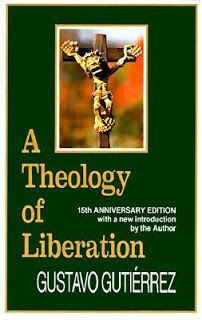
  photo TheologyLiberation_zps7e7e7172.jpg
 Liberation Theology Cross from Latin America

This morning the comment section was visited by a Frederik Froth who seems to beleive the atheist propaganda that Chrstianity can only be repressive.


Frederick Froth said...
Then of course there were the old style traditionalist Christian true believers who were very enthusiastic about Hitler and how he was prepared to deal with the Jews and anyone with whom he disagreed - all the genuine free-thinkers and non-conformists.
www.nobeliefs.com/nazis.htm

Plus why not check out what the catholic Croats did to the Serbs,
the Jews and almost everyone who was not a catholic and/or refused to "convert". All done with the nudge-nudge wink-wink approval and "blessing" of the vatican and the then pope. And how Anton Pavelic and his murderous hench-men were given safe refuge in the vatican and thence safe passage to South America - so too with many other nazi war criminals.
He seems also to buy into the propaganda that Hitler was a Chrsitain and that Nazism is somehow in tune with Christianity. While I must admit, shamefully, that a good many Christian minds these days have been brain washed by the right wing, history shows us that Christianity has also been a powerful force for liberation.


Modern atheist "wisdom" leads our atheist counterparts to contend that religion is dark and evil; God is a big meanie, and they try to stick Christianity with every social ill one can imagine, from cold breakfast to nuclear war. Some of their favorites include slavery, war, social oppression. These are suppossedly condoned in the Bible. What these great thinkers and paradigms of social insight have missed is the fact that Christianity has always been a major force for liberation and social reform. This has been true since Moses led the Israelites out of Slavery in Egypt (this became a powerful metaphor for slaves in America). In the early centuries of Christianity Christians such as Olympia, Deaconess of Constantinople spent their family fortunes to buy slaves so they could free them; they would rescue abandoned infants form under bridges (the ancient world's version of modern day abortion clinics). We know that the civil rights movement was largely motivated by the Bible. Civil rights workers tapped into an old tradition, very much at the core of the abolition movement, that found the Bible not a source of oppression but of encouragement and liberation. They did not call the major Civil rights organization "The Southern Christian Leadership Conference" for nothing! The major figure in the Civil Rights movement was not a minister for nothing. The link between the Bible and liberation goes way back, in the history of liberalism (first abolition group in America, Pheobe Palmer and the Methodist Woman's Association--same people did the first Women's Suffrage group in America) but also in the history of American social justice. But have we forgotten the Baragan brothers? Christianity and the Bible were a big influence upon the anti-war movement in the 60s as well. In fact we can find historically that Christianity has influenced and led to reform, revolution, and radical movements throughout history.
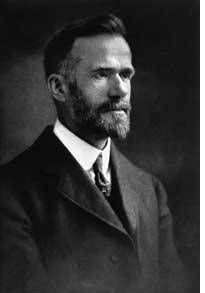

  photo walterrauschenbusch_zps9fdab00f.jpg
 Walter Rauschenbusch: Social Gospel
Theologian who avidly supported labor movement
early 20th century New York.

From Joachim of Flora and his thirteenth century revolt of the poor, to sixteenth century peasant revolts in south Germany, to the folks at Lo Chambo (who hid Jews from the Nazis and some of them died doing that--where Camus stayed when the wrote his great novel Le Peste--but I'm sure Avaols would find that of no intrinsic value, being literature and all.) The Ranters, the Levelers, The Diggers, the Quakers --all were revolutionaries or social activists inspired by the bible. Read he Journal of John Woolman to see how this major voice in the early abolition movement was inspired by the Bible. Also consult William Wilburforce, and the abolitionists of the early nineteenth century as well.

Avalos's arguments are themselves totally irrelevant, because he ignores liberation theology as though it doesn't exist. I was a seminary student and (if I do say so myself) a very active political activist in the Central America Solidarity Movement of the 80s. I can tell you liberation theology was a major movement of the day, and the Bible was a source of its inspiration. Liberation historians demonstrate that the Christian left is very old, and it has been involved in every movement in every time period including the beginning of Imperial Christianity, when Olympia the Deaconess gave away her family fortune to free slaves (Constantinople of the 300s). Most people begin to date liberation theology with the radical priests of the `60s. If they know the history of the modern movement, they begin with CLAMB and Christians for Socialism in the `50s. If they are really historically minded, they start with A Theology for the Social Gospel, by Walter Rauschenbusch. But, Rauschenbusch, while he could be viewed as a forerunner, and while he called himself a "Christian Socialist," may really represent the end of an older tradition of Christians in the labor movement of the late 19th century (his work was written in 1917). Those who came before him, in the labor movement, represent a vast movement of religiously minded reformers with antecedents in the Second Great Awakening, much of which Hudson documents. (Winthrop S. Hudson, Religion In America: A Historical Account of the Development of American Religious Life. Second ed. New York: Charles Scribner's Sons, 1965, 1973, 310-315.). Enrique Dussel uncovers a long history, far more indepth than we have time for here.



  photo camilo-torres.jpg

Father Camilo Torres Restrepo was a Colombian socialist, 
Roman Catholic priest, 
a predecessor of liberation theology and a member of the 
National Liberation Army guerrilla organisation. 1966 Wikipedia

The point is that the "religious left", including all forms of Christian socialism, and left-leaning social reformers, is very old and represents a whole world unto itself. It is well worth learning, and demonstrates the irony and tragedy of the current climate in the academy, a climate in which academics would rather feed their urge to bash religion rather than create a dialogue with thinkers who have access to a vast tradition they themselves know little about. (History and the Theology of Liberation. Maryknoll, New York: Orbis Books, 1976). Another excellent source is Smith's book on revivalism (Timothy L. Smith, Revivalism and Social Reform: American Protestantism on the Eve of the Civil War. Baltimore, London: Johns Hopkins University Press, 1957, 129-80.)

While many conservative readers of the CADRE may feel that they have another side to the issues of the Central America movement, one thing we can both agree upon, weather for good or ill: a large part of the support given the FSLN (National Sandinist Liberation Front--the "Frente", the dreaded "Sandinistas") and those who took part as Nicaraguans in that movement, drew their inspiration from their Christian faith.

For a strong sense of the crucial nature of religion to the struggle in Latin America see Penny Lernoux's book, (Penny Lernoux, Cry of The People. Penguin Books, 1982. 29-30). Let us remember priests such as Father Camillio Torres, who was the first priest, but not the last, to take up arms in the struggle. He died in Colombia in 1966. His example sparked much interest in liberation movements throughout Latin America. For a look at religious involvement in the Nicaraguan revolution in particular, see Margaret Randal, Sandino's Daughters: Testimonies of Nicaraguan Women in Struggle. (Vancouver, Toronto: New Star books, 1981.) The example of Thomas Borge in Nicaragua, the FSLN Minster of Interior, is awe-inspiring in that he confronted the torturer who tortured him and killed his wife. He forgave the man and let him live because Borge had become a Christian and read in the Bible to turn the other cheek and forgive. Nothing is more touching than the letter he wrote to Father Ernesto Cardinal about his new found faith. Borge was the leader of the FSLN, the "Sandinistas" in Nicaragua. He was one of the first to help start the Sandinista party. Some might argue that his commitment to religious belief was mere propaganda; but, while he was yet a guerrilla on the run in the mountains, he sent for a priest (Ernesto Cardinal, later to become a member of the Sandinista party). He wished to discuss religion with the priest. The simple note he sent is one of the most moving documents of the Latin American struggle.

"I knew a God who joyfully rang the church bells and dressed up when General Somoza visited León... a God who forgave the heavy sins of the rich... I slew that God without mercy within my conscience. It would seem, however, that God does not wish to die. In the jungles of Colombia there has been a new Bethlehem. Camilio Torres told us before dying, or perhaps told us in dying. Father I await you..."

The priest made his way through the mountains to talk with the revolutionary, and the Nicaraguan revolution kicked in the womb. (Andrew Reding, Christianity and Revolution: Tomás Borge's Theology of Life. Maryknoll, New York: Orbis Books, 1987.) Liberation Theology was spreading to South Korea and all of Asia as the Berlin wall came down. (see James H. Cone, Minjung Theology: People as the Subjects of History. ed. by the Commission on Theological Concerns of the Christian Conference of Asia. Maryknoll, New York: Orbis Books, 1981)

I have no problem with finding more scholars to read more ancient texts that are now being ignored. The study of the Bible is not forcing anyone away form such study. Dr. Avalos himself could have chosen to spend his time studying these texts--then we would be enlightened by his brilliant scholarship!

People are ignorant of the Bible; we need more scholars to teach it. Ignoring the Bible is not the answer. The Bible is not all there is to the Christian tradition. Christianity is a living tradition, with many sources, not the least of which is one's own inner life. The inner life consists of prayer, but also intellectual understanding, literacy, and not just how to read the labels of aspirin bottles but an understanding that there is a world of letters. I cannot abide academics who hate the world of letters. This is the essence of the one-dimensionalizing tendencies of atheism and reductionism that the PC crowd have taken up--and Avalos is their spokesperson. They want to further one-dimensionality at the expense of Western culture. The Bible is at the heart of Western culture. Avalos wants to persuade us that Biblical values are ancient-world and thus foreign to us, but they are the heart of our culture. All of our modern values are the grandchildren of Biblical values. Democracy; autonomy; selfhood; the individual; basic human rights; humane treatment of the poor; worker's rights; even modern science--it all comes out of the Christian tradition.

Arnold J. Toynbee observed that Christianity freed humans from the cyclical understanding of time. Christianity made “history” in the modern sense possible. Ancient paganism, the texts with which Avalos wants to replace Biblical studies, would not have allowed us progress in history, or even a modern concept of history at all; they were focused upon the eternal return of the god/goddess from winter to spring. The same things over and over again. But Jesus died and rose once for all, and then we venture forward in time toward an eschatological horizon. There will be no end of history. History will continually sublate itself until the final and once for all return of Christ.

We can make progress. But we can only make progress if we remember who we are and where we came from. We cannot abandon the inner, the world of books and letters, our ability to think, faith in God, or our understanding of culture as it was and as it will be. This makes the Bible far more relevant than anything, and it means that people with Ph.D's in Biblical studies have an awesome responsibility: a responsibility to promote the world of letters, not to abort it. One is called to teach, not to persuade the student to give up learning. We need to learn more about the Bible. We need to talk up the Bible, we need to educate people on it, and we need to help students develop their own little worlds lined with books so they can understand the interrelationship between the Bible and the culture. I fear this is something for which many of our modern teachers are not equipped.


Notes on Sources


1 Matthew L. Lamb, Solidarity with Victims: Toward a Theology of Social Transformation. New York: Crossroad, 1982, 122.

 2 Barry Katz, Marcuse and The Art of Liberation: An Intellectual Biography.Verso, 1982, 200.

 3 A. Daniel Frankforter, A History of The Christian Movement: The Development of Christian Institutions. Chicago: Nelson-Hall, 1978, 170. See Also, Karl Marx and Frederick Engles,The Communist Manifesto . New York: International Publishers Co. inc. 1948, 1984 ed. 33. Granted, Marx didn't think much of "Christian Socialism" in the middle ages, which he called ":Feudal Socialism." "Nothing is easier than to give Christian asceticism a Socialist tinge. Has not Christianity declaimed against private property...? Christian socialism is but the Holy Water with which the priest consecrates the heart burnings of the aristocrat." Granted, history was waiting for Marx to come and introduce true socialism. But, the socialism of the middle ages was more diverse than that. It existed in the monasteries as a monastic form, along side early capitalism, but it also existed among the peasants and in revolutionary form. And there were thinkers, such as Joachim of Flora who led a peasant revolt to bring on the end of times.

4 Enrique Dussel, History and the Theology of Liberation. Maryknoll New York: Orbis books, 1976. Dussel uncovers a long history, far more indepth than we have time for here. The point being, the "religious left," including all forms of Christian socialism, and left leaning social reformers, is very old and represents a whole world unto itself. It is well worth learning, and demonstrates the irony and tragedy of the current climate in the academy, a climate in which academics would rather feed their urge to bash religion rather than create a dialogue with thinkers who have access to a vast tradition they themselves know little about.

 5 Winthrop S. Hudson, Religion In America: A Historical Account of the Development of American Religious Life. Second ed. New York: Charles Scribner's Sons, 1965, 1973, 310-315. Most people begin to date liberation theology with the radical priests of the `60s. If they know the history of the modern movement, they begin with CLAMB and Christians for socialism in the `50s. If they are really historically minded, they start with A Theology for the Social Gospel , by Walter Rauschenbusch. But, Rauschenbusch, while he could be viewed as a forerunner, and while he called himself a "Christian Socialist," may really represent the end of an older tradition of Christians in the labor movement of the late 19th century (his work was written in 1917). Those who came before him, int he labor movement, represent a vast movement of religiously minded reformers with antecedents in the second great awakening, much of which Hudson documents.


6 Timothy L. Smith, Revivalism and Social Reform: American Protestantism on the Eve of the Civil War. Baltimore, London: Johns Hopkins University Press, 1957, 12980.

 7 Penny Lernoux, Cry of The People. Penguin Books, 1982. 29-30. Torres was the first priest , but not the last, to take up arms in the struggle. He died in Colombia in 1966. His example sparked much interest in liberation movements throughout Latin America.

 8 Andrew Reding, Christianity and Revolution: Tomás Borge's Theology of Life.Marknoll, New York: Orbis books, 1987. Borge was the leader of the FSLN, the "Sandinistas" in Nicaragua. He was one of the first to help start the Sandinista party. Some might argue that his commitment to religious belief was mere propaganda, but , while he was yet a gorilla on the run in the mountains, he sent for a priest (Ernesto Cardenal, latter to become a member of the Sandinista party). He wished to discuss religion with the priest. The simple note he sent is one of the most moving documents of the Latin American struggle. "I knew a God who joyfully rang the church bells and dressed up when General Somoza visited León..a God who forgave the heavy sins of the rich...I slew that God without mercy within my conscience. It would seem, however, that God does not wish to die. In the jungles of Colombia there has been a new Bethlehem. Camilio Torres told us before dying, or perhaps told us in dying." The priest made his way through the mountains to talk with the revolutionary, and the Nicaraguan revolution kicked in the womb.

9 For a strong sense of the crucial nature of religion to the struggle in Latin America see Penny Lernoux's book, op. cit. For a look at religious involvement in the Nicaraguan revolution in particular, see Margaret Randal, Sandino's Daughters: Testimonies of Nicaraguan Women in Struggle. Vancouver, Toronto: New Star books, 1981.

10 James H. Cone, Minjung Theology: People as the Subjects of History. ed. by the Commission on Theological Concerns of the Christian Conference of Asia. Maryknoll, New York: Orbis books, 1981. Minjung means "mass of the people," as in "a great crowd." It is a theology specific to South Korea, where they are not allowed to use the term "the people" because the government fears the spread of Maoism. But, this is one example of a liberating style theology spreading over Asia.

see also Hitler was not a Christian

Wednesday, September 4, 2013

Buddhism is not Atheism

 photo buddhism_zps211fbce0.jpg


I've seen atheists argue that Buddhists are atheist, that in general Buddhism can be counted as part of atheism. Some even go so far as to try and make it sound as though all eastern religion is part of atheism. I thin there are many reasons why atheists take this tact. Some may feel that anything that's not Christianity is supportive of atheism. I've long held that for some atheists atheism is nothing more than anti-Christianity. I think a large portion of atheism try to inflate their numbers becuase they cant' stand being in such a tiny fringe minority and they want to feel that their view are more represented. I've known for a long time that Buddhism is not atheistic. I final saw some atheists say these things too many times so I decided to just prove it. Here are a couple of the statements that drove me to action recently on CARM.


 Celtic Spice

Most Buddhists are atheists, and forgiveness and compassion are important principles in Buddhism. To see a Buddhist, atheist or otherwise, not practicing forgiveness and compassion would be a strange thing indeed to behold.


 ChelVanin

 Indeed. And I could be mistaken here but I believe the same is true for most Jainists, and non-violence and empathy towards all living beings is the fundamental tenet of Jainism.

That's a totally Western idea that's been nursed by the atheist propaganda.

While it is true that Buddhism rejects the idea of a power individual who created the world, that concept is analogous to the "big man in the sky." Rejecting that is not on a par with being atheists, it's on a par with what Tillich did. In fact Tillich himself studied Buddhism when he first really got deeply into it he said "this is what I've been saying about God." He saw the idea of eternal Buddha as equivalent to Being itself.

God in Buddhism

"Some variations of Buddhism express a philosophical belief in an eternal Buddha: a representation of omnipresent enlightenment and a symbol of the true nature of the universe. The primordial aspect that interconnects every part of the universe is the clear light of the eternal Buddha, where everything timelessly arises and dissolves.[22][23][24]" (for FN see below)

Eternal Buddha

"The idea of an eternal Buddha is a notion popularly associated with the Mahayana scripture, the Lotus Sutra, and is also found in other Mahayana sutras."

my brother was a Buddhist. I studied Buddhism when I was an atheist. Not because I thought it was atheism. I was just searching, not to become religious but to know what's going on.


Atheists try to claim every non Christian as an atheist. This makes me think atheism is really nothing more than anti-Christianism. I know that's not true of atheists who grow up atheist but I think a klot of former fundies who have gone over are just in the Christian hater club. I think they are doing it because they really think of themselves as Superior kind of fundie.

I've even seen atheists claim that Hindus are atheist. Then their Deist who tires to say that there is no Christian religion, that all Chrsitians have such different ideas that they can't count as one faith. It that is proof that atheism is a brain wash cult.They can't understand the concept of diversity.

Here's a long quote from the original article that shows that (1) Buddhims is very diverse and just as "incoherent" and "mixed up" as these atheist think Christianity is. It also shows that Buddha's original teaching as reflected in the Pali canon (and we don't know who wrote it) did not reject the idea of a God.

http://en.wikipedia.org/wiki/God_in_...es_of_creation


Reflecting a common understanding of the Buddha's earliest teachings, Nyanaponika Thera asserts:

From a study of the discourses of the Buddha preserved in the Pali canon, it will be seen that the idea of a personal deity, a creator god conceived to be eternal and omnipotent, is incompatible with the Buddha's teachings. On the other hand, conceptions of an impersonal godhead of any description, such as world-soul, etc., are excluded by the Buddha's teachings on Anatta, non-self or unsubstantiality. ... In Buddhist literature, the belief in a creator god (issara-nimmana-vada) is frequently mentioned and rejected, along with other causes wrongly adduced to explain the origin of the world.[69]

In addition, nowhere in the Pali Canon are Buddhas ascribed powers of creation, salvation and judgement. In fact, Buddhism is critical of all theories on the origin of the universe[70] and holds the belief in creation as a fetter binding one to samsara. However, the Aggañña Sutta does contain a detailed account of the Buddha describing the origin of human life on earth. In this text, the Buddha provides an explanation of the caste system alternate to the one contained in the Vedas, and shows why one caste is not really any better than the other.[71] According to scholar Richard Gombrich, the sutta gives strong evidence that it was conceived entirely as a satire of pre-existing beliefs,[72] and he and scholar David Kalupahana have asserted that the primary intent of this text is to satirize and debunk the brahminical claims regarding the divine nature of the caste system, showing that it is nothing but a human convention.[73][74] Strictly speaking, the sutta is not a cosmogony, as in Buddhism, an absolute beginning is inconceivable. Since the earliest times Buddhists have, however, taken it seriously as an account of the origins of society and kingship.[72] Gombrich, however, finds it to be a parody of brahminical cosmogony as presented in the Rig Vedic "Hymn of Creation" (RV X, 129) and BAU 1, 2.[75] He states: "The Buddha never intended to propound a cosmogony. If we take a close look at the Aggañña Sutta, there are considerable incoherencies if it is taken seriously as an explanatory account - though once it is perceived to be a parody these inconsistencies are of no account." In particular, Gombrich finds that to view the Aggañña Sutta as a truthful account violates the basic Buddhist theory of how the law of karma operates, as Gombrich argues that beings cannot possibly be born in a realm (Streaming Radiance) higher than the Maha Brahma realm only to fall back to such a low realm of existence on Earth, and eventually succumb to sense craving as the first beings in a re-evolved human realm.[76] However, scholars Rupert Gethin and Brahmana Metteyya strongly disagree with Gombrich's complete dismissal as satire of the Aggañña Sutta.[77][78 
 Razib Khan

Evolutionist. Geneticist. Atheist. Reactionary.
(his self identification*)

Discover, Science for the Curious

"But there’s a bigger issue with this objection: most Asians who identify as Buddhist are themselves theists. This is also the case for American Buddhists. Some people have objected that theism in a Buddhist context is not equivalent to theism in a Hindu, and especially Abrahamic sense. There is no creator god obviously. That is fine, but I think it is important to point out that no matter the theological details of their beliefs, most Buddhists do seem to accept the existence of supernatural entities which we would term “gods.” I was aware of this personally because I’ve encountered several people of Chinese origin who tell me that they’re Buddhist, they believe in god, when I tell them I’m an atheist (usually in response to the question about whether I am Muslim)."


*

22 = http://hhdl.dharmakara.net/hhdlquotes22.html
23 =
Dr. Guang Xing, The Concept of the Buddha, RoutledgeCurzon, London, 2005, p. 89
24=
^ Hattori, Sho-on (2001). A Raft from the Other Shore : Honen and the Way of Pure Land Buddhism. Jodo Shu Press. pp. 25–27. ISBN 4-88363-329-2.


 65-78
  1. John Paraskevopoulos, The Call of the Infinite: The Way of Shin Buddhism, California, 2009, p. 43
  2. ^ John Paraskevopoulos, The Call of the Infinite: The Way of Shin Buddhism, California, 2009, p. 81
  3. ^ Kannakatthala Sutta, (MN-90)
  4. ^ Pali Tripitaka, Sutta Pitaka, Samaññaphala Sutta
  5. ^ " bBuddhism and the God-idea" by Nyanaponika Thera[3]
  6. ^ Brahmajala Sutta (DN 1)
  7. ^ M. Walshe: The Long Discourses of the Buddha, p. 407: "On Knowledge of Beginnings", Somerville, MASS, 1995.
  8. ^ a b Richard Gombrich, How Buddhism began: the Conditioned Genesis of the Early Teachings. Continuum International Publishing Group, 1996, page 82.
  9. ^ Richard Gombrich, Theravada Buddhism: A Social History from Ancient Benares to Modern Colombo. Routledge and Kegan Paul, 1988, page 85: [4].
  10. ^ David J. Kalupahana, Mūlamadhyamakakārikā of Nāgārjuna: The Philosophy of the Middle Way. Reprint by Motilal Banarsidass Publ., 1991, page 61: [5]
  11. ^ Richard Gombrich, How Buddhism began: the Conditioned Genesis of the Early Teachings. Continuum International Publishing Group, 1996, page 81.
  12. ^ Richard Gombrich, How Buddhism began: the Conditioned Genesis of the Early Teachings. Continuum International Publishing Group, 1996, pages 82-83.
  13. ^ Brahmana, Metteyya. Book Review: What the Buddha Thought, by Richard Gombrich [6]
  14. ^ Gethin, Rupert. "Cosmology and meditation: from the Agganna Sutta to the Mahayana" in Williams, Paul. Buddhism, Vol. II. Routledge 2004. ISBN 0-415-33228-1 pgs 104, 126 [7]

Monday, September 2, 2013

New Atheist Ideology Disected and Disproved

Photobucket


Andrew Brown, author of Fishing in Utopia (review) (won the Orwell prize)

New atheism is a political movement and not an Intellectual one:

Brown's blog on the Guardian site
In part this is difficult because the new atheism is largely a political and social rather than an intellectual movement. In some ways it can be understood as the canary in the coalmine of American power and exceptionalism.
this guy is an expert in ideology. This guy knows ideology when he sees it. He distills an idea for New Atheism (which proves one of my major assertions). His method for piecing together the ideology is to find the communality in the works of the major leaders of their movement, the major New Atheist writers.

The ideas I claim are distinctive of the new atheists have been collected from Richard Dawkins, Sam Harris, Christopher Hitchens, Jerry Coyne, the American physicist Robert L. Park, and a couple of blogging biologists, P Z Myers and Larry Moran. They have two things in common. They are none of them philosophers and, though most are scientists, none study psychology, history, the sociology of religion, or any other discipline which might cast light on the objects of their execration. All of them make claims about religion and about believers which go far beyond the mere disbelief in God which I take to be the distinguishing mark of an atheist.

These are the ideas:


There is something called "Faith" which can be defined as unjustified belief held in the teeth of the evidence. Faith is primarily a matter of false propositional belief.
The cure for faith is science: The existence of God is a scientific question: either he exists or he doesn't. "Science is the only way of knowing – everything else is just superstition" [Robert L. Park]
Science is the opposite of religion, and will lead people into the clear sunlit uplands of reason. "The real war is between rationalism and superstition. Science is but one form of rationalism, while religion is the most common form of superstition" [Jerry Coyne] "I am not attacking any particular version of God or gods. I am attacking God, all gods, anything and everything supernatural, wherever and whenever they have been or will be invented." [Dawkins]
In this great struggle, religion is doomed. Enlightened common sense is gradually triumphing and at the end of the process, humanity will assume a new and better character, free from the shackles of religion. Without faith, we would be better as well as wiser. Conflict is primarily a result of misunderstanding, of which Faith is the paradigm. (Looking for links, I just came across a lovely example of this in the endnotes to the Selfish Gene, where lawyers are dismissed as "solving man-made problems that should never have existed in the first place".)
Religion exists. It is essentially something like American fundamentalist protestantism, or Islam. More moderate forms are false and treacherous: if anything even more dangerous, because they conceal the raging, homicidal lunacy that is religion's true nature. [Sam Harris]
Faith, as defined above, is the most dangerous and wicked force on earth today and the struggle against it and especially against Islam will define the future of humanity. [Everyone]
All of these propositions will be found in the authors I have cited as well as in the comments to religious articles here. I sometimes think that only the last two are unique to the new atheists: you can certainly find the others in earlier authors. But those are the six doctrines which I would reject when saying rude things about the new atheists.
let's take them one at a time:

There is something called "Faith" which can be defined as unjustified belief held in the teeth of the evidence. Faith is primarily a matter of false propositional belief.
This is nothing more than the message board atheist fallacy about the nature of faith. The Faith article in Westminster Dictionary of Theology is like two huge pages of small type. It's much too complex to just pack into this loaded self serving ideological propaganda slogan. "unjustified bleief" no believer accepts that faith is unjustified and thus this is not a definition but a slogan. The Westminster article show that faith means as much "faithfulness" or commitment as it does placing confidence in an hypothesis. Faith is placing confidence in a hypothesis toward the end of making a commitment and remaining faithful to the placing of such confidence.

The cure for faith is science: The existence of God is a scientific question: either he exists or he doesn't. "Science is the only way of knowing – everything else is just superstition" [Robert L. Park]
Of course we only need a cure if there's an illness. There is no such illness because faith is not a negative. Of course the existence of God is not a scientific question. I've disproved this and written about why it's not many times.

the phrase in that point science is the only way of knowing is the atheist fortress of facts concept that I've talked about many times. Everytime I've brought it up on CARM they deny it then go on to prove I'm right by embracing it. So they deny it with one breath and embrace it with the next. Anyone who really knows much about history and Philosophy of scinece knows this is BS.

Science is the opposite of religion, and will lead people into the clear sunlit uplands of reason. "The real war is between rationalism and superstition. Science is but one form of rationalism, while religion is the most common form of superstition" [Jerry Coyne] "I am not attacking any particular version of God or gods. I am attacking God, all gods, anything and everything supernatural, wherever and whenever they have been or will be invented." [Dawkins]
The identification of reilgion with superstition belies all the talk about reason. When we actaully get around to apply some reason we see their argument is merely circular reasoning. They will say "theology is stupidity" but demand that they quote some theologian to prove its' superstition they say "I have not read theology, I don't to read it because I know it's stupid." That sort of anti-intellectual clap trap is a higher crime against reason. Reason is the last these jokers really believe in. The Dawkins statment at the end is the most anti-intellectual piece of crap ever uttered.

They are making the assumption that scienc eis reason but it's actually oppossed to reason because that concept contradicts what is said above about scinece being the only from of knowledge. Atheist disparage logic as a means of understanding the world. They deny that there is any other form of knowledge. Logic is a from of reason. Reason is not empircal observation. So therefore they are actually contradicting because reason is a competeing form of knowledge to empirical science.


In this great struggle, religion is doomed. Enlightened common sense is gradually triumphing and at the end of the process, humanity will assume a new and better character, free from the shackles of religion. Without faith, we would be better as well as wiser. Conflict is primarily a result of misunderstanding, of which Faith is the paradigm. (Looking for links, I just came across a lovely example of this in the endnotes to the Selfish Gene, where lawyers are dismissed as "solving man-made problems that should never have existed in the first place".)
Here we have one of the most interesting. It's not only working from the myth of progress that modernity loves define itself by (thus demonstrated that it's an outmoded way of thinking--disproved by Postmodernism) but it also reads like an eschatology. This marks it as a true aspect of ideology. All ideologies have an eschatology, an end times, a end point toward which the great struggle of the ideological vanguard resolves itself in their victory. Check out past versions:


Christianity: Return of Christ in the end times

Marxism: Worker's paradise

Black Muslims: Black Supremacy

Feminism: Gynarchy (matriarchy)


there the new atheists have the scientific post religious society. this more than anything proves it's an ideology. The rest of the points are just rehashes. They have all the aspects of an ideology:

a exigence, a villain, a vanguard, a audience, a great struggle, an eschatology


Marxism:

exigence: exploitation of the working class.
villain: Capitalism
Vanguard: communist party
audience: workers
great struggle: class warfare
eschatology: worker's paradise.

Works with any ideology one cares to name.

Nation of Islam:

exigence: exploitation of the black race
Villain: White race
Vanguard: Fruit of Islam (black Muslims)
Audience: Black people
great struggle: racism
eschatology: Black society becomes dominate society.

new Atheism:

existence: faith prominent in society
Villain: religion
Vanguard: new atheists
Audience. people who hate religion
great struggle: to destroy religion
eschatology: scientific society post religious.

Having an ideology doesn't' necessary make people wrong. Both Marxists and Black Muslims have their salient points. New atheists, however, are totally afraid to admit they have an ideology. They will never admit it. Even the loyal opponent Hermit is still avidly denying that there is one. Which is odd becuase they seem to think they are the only valid view point there is.