
Showing posts with label phenomenology. Show all posts

Monday, July 1, 2013

Atheist's misconceptions about Metaphysics

Photobucket


Atheists have many misconceptions about the term. Most of the time they seem to think it means some special way or argument for God, or that's synonymous with their screwed up understanding of "supernatural" (which is not the right definition of that term either but that's another story).

standard misconception that Metaphysics is about "things beyond the physical" that's not true. AT least not necessarily. For exampel the question of free will is a metaphysical question and the will is a real thing it's not a concrete thing in the physical. The question about mental vs physical is a metaphysical question.

Stanford encyclopedia.
"Metaphysics"

It is not easy to say what metaphysics is. Ancient and Medieval philosophers might have said that metaphysics was, like chemistry or astrology, to be defined by its subject matter: metaphysics was the “science” that studied “being as such” or “the first causes of things” or “things that do not change.” It is no longer possible to define metaphysics that way, and for two reasons. First, a philosopher who denied the existence of those things that had once been seen as constituting the subject-matter of metaphysics—first causes or unchanging things—would now be considered to be making thereby a metaphysical assertion. Secondly, there are many philosophical problems that are now considered to be metaphysical problems (or at least partly metaphysical problems) that are in no way related to first causes or unchanging things; the problem of free will, for example, or the problem of the mental and the physical.


Conversely the idea that metaphysics is just making things up is also obviously false since the will and the mental and the physical are not made up.

Misconceptions:

I. Metaphysics is about magic, supernatural or made up stuff

That's was disproved in the things said above. In Heidegger's version of metaphysics scinece is a form of metaphysics.

II. we can't test or verify anything about metaphysics

Modal logic is a limit on any metaphysical construct. Other kinds of logic as well, also assist. We don't need to empirical investigation to know that there are no square circles. We can rule them out with logic. so logic can tell us things. Obviously we are not going to build a rock with just logic. We can use logic to screen metaphysical ideas.

III. That metaphysics is about magic and psychic powers.

Nope it's not, not at all. As I said in Heidegger's view science is metaphysics.


IV. That Christians have to support metaphysical thinking.

false. Especially if one is a Heideggerian Christian because in Heidegger's terms metaphysics is a bad thing. For Heidegger metaphysics is herding or grouping sense data into pre conceived categories. That's actually what reductionism is doing. Reductionism and naturalism are both metaphysics.

There are two major thinker's whose views of metaphysics I go by. One is Heidegger the other is Bruce Wiltshire.He is a professes emeritus at Ruttger's University.


He wrote a book called Metaphysics: An Introduction to Philosphy

He defines metaphysics as talk about talk about the world. That's tricky because you might think it's just "talk about the world." It's not talking about the world, it's talking about how to talk about the world. so metaphysics for him is a methodological procedure.

I think what both of these views have in common is that they are about how to organize knowledge about the world. For me that's my idea of metaphysics how to organize knowledge, organizing it in a way that it's all put into preconceived categories.

So the same reasons that make me dislike reductionism also make me dislike metaphysics.
For me as with Heidegger the alternative is phenomenology, which means allowing the sense data to suggest their own categories.When one says "Metaphysics is no good it's just making things up," Or "there's no God" or "scinece is the only form of knowledge" one is doing metaphysics. You guys don't even know it but most of you are doing metaphysics all the time.

An example of metaphysics would be Tillich's ideas about the depth of being. Tillich's theological method, is a good example of metaphysical work that's almost scientific and offers more than just speculation. Depth of being is an example of metaphysics.
Tillich equates knowing that being has depth with knowing that God is real. This will be the basis of the “realization” that is the end goal and object of my work in this regard. The development of an alternative to endless arguments that must be taken on faith before they prove anything is moving toward an understanding of realization as the alternative to argument. We have seen this quotation before but I will use it here again:
"The name of infinite and inexhaustible depth and ground of our being is God. That depth is what the word God means. And if that word has not much meaning for you, translate it, and speak of the depths of your life, of the source of your being, of your ultimate concern, of what you take seriously without any reservation. Perhaps, in order to do so, you must forget everything traditional that you have learned about God, perhaps even that word itself. For if you know that God means depth, you know much about Him. You cannot then call yourself an atheist or unbeliever. For you cannot think or say: Life has no depth! Life itself is shallow. Being itself is surface only. If you could say this in complete seriousness, you would be an atheist; but otherwise you are not."[i]
This is not a literal one-to-one correspondence. When one concludes that being has depth one has not proved the existence of God in the sense that the ontological argument is supposed to do. This is not a priori truth. It is more than just a “rhetorical” statement. The statement is hermeneutical and ontological although not literal. The quotation itself tells us why he says that if we know being has depth we can’t be atheists. He equates depth of being with the source of being, the source of life, and he tells us that the term “God” means depth. Literally the word “God” does not mean “depth.” He’s saying that the concept of God in modern theology and in the Christian tradition has always been that God transcends the level of mere things in creation. Depth of being means that being is not just the fact of things existing, nor is it only a surface understanding of the causes of things around us. The depth of being is the big picture, the idea that being is more than what we observe empirically, it is the spiritual sense, depth in in profundity. He actually uses the term “depth” in more than one sense; suffering as in depth of despair, profundity, as in “deep meaning,” and transcendence, beyond the surface level. All of these uses are embodied in his essay.[ii] According to this statement, when we come to realize that there’s a lot more to being than just surface fact of existence, then we understand that God is real. Thus God and the depth of being are equated. This is because God is not a big man in the sky, but rather, God is the power of being, that to say the ground upon which all is has come to be and in which it coheres and continues. In the last chapter I discussed the possibility that this is the power of mind to perceive or to think the universe. The connection between the possibilities of consciousness as the basis of reality and the philosophical questions raised by this notion, as well as others related to it, form the basis of a good place to start exploring the depth of being.
In the previous chapter I discussed the hard problem of human consciousness. In the opening chapter I discussed philosophical questions at the epistemic level that science cannot answer. The fact that these questions cannot be answered by empirical research or observation is a good indication that there is a depth being beyond the surface of things existing. This in and of itself proves that being has depth. The fact that we have these questions to ask, they mean something to most people, and we can answer them through science, which is to say, through empirical observation of the surface of fact of existence or thing-hood, indicates that there is a depth there that be probed through reason. The hard problem of consciousness is one of those issues. There are many focal points that highlight these kinds of questions and demonstrate the depth of being. Many of these can be used as God arguments, and the traditional God arguments can be used as focal points for reflection upon the depth of being. In the subsequent chapter I will deal with God arguments. For now I want to focus upon the major issues of the depth of being. The point is that in understanding the depth of being one is forced to confront the realization of the reality of God. Since my overall point is to produce a theology of the realization toward a new apologetic, these “focal points,” are like stepping stones that lead us down the path to realization.
In his essay The Shaking of the foundations,[iii] Tillich discusses depth of benig and some things have been said about that already (chapter 3). At this point, however, I will depart from Tillich’s organizational scheme but not from is basic thought and intent. There are what I like to call “deep structures” in reality that can be observed, or teased out. These deep structures can be organized into ideas that might serve to illustrate the point of depth of being, or might ever serve the function of arguments either for the reality of God or for the rational nature of belief. This is what I call the “focal points,” or a term of my invention I also like, “signifiers of depth.” The signifiers of depth highlight the deep structures. These consist of Tillich’s ontological categories. These categories are empirically derived forms of speaking. Because they are ontological, considered with the nature of being, they are in everything, not limited to religion. We make our world out of the categories, which determines the content. When I say “our world” I mean the world of our constructs, the world in our minds that consists of what we understand and how we understand it. The cause of the big bang is not part of this world because we don’t understand it or observe it. The attitudes we perceive in others may be mysterious or they may be understood wrongly or rightly but what we perceive about them is part of the world of our constructs because we perceive and it registers upon our understanding in some way. It is out of this amalgam of understood constructs that the categories are forged. This is all empirically deduced by Tillich.[iv] The categories do not include the unconditioned (God) because it transcends our understanding. But we have ideas about God that are derived from experiences and teachings and these are part of the categories, but they are not the uncontained, they are not the reality of God they are perception of God.
The categories are:
Being and non being, and the forms finitude.[v]
The forms of finitude:
*time: central to finitude because it limits being
*space: to be special is to be limited by the possibility of non being
*causality: determinate of being enables symbol and logical interpretation
*substance: the nature or mode of being
When Tillich gets even more specific forms of finitude include at some point self and the world. Much was said about self and the world in chapter 3. Tillich teases out problems of insecurity relating to each category:
*temporal (finitude) = we die.
*spatial = limitation of space (another form of finitude) remind us that we are limited in duration and in reach.
*causality = remind us of being and non being
*substance = we limited to accidents of being;
All of these produce anxiety at the prospect of non being (death). This is where Tillich plugs in the object of ultimate concern. The fact that we have an ultimate concern and that we can be bothered by the prospect of our finitude and cessation of being points to the deep structures of reality; it shows us that there’s more there than just the fact of existence, there’s the fact of cessation of existence and that it bothers us. Sometimes atheists try to deny that they have an ultimate concern or that they care about death. Even if one doesn’t feel the ultimate concern it’s logically there, and all one need do is to read the literature of the world to know that for most of humanity death is the ultimate concern.
Some atheists or skeptics might be inclined to say this is all just speculation and can’t be proved. Actually there is no reason to doubt any of this so far. We can deduce all of this; Tillich says it’s empirical, from the universally expressed observations and aspirations of humanity. These ideas, there is time, there is space, there is ultimate concern, time and space are forms of finitude and they remind us we are going to die, this is hardly arcane metaphysics or the ravings of a mad man. These are things most great writers throughout human history have said in one way or anther. The relationship of duration to finitude is deductive and hardly brain surgery. From these categories, that are more or less universally understood, we derive equally basic epistemological questions. These basic epistemological questions are indicative of the meaning and nature of being; they are born out of the way our insecurities about our own being strike us. We caused to reflect upon what we know and how we know it. The fact that we are caused to reflect upon such basic aspects is indicative of deep structures in being; since being is more than just a surface inventory of things that exist, but must be understood in relation to how we know what we know, there is reason enough to consider that being has depth. These questions may sound silly to the uninitiated in philosophy, but they have a serious purpose in being asked. This has already been presented in chapter 1. Questions such as “why is there something rather than nothing?” “Why am I here?” “What is life about?” The very fact of these questions, and that they are asked seriously and at times with great longing indicates to us the depth of being.
Deep s

[i] Tillich, Shaking of the foundations 0p cit, (see chapter three) 52.
[ii] Ibid, 52-53
[iii] Ibid
[iv] Tillich, Systematic I. 197
[v] Tillich, Shaking… op cit 197=200

Wednesday, March 13, 2013

My Answer To Jeff Lowder on Bayes, Part 2

His part 2 answer to mine is here


....Before getting into specifics I think it's important to understand the basic difference between the orientation of a believer and a skeptic. The kind of skeptics that tend to make up most of the atheist ranks on the net are scientifically inclined people who view the world through the lens of some kind of scientific orientation. Believers tend to be more "liberal arts"oriented in that their top concerns are not scientific proof. I have observed time after time the atheist constantly a mistake in thinking that the reason to believe in God is because one needs to explain that world. That is catered to by God argument, but God arguments are attempts to reach out to others so they embody the concerns of non believers. The reason for belief in God is not to explain the world. Atheist think this so they always oriented things in those terms. This is will be important in the discussion below becuase Mr. Lowder is constantly saying things about hypothesis. one of my major arguments is that belief is not an hypothesis. It' snot an attempt to explain the world, at least not in the same kind of scientific terms. Thus the arguments he makes taht embody the idea of competing explanatory power are non applicable.
 ....Lowder never comes to terms with my core reason for assuming that Bayes can't deal with God. He seems to understand the basic reason itself but rather than answering it he puts it into a frame work that tries to cast aspersions on it then uses red herrings and white rabbits to divert attention form the inadequacy of not answering the issue:

Again, Metacrock claims that we can’t use BT to measure the probability of God’s existence. Why? Because BT is not good
for determining the answer to questions about reality that are philosophical by nature and that would require an understanding of realms beyond, realms of which we know nothing.
In other words, Metacrock seems to embrace a kind of so-called “skeptical theism,” according to which we don’t have sufficient knowledge in order to measure the probability of certain items of evidence on theism (such as, but not limited to, evil). That position is a double-edged sword, however, for it implies that we also don’t have sufficient knowledge to conclude that certain items of evidence (such as, say, fine-tuning) are more probable on theism than on naturalism.

 I'll accept that assessment provisionally for now. In response to it Lowder argues that we can use Bayes to undrstand God's existence. In so saying he's already lost becuase he doesn't understand where I'm coming from, which Tillich, and that means we can't speak of God "existing." So it sounds like he's got hold of the actual argument but really he doesn't deal with it. He's right that I think Bayes can't used to access the reality of God becuase God is beyond our understanding and not subject empirical data. He says this is wrong but then instead of proving other wise he shifts to a bait and switch. He says:

As Doug Hubbard writes, “We use probabilistic methods because we lack perfect data, not in spite of lacking it. If we had perfect data, probabilities would not be required.”[1] Furthermore, “It is a fallacy that when a variable is highly uncertain, we need a lot of data to reduce the uncertainty. The fact is that when there is a lot of uncertainty, less data is needed to yield a large reduction in uncertainty.”
 But that's in a different sense really. It's true that probability is used becuase we don't have specifics and we trying to find a general range by extrapolating inductively. That is not a guarantee that we can find it. Probability can only pertain to that which is within our grasp empirically. If we do not have empirical data of something we can't make a probability for it. On the other hand, if we have other reasons to see it as a certainty then it has no probability. A certainty is not probable. These are two separate reasons why BT can't tell us about God's reality. Especially since the certainty can't be understood in the empirical way that scinece demands. Just becuase we say we are getting at something doesn't' mean we really are. How can we know if we are, if it's beyond our understanding?
....O yes and here Lowder tries to play off Bayes using apologists and philosophers of religion:

Again, Metacrock argues that we don’t have empirical evidence about God and, again, Bayesian philosophers of religion (including theists, agnostics, and atheists) must disagree with him. Metacrock needs to study Richard Swinburne’s classic, The Existence of God.[3] Although I disagree with his conclusions, I largely agree with his overall Bayesian approach.

 No doubt I should study Swinburne. I know I'm missing a lot by not knowing his works. That's a real failing on my part. That doesn't mean that he's right here. It also doesn't mean that Lowder isn't sort of pulling a fast one by assuming Swinburne really thinks he has a certain method of proving God's "existence." Not know more about how he does it he could just be setting up co-determinate as I spoke of in the part. I'm not opposed to that method at all. Find a reason to think some aspect is a trace of God, such as religious experience, then use that as the indicator that you are dealing with God. That's not "proof" but it's "warrant for belief." The problem is if these philosophers of religion really think Bayes is just a direct root to proving God exists then that actually proves we can't be certain though Bayes. Lowder disagrees. Two schools are squared off, they both use this amazing mathematical miracle that's suppose to guarantee scientific truth for us and yet the results are broken down long ideological lines. Doesn't that really kind of indicate that people just see what they want to see and there's scientific precision there?
....Then he quotes me about the prior:
Where we set the prior, which is crucial to the outcome of the whole thing, is always going to be a matter of ideological assumption.
then he says:

With all due respect to Metacrock, this statement reveals that he simply doesn’t know what he is talking about. He needs to study the philosophy of science and specifically confirmation theory. According to the epistemic interpretation of probability, the probability of a statement is a measure of the probability that a statement is true, given some stock of knowledge.
 I'm glad he has such respect for me.I'm not sure what it's based upon. what it should be based upon is this: I did 10 years of Ph.D. work and half of that was in history ideas studying the history of scinece. He doesn't understand he history of scinece. He doesn't know what he's talking about because he's playing bait and switch. Look what he's done. He assumes that because he has a phony "confirmation theory" it aims at doing something that's proof that it does. Are we still talking about getting new information God. I don't think so. He's assuming we don't need new information because there's no God there to get info on so we know all about God we need to know. So he's just substituted the way the prior works in Bayes actual thinknig for an quick ideolgoical fix. He totally abandons the new information issue and asserts that because he has theories they must be true. He goes on:


 In other words, epistemic probability measures a person’s degree of belief in a statement, given some body of evidence. The epistemic probability of a statement can vary from person to person and from time to time (based upon what knowledge a given person had at a given time).[4] For example, the epistemic personal probability that a factory worker Joe will get a pay raise might be different for Joe than it is for Joe’s supervisor, due to differences in their knowledge.

 That's pretty useless. Epistemic probability is a measure of the degree of belief. I believe my stuff so I guess it's real probable.  None of this is a guarantee that we are going to get new info about God.
....Here he pulls an even more deeply seated bait and switch. He substitutes the assertion of rival explainations, where as they are not rival explain at all. They do not seek to explain the same things. Religious belief doesn't' seek to explain Newtonian physics or the reason for expansion of the singularity. When was the last time you heard a scientist try to explain sanctifying grace, or supererogatory merit? The only reason he can try to make them seem like rivals is through the reductionism of atheist ideology where all knowledge is reduced to the level that the reductionist can control. There's only one form of knowledge in that view, not scientific but only the exact science that supports atheist assertions. Thus anything else we just lose the phenomena then it doesn't exist it need not be considered. This part of the same tendency that reduces God to just one more fact in the universe. He thinks if he disbelieves God his universe is just like mine except minus one thing, God. When God is being itself the very fabric of the universe is altered if God is taken out. God is not just another fact but the basis of the whole. Since that can't be accessed through empirical means but must be experienced we are talking apples and oranges in a huge way on a huge scale. To then assert that we can stretch out knowledge over into this realm that is beyond us merely because we wish to is ridiculous. it's obvious what's really being done is the reductions hatchet job. Whatever aspects of reliability we can't subject our methods of truth regime building we just hack off and pretend like it doesn't' exist.
....Inside the deeper level bait and switch (the switch is the reductionist move the bait is talk about rival hypthesies) the quotes Drapper again:

The degree of modesty of a hypothesis depends inversely on how much it asserts (that we do not know by rational intuition to be true). Other things being equal, hypotheses that are narrower in scope or less specific assert less and so are more modest than hypotheses that are broader in scope or more specific.
 See the problem?  "other things" are not equal. We are comparing empirical data to "the heart" we are comparing scientific domain to philosophical, religious, and mystical domains, we are comparing objective to subjective, physical to spatial. There is no equal footing not epistemological, not noetically, no ontologically, not in any way. Then further he's speaking as everything is a hypothesis. Every aspect of knowledge and experience has to spindled, folded and mutilated and made to fit into the realm of science as a "hypothesis." I don't remember Madame Guyon every referring to sense of God's presence as "an hypothesis." I don't recall Dōgen Zenji calling satori "hypothesis." By the time you make the step to reduce reality to competing hypotheses you've already lost the phenomena and reduced away the mystical. To even formulate the issue in those terms is to create a palimpsest on the topic that has ruled out the very methodology through which new information about God could come. The other quotations he makes form Draper suffer form the same limitations. To put them into the form of competing hypotheses means a prori one is writing off through which the new information of God would come. This goes back to my observation at the top, the reason to believe in God is not explain the universe.


 The next quote form Drapper brings this home:

The degree of coherence of a hypothesis depends on how well its parts (i.e. its logical implications) fit together. To the extent that the various claims entailed by a hypothesis support each other (relative only to what we know by rational intuition), the hypothesis is more coherent. To the extent that they count against each other, the hypothesis is less coherent. Hypotheses that postulate objective uniformity are, other things being equal, more coherent than hypotheses that postulate variety, either at a time or over time
 There's no way one can make a rational comparison of God experience to objective data in those terms. They are going to work together and since the requirement is for an alien state of affairs from the point of view of new God info, that's going to be ejected up front. So you have two clashing world views and one has to subdue the other. The one you favor is going to bias the whole outcome. The only logical answer is not to seek God in scientific terms. Seek God on the terms has given us to seek him; in the heart. Either you are in or you are out. If you are out just say "I am out." don't try to pretend like "I have triumphed beaten the other side."
....Yet human nature will persist in it's insatiable quest to triumph and vanquish the foe. Lowser says:

The upshot is that the intrinsic epistemic probability of a hypothesis is entirely objective, not “a matter of ideological assumption” as Metacrock claims.
Holy proclamation Batman! What he really means is "we don't want it to be that way!" Maybe it will be?  Look at what assumptions have to be made to read the point of that statement: He thinks he can just declare that it's not ideology and it wont be because he says its not. If it is of course that statement is pure propaganda. Epistemic probability is entirely objective. That may be but objectivity itself is a pretense. There is no objectivity form a human standpoint. Obviously this bares the marks of a truth regime to just declare that it's objective. That is not grantee that it is. Moreover, just becuase the philosophical move he terms "epistemic probability" is objective doesn't rule out the bait and switch that got us to this point in the first place. It's based upon comparing world views as though they compete to explain the same things when they don't. That means the one he values is lauded as the better explanation becuase it's per selected to explain that which he deems should be explained. The reality the "competing" explanation explains are not not what he wants explained so he deems those "unimportant. non existence. imaginary, wrong," assumed this is their disproof.
....In effect here's what he's doing, it's really circular. He asserts that the only valid explanation is his becuase only his explains what he wants explained. That gives them the false ground to assume it's better when in reality it's not competing. Now the bits of his world view that actually conflict with God belief are not science, they are either philosophy or ideology. Those are not the same things but I'm sure his view, like mine, contains both. So he sets up this truth regime that assumes there's only one form of knowledge and of cousre that's the one he feels he has going for his view because it explains what he wants to explain, the other stuff is not there.
....He pulls the Drapper hypothesis idea in arguing against my statement hat a prior at 50-50 would yield a high probability of God. I documented those how have done the work to show it's possible. He's already undermined his own argument. He has this whole group of philosophers who argue for God with the BT. Of cousre he would argue he can beat them but all that proves is that it's not as cut and dried as scinece, it's not precise it's not a done deal, it depends upon your assumptions. Notice he sort of guides us away from the admission that where you set the prior is going to deterine things and that setting the prior is going to involve ideology and opinion and bias. To avoid that admission he sticks ins this propagana about Draper and how great certain kinds of hypothesis are. Yet he has to make the kinds of assumption I'm indicting to get tot tha point where he can assert the objectivity.
....Here's another form of the switch, what's being swtiched is differing domains and differing aims of the explainations:

This is refuted by Draper’s objective criteria explained above. Since metaphysical naturalism and (metaphysical) supernaturalism are equally modest and equally coherent, it follows that they have equal intrinsic epistemic probabilities. Since there are other options besides naturalism and supernaturalism, however, it follows that the intrinsic probabilities of both naturalism and supernaturalism are less than 1/2.

 The fact that they they are both modest and coherent so they must be the same, the fact that explain different aspects of reality is totally left out. They don't compete. Of if they do compete it's in areas more directly empirical than belief in God. The insertion of "other options" is also bogus because at this point we have been doing this switch to comparison of apples and oranges. now there's a possibly that other fruit is involved. This really can't be the way to go about it.  He pulls the rug out from underhimself:


Unlike naturalism and supernaturalism, however, naturalism and theism are not symmetrical claims. Theism entails supernaturalism but is not entailed by it; theism is one of many variants or more specific versions of supernaturalism. Thus, theism is less modest than supernaturalism. Furthermore, theism is not epistemically certain given supernaturalism. So metaphysical naturalism has a higher intrinsic epistemic probability than theism
 This is really problematic he's just juggling labels. first of all I'm not a theist. I'm a panenthiest. Secondly, in making his admission he sort of undoes what he did above. He has supposedly equal hypothesis even though explain different aspects of reality, now he brings the comparison into the range of unequal hypothesis. All red herring becuase none of it get's around the fact that they explain different things, they use different methods, they do do not share the same domains of magisteria, there's no reason to compare them to each other. One can be scientific and use materialist analysis of economic and society and biology and phsyics without being an atheist or refusing belief in God.
....Not to even mention the issue about the meaning of the term "supernatural." In the enlightenment "supernatural" because a pejorative to be little chruch dogma. That's even more the case today. It's a way for atheists to make a king's x on their views because they are sanctioned by science, naturalism, hard concrete the fortress of facts, and to cast aspersions on Christian beliefs as 'magic.' Chrsitains can be labeled as silly and unreal because they are "supernatural" which is like wave a red flag to a bull; read "stupid, pretend, made up, unprovable." The term was employed by  Pseudo-Dionysus in around 500AD it refereed to the power of God to raise human nature to the higher level of spiritual wisdom and moral perfection. It did not mean magic, it did not mean psychic powers or unseen realms. The upshot of this is that the materialist bifurcates reality so God can't work in the natural. Anything of God is automatically supernatural becuase for the atheist it is "imaginary." The believer understands that God is working in the ordinary world all the time. The prevalence of "naturalistic" evidence in connection with God sign (such as brain chemistry with religious experience) is not proof of a purely naturalistic origin becuase God works in the natural and through the natural. Yet that labeling of natural/supernatual is the atheist way of dismissing evidence that's not convenient and cant be denied. That means when it comes to setting the prior the atheist never has to accept any prior set by a believer because it's automatically tainted just being about God. Being about God makes it "supernatural" that translates to "pretend, unreal. stupid."
....Never does he disprove he notion that where you set the prior is crucial to the outcome. Moreover, there  is no fair UN-baised way to set it. He does the bait and switch with reductionism to get around that by trying make them be about the same thing then ruling that which doesn't' explain what he wants explained. That's not actually a disproof of my original argument. Philosopher Victor Reppert says:

How in blazes do you calculate probabilities? Probability theory tells you how you get from a prior probability to a posterior probability. What it does not tell you is what prior probabilities are correct. Hence I can begin with a probability of 1 for the Resurrection and end up with a probability of 1 for the resurrection. Ditto for a probability of zero. So telling me to think exclusively in terms of probabilities tells me squat. Probability theory does tell you how, given enough evidence and a small enough split between probabilities, we can come to an agreement about whether something is true or not. But if there is a large split between antecedent probabilities, we can easily have rational people taking opposite beliefs to their graves.

I happen to think that there are no right or wrong antecedent probabilities. We start with the probabilities we have and go from there. My view is that a Bayesian-rational person can conclude that Jesus rose from the dead.[1]

 That essentially backs what I've said. If you don't have new information (the kind of new info one has available on God is not the kind that Lowder will accept as information) the end result is going to be biased. What does he say that actually disproves this? He says a bunch of theoretical stuff about making hypothesis that assume that you can treat religious belief and mystical experience the same way you would an hypothesis about mockingbird feeding habits in the south. Obviously that's not the case. Bringing different kinds of fruit into it (other ideas that are neither Christian or atheist) doesn't help any because they are going to have the same split. Bodi Darma never refereed to enlightenment as "hypothesis." Spiritual reality is experienced but it is not empirical in the scientific sense.
....At this point he deals why my statements about Unwin's book. I present several "topics" that he uses to illustrate the kinds of thing one would use to set the prior. Here we have an example of how Athiests slay me. Here's a guy who not read the book, admits he has not, he's trying to lecture guy who has read the book how he's wrong about what he read.

I say:
Stephen Unwin tries to produce a simple analysis that would prove the ultimate truth of God using Bayes. The calculations he gives for the priors are as such:

Uwin says:
Recognition of goodness (D = 10)
Existence of moral evil (D = 0.5)
Existence of natural evil (D = 0.1)
Intra-natural miracles (e.g., a friend recovers from an illness after you have prayed for him) (D = 2)
Extra-natural miracles (e.g., someone who is dead is brought back to life) (D = 1)
Religious experiences (D = 2)[10]

Lowder says:

Metacrock’s article reminds me that I need to add Unwin’s book to my list of books to read. Since I haven’t read it, I cannot yet comment on how he justifies these values. I do, however, have one nitpick. Metacrock refers to these values as “priors,” but that is obviously wrong for the simple reason that probability values, regardless of one’s philosophical interpretation of probability, are by definition always real numbers between 0 and 1 inclusive. It would appear that the D values quoted by Metacrock are what is known as “Bayes’ factors.”
I read the book and Lowder didn't. Unwin says, I quote from the book:

The inconvenience of employing any kind of systematic approach to analysis is that it demands the establishment of a system. Let's begin by establishing our system. We have Six evidentairy areas to consider:

(1) the recognition of Goodness
(2) The existence of moral evil
(3) the existence of natural evil
(4) intro-natrual miracles[2]


These are the issues Unwin uses to do the calculation to set the prior. These are the issues he uses for the whole busienss of the BT in relation to probability of God. Who is to say this is the exhaustive take on issues? The formulation I quoted with the numbers is the result of the palimpsest. It's the understanding of goes into that that is at issue. The assertion that final result is valid and it proves soemthing is not a done deal merely becuase it's blessed by mathematics. Unwin himself says his numbers are subjective.
 ....My argument, which Lowder does not deal with, is simply that these are not done deals. Many skeptics want to see these issues as done deals, there's evil in the world, therefore there can't be a God." if that's true than the whole busienss of making a probabilistic calculation is a farce. If it is true that if evil is in the world there can't be a God we don't need to quantify how much of life invovles evil to disbelieve God. If that's all there is to it why even bother with the math. evil exits, therefore, there is no God. These are not done deals they are issues for theologians. Is it true that "if Evil, then no God?" I think few theologians would have some things to say about that. The standard atheist dismissal would the Dawkinsian refusal to accept theological answers on the grounds that "since they are stupid I don't have to know what they are." Of cousre the miracles, trying to put a number on that would be sheer stupidity. That's going to be the most contentious arguemnt of all. In part one I talk about he circular reasoning of atheits in dealing with miracles. Lowders wants to believe they don't think that way but I've been doing this internet atheist war stuff for 15 years I've dealt with thousands of argumetns with atheists about miracle I know do think that way. "We have never accepted it before so we can't accept it know" rather, "we don't have to." They create a false history of no miracles by pretending all the claims of the past have been over turned, when in reality many of them were merely assumed to be untrue based upon dismissal of the past. One can probably trace that back and back an back to the first miracle claim.[3]
....They can't accept that there could be miracles if they did they wouldn't be atheist any more. To have miracles in the first place there must be some form of the divine. So that's like asking a creationist to make open ended findings that might prove evolution is real. It's like saying "would you please be willing to be booted out of your club to day and to admit that your world view is wrong?" A lot of people find that a tough one. Looking back over the issues he has never answered or even come to terms with my most basic argument: belief in God is about obtaining scientific proof of a new fact in the universe, the addition of God to that universe. It's a phenomenological of reality as a whole such one comes to understand noetically one's place in being. That is a journey one takes inside one's self, it is not lined with road markers from the world of scientifically empirical data but with road markers not accessible to those outside one's head. Naturally there touchstones in reality in the form of inter-subjectivity that make it possible for us to share aspects of the journey with the link minded. There's no way to share it with those who will not accept even it's existence. My argument has been that you can't base a mathematical probability for a reality of something that is only apparent though phenomenal apprehensions and world views that are only shared inter-subjectively. The atheist's game is one of reductionism. They want to reduce all knowledge to one thing, that which they control. They can never control the world of the phenomenological.
....If we had the empirical evidence of God we need to make calculations of probability we would not need calculations of probably. The fact that we don't have it cannot be construed as a low probability for God  any meaningful way because it's not meaningful that there is a low probability in those terms. For those who have experienced the reality of God it's a certainty need to probablizing. For those who refuse to find God God's way and who demand that methods under control are the only form of knowledge and the way to know the certainty of God's reality si a close book. It was at one time a closed to me as well, I was an atheist. It doesn't have to remain one but it' snot a book that will be opened by mathematics. One one guy who opens cosmically sealed books.


[1] Victor Reppert, "how shall we follow probabilities" Dangerous Idea Blog. oct 28, 2012
Url: http://dangerousidea.blogspot.com/2012/10/but-how-shall-we-follow-probabilities.html
[2] Stephen D. Unwin, The Probability of God a Simple Calculation That Proves the Ultimate Truth.New York, New York: Three Rivers Press,2003, 93.
[3] Unwin doesn't argue about miracles he merely assumes them as a matter of course for the sake of the calculation: "I will decline to speculate as to weather not authentic extra-natural miracles have occurred I have no way of knowing the answer..." (122) he then assumes based upon the reports for the sake of the calculus. I think that's fair but that much signifies the subjective nature of the issues, as one might also argue the evidence is better than skeptics are willing to admit. There are skeptics who might not accept this appraoch at all.


Wednesday, December 14, 2011

The Religious A prori and the Trace of God

pray_stgw


The discussion on method in the comment section of the last posts prompts me to post a couple of discussions from Metacrock's Blog that deal with theological method. Instead of proof and scientific verification of God we have the co-determinate. The co-determinate is verifiable. The relation between it and God is a matter of the religous a prori. These are understood in the sense of phenomenology.


Firt, no I The religious a prori

(1) Scineitifc reductionism loses phenomena by re-defining the nature of sense data and quailia.

(2)There are other ways of Knowing than scientific induction

(3) Religious truth is apprehended phenomenologically, thus religion is not a scientific issue and cannot be subjected to a materialist critique

(4) Religion is not derived from other disciplines or endeavors but is a approach to understanding in its own right

Therefore, religious belief is justified on its own terms and not according to the dictates or other disciplines


--------------------------------------------------------------------------------

In my dealings with atheist in debate and dialogue I find that they are often very committed to an empiricist view point. Over and over again I hear the refrain "you can't show one single unequivocal demonstration of scientific data that proves a God exists." This is not a criticism. It's perfectly understandable; science has become the umpire of reality. It is to scientific demonstration that we appear for a large swath of questions concerning the nature of reality. The problem is that the reliance upon empiricism has led to forgetfulness about the basis of other types of questions. We have forgotten that essentially science is metaphysics, as such it is just one of many approach that can be derived from analytical reasoning, empiricism, rationalism, phenomenology and other approaches.


Problem with Empiricism


Is empirical evidence the best or only true form of knowledge? This is an apologetic question because it bears upon the arguments for the existence of God.

Is lack of empirical evidence, if there is a lack, a draw back for God arguments?
I deny that there is a lack, but it has to be put in the proper context. That will come in future threads, for this one I will bracket that answer and just assume there no really good empirical evidence (even though I think there is).

I will ague that empiricism is not true source of knowledge by itself and logic is more important.

True empirical evidence in a philosophical sense means exact first hand observation. In science it doesn't really mean that, it implies a more truncated process. Consider this, we drop two balls of different size from a tower. Do they fall the same rate or the bigger one falls faster? They are supposed to fall at the same rate, right? To say we have empirical proof, in the literal sense of the term we would have to observe every single time two balls are dropped for asl ong as the tower exists. We would have to sit for thousands of years and observe millions of drops and then we couldn't say it was truly empirical because we might have missed one.

That's impractical for science so we cheat with inductive reasoning. We make assumptions of probability. We say we observed this 40,000 times, that's a tight correlation, so we will assume there is a regularity in the universe that causes it to work this way every time. We make a statistical correlation. Like the surgeon general saying that smoking causes cancer. The tobacco companies were really right, they read their Hume, there was no observation fo cause and effect, because we never observe cause and effect. But the correlation was so tight we assume cause and effect.

The ultimate example is Hume's billiard balls. Hume says we do not see the cause of the ball being made to move, we only really see one ball stop and the other start. But this happens every time we watch, so we assume that the tight correlation gives us causality.

The naturalistic metaphysician assumes that all of nature works this way. A tight correlation is as good as a cause. So when we observe only naturalistic causes we can assume there is nothing beyond naturalism. The problem is many phenomena can fall between the cracks. One might go one's whole life never seeing a miraculous event, but that doesn't mean someone else doesn't observe such things. All the atheist can say is "I have never seen this" but I can say "I have." Yet the atheist lives in a construct that is made up of his assumptions about naturalistic c/e and excluding anything that challenges it. That is just like Kuhns paradigm shift. The challenges are absorbed into the paradigm until there are so many the paradigm has to shit. This may never happen in naturalism.

So this constructed view of the world that is made out of assumption and probabilities misses a lot of experience that people do have that contradicts the paradigm of naturalism. The thing is, to make that construct they must use logic. After all what they are doing in making the correlation is merely inductive reasoning. Inductive reasoning has to play off of deductive reasoning to even make sense.

Ultimately then, "empiricism" as construed by naturalist (inductive probabilistic assumptions building constructs to form a world view) is inadequate because it is merely a contract and rules out a prori much that contradicts.


The A priori


God is not given directly in sense data, God transcends the threshold of human understanding, and thus is not given amenable to empirical proof. As I have commented in previous essays (bloodspots) religion is not a scientific question. There are other methodologies that must be used to understand religion, since the topic is essentially inter-subjective (and science thrives upon objective data). We can study religious behavior through empirical means and we can compare all sorts of statistical realizations through comparisons of differing religious experiences, behaviors, and options. But we cannot produce a trace of God in the universe through "objective" scientific means. Here I use the term "trace" in the Derision sense, the "track," "footprint" the thing to follow to put us on the scent. As I have stated in previous essays, what we must do is find the "co-determinate," the thing that is left by God like footprints in the snow. The trace of God can be found in God's affects upon the human heart, and that shows up objectively, or inter-subjectively in changed behavior, changed attitudes, life transformations. This is the basis of the mystical argument that I use, and in a sense it also have a bearing upon my religious instruct argument. But here I wish to present anther view of the trace of God. This could be seen as a co-determinate perhaps, more importantly, it frees religion from the structures of having to measure up to a scientific standard of proof: the religious a prori.

Definition of the a priori.


"This notion [Religious a priori is used by philosophers of religion to express the view that the sense of the Divine is due to a special form of awareness which exists along side the cognitive, moral, and aesthetic forms of awareness and is not explicable by reference to them. The concept of religion as concerned with the awareness of and response to the divine is accordingly a simple notion which cannot be defined by reference other than itself." --David Pailin "Religious a pariori" Westminster Dictionary of Christian Theology (498)


The religious a priroi deals with the spacial nature of religion as non-derivative of any other discipline, and especially it's spacial religious faculty of understanding which transcends ordinary means of understanding. Since the enlightenment atheist have sought to explain away religion by placing it in relative and discardable terms. The major tactic for accomplishing this strategy was use of the sociological theory of structural functionalism. By this assumption religion was chalked up to some relative and passing social function, such as promoting loyalty to the tribe, or teaching morality for the sake of social cohesion. This way religion was explained naturalistically and it was also set in relative terms because these functions in society, while still viable (since religion is still around) could always pass away. But this viewpoint assumes that religion is derivative of some other discipline; it's primitive failed science, concocted to explain what thunder is for example. Religion is an emotional solace to get people through hard times and make sense of death and destruction (it's a ll sin, fallen world et). But the a priori does away with all that. The a priori says religion is its own thing, it is not failed primitive sincere, nor is it merely a crutch for surviving or making sense of the world (although it can be that) it is also its own discipline; the major impetus for religion is the sense of the numinous, not the need for explanations of the natural world. Anthropologists are coming more and more to discord that nineteenth century approach anyway.

Thomas A Indianopolus
prof of Religion at of Miami U. of Ohio

Cross currents


"It is the experience of the transcendent, including the human response to that experience, that creates faith, or more precisely the life of faith. [Huston] Smith seems to regard human beings as having a propensity for faith, so that one speaks of their faith as "innate." In his analysis, faith and transcendence are more accurate descriptions of the lives of religious human beings than conventional uses of the word, religion. The reason for this has to do with the distinction between participant and observer. This is a fundamental distinction for Smith, separating religious people (the participants) from the detached, so-called objective students of religious people (the observers). Smith's argument is that religious persons do not ordinarily have "a religion." The word, religion, comes into usage not as the participant's word but as the observer's word, one that focuses on observable doctrines, institutions, ceremonies, and other practices. By contrast, faith is about the nonobservable, life-shaping vision of transcendence held by a participant..."


The Skeptic might argue "if religion as this unique form of consciousness that sets it apart form other forms of understanding, why does it have to be taught?" Obviously religious belief is taught through culture, and there is a good reason for that, because religion is a cultural construct. But that does not diminish the reality of God. Culture teaches religion but God is known to people in the heart. This comes through a variety of ways; through direct experience, through miraculous signs, through intuitive sense, or through a sense of the numinous. The Westminster's Dictionary of Christian Theology ..defines Numinous as "the sense of awe in attracting and repelling people to the Holy." Of course the background assumption I make is, as I have said many times, that God is apprehended by us mystically--beyond word, thought, or image--we must encode that understanding by filtering it through our cultural constructs, which creates religious differences, and religious problems.

The Culturally constructed nature of religion does not negate the a priori. "Even though the forms by Which religion is expressed are culturally conditioned, religion itself is sui generis .. essentially irreducible to and undeceivable from the non-religious." (Paladin). Nor can the a priori be reduced to some other form of endeavor. It cannot be summed up by the use of ethics or any other field, it cannot be reduced to explanation of the world or to other fields, or physiological counter causality. To propose such scientific analysis, except in terms of measuring or documenting effects upon behavior, would yield fruitless results. Such results might be taken as proof of no validity, but this would be a mistake. No scientific control can ever be established, because any study would only be studying the culturally constructed bits (by definition since language and social sciences are cultural constructs as well) so all the social sciences will wind up doing is merely reifying the phenomena and reducing the experience. In other words, This idea can never be studied in a social sciences sense, all that the social sciences can do is redefine the phenomena until they are no longer discussing the actual experiences of the religious believer, but merely the ideology of the social scientist (see my essay on Thomas S. Kuhn.

The attempt of skeptics to apply counter causality, that is, to show that the a priori phenomena is the result of naturalistic forces and not miraculous or divine, not only misses the boat in its assumptions about the nature of the argument, but it also loses the phenomena by reduction to some other phenomena. It misses the boat because it assumes that the reason for the phenomena is the claim of miraculous origin, “I feel the presence of God because God is miraculously giving me this sense of his presence.” While some may say that, it need not be the believers argument. The real argument is simply that the co-determinate are signs of the trace of God in the universe, not because we cant understand them being produced naturalistically, but because they evoke the sense of numinous and draw us to God. The numinous implies something beyond the natural, but it need not be “a miracle.” The sense of the numinous is actually a natural thing, it is part of our apprehension of the world, but it points to the sublime, which in turn points to transcendence. In other words, the attribution of counter causality does not, in and of itself, destroy the argument, while it is the life transformation through the experience that is truly the argument, not the phenomena itself. Its the affects upon the believer of the sense of Gods presence and not the sense of Gods presence that truly indicates the trance of God.

Moreover, the attempts to reduce the causality to something less than the miraculous also lose the phenomena in reification.William James, The Verities of Religious Experience (The Gilford Lectures):

"Medical materialism seems indeed a good appellation for the too simple-minded system of thought which we are considering. Medical materialism finishes up Saint Paul by calling his vision on the road to Damascus a discharging lesion of the occipital cortex, he being an epileptic. It snuffs out Saint Teresa as an hysteric, Saint Francis of Assisi as an hereditary degenerate. George Fox's discontent with the shams of his age, and his pining for spiritual veracity, it treats as a symptom of a disordered colon. Carlyle's organ-tones of misery it accounts for by a gastro-duodenal catarrh. All such mental over-tensions, it says, are, when you come to the bottom of the matter, mere affairs of diathesis (auto-intoxication most probably), due to the perverted action of various glands which physiology will yet discover. And medical materialism then thinks that the spiritual authority of all such personages is successfully undermined."

This does not mean that the mere claim of religious experience of God consciousness is proof in and of itself, but it means that it must be taken on its own terms. It clearly answers the question about why God doesn't reveal himself to everyone; He has, or rather, He has made it clear to everyone that he exists, and He has provided everyone with a means of knowing Him. He doesn't get any more explicit because faith is a major requirement for belief. Faith is not an arbitrary requirement, but the rational and logical result of a world made up of moral choices. God reveals himself, but on his own terms. We must seek God on those terms, in the human heart and the basic sense of the numinous and in the nature of religious encounter. There are many aspects and versions of this sense, it is not standardized and can be describes in many ways:

Forms of the A priori.

Schleiermacher's "Feeling of Utter Dependence.

Frederick Schleiermacher, (1768-1834) in On Religion: Speeches to it's Cultured Disposers, and The Christian Faith, sets forth the view that religion is not reducible to knowledge or ethical systems. It is primarily a phenomenological apprehension of God consciousness through means of religious affections. Affections is a term not used much anymore, and it is easily confused with mere emotion. Sometimes Schleiermacher is understood as saying that "I become emotional when I pay and thus there must be an object of my emotional feelings." Though he does vintner close to this position in one form of the argument, this is not exactly what he's saying.

Schleiermacher is saying that there is a special intuitive sense that everyone can grasp of this whole, this unity, being bound up with a higher reality, being dependent upon a higher unity. In other words, the "feeling" can be understood as an intuitive sense of "radical contingency" (int he sense of the above ontological arguments).He goes on to say that the feeling is based upon the ontological principle as its theoretical background, but doesn't' depend on the argument because it proceeds the argument as the pre-given pre-theoretical pre-cognitive realization of what Anslem sat down and thought about and turned into a rational argument: why has the fools said in his heart 'there is no God?' Why a fool? Because in the heart we know God. To deny this is to deny the most basic realization about reality.

Rudolph Otto's Sense of the Holy (1868-1937)

The sense of power in the numinous which people find when confronted by the sacred. The special sense of presence or of Holiness which is intuitive and observed in all religious experience around the world.

Paul Tillich's Object of Ultimate Concern.

We are going to die. We cannot avoid this. This is our ultimate concern and sooner or latter we have to confront it. When we do we realize a sense of transformation that gives us a special realization existentially that life is more than material.

see also My article on Toilet's notion of God as the Ground of Being.

Tillich's concept made into God argument.

As Robert R. Williams puts it:

There is a "co-determinate to the Feeling of Utter dependence.


"It is the original pre-theoretical consciousness...Schleiermacher believes that theoretical cognition is founded upon pre-theoretical inter subjective cognition and its life world. The latter cannot be dismissed as non-cognitive for if the life world praxis is non-cognitive and invalid so is theoretical cognition..S...contends that belief in God is pre-theoretical, it is not the result of proofs and demonstration, but is conditioned soley by the modification of feeling of utter dependence. Belief in God is not acquired through intellectual acts of which the traditional proofs are examples, but rather from the thing itself, the object of religious experience..If as S...says God is given to feeling in an original way this means that the feeling of utter dependence is in some sense an apparition of divine being and reality. This is not meant as an appeal to revelation but rather as a naturalistic eidetic"] or a priori. The feeling of utter dependence is structured by a correlation with its whence." , Schleiermacher the Theologian, p 4.


The believer is justified in assuming that his/her experiences are experiences of a reality, that is to say, that God is real.

Freedom from the Need to prove.

Schleiermacher came up with his notion of the feeling when wrestling with Kantian Dualism. Kant had said that the world is divided into two aspects of reality the numinous and the phenomenal. The numinous is not experienced through sense data, and sense God is not experineced through sense data, God belongs only to the numinous. The problem is that this robbs us of an object of theological discourse. We can't talk about God because we can't experience God in sense data. Schleiermacher found a way to run an 'end round' and get around the sense data. Experience of God is given directly in the "feeling" apart form sense data.

This frees us form the need to prove the existence of God to others, because we know that God exists in a deep way that cannot be entreated by mere cultural constructs or reductionist data or deified phenomena. This restores the object of theological discourse. Once having regained its object, theological discourse can proceed to make the logical deduction that there must be a CO-determinate to the feeling, and that CO-determinate is God. In that sense Schleiermacher is saying "if I have affections about God must exist as an object of my affections"--not merely because anything there must be an object of all affections, but because of the logic of the co-determinate--there is a sense of radical contingency, there must be an object upon which we are radically contingent.

apologetics, existence of God. Arguemnts, Philosohpy of Religious, Religious a priori


II. The Trace of God


In my dealings with atheist in debate and dialogue I find that they are often very committed to an empiricist view point. Over and over again I hear the refrain "you can't show one single unequivocal demonstration of scientific data that proves a God exists." This is not a criticism. It's perfectly understandable; science has become the umpire of reality. It is to scientific demonstration that we appear for a large swath of questions concerning the nature of reality. The problem is that the reliance upon empiricism has led to forgetfulness about the basis of other types of questions. We have forgotten that essentially science is metaphysics, as such it is just one of many approach that can be derived from analytical reasoning, empiricism, rationalism, phenomonology and other approaches.


God is not given directly in sense data, God transcends the threshold of human understanding, and thus is not given amenable to empirical proof. As I have commented in previous essays (bloodspots) religion is not a scientific question. There are other methodologies that must be used to understand religion, since the topic is essentially inter-subjective (and science thrives upon objective data). We can study religious behavior through empirical means and we can compare all sorts of statistical realizations through comparisons of differing religious experiences, behaviors, and options. But we cannot produce a trace of God in the universe through "objective" scientific means. Here I use the term "trace" in the Derision sense, the "track," "footprint" the thing to follow to put us on the scent. As I have stated in previous essays, what we must do is find the "co-detemrinate," the thing that is left by God like footprints in the snow. The trace of God can be found in God's affects upon the human heart, and that shows up objectively, or inter-subjectvely in changed behavior, changed attitudes, life transformations. This is the basis of the mystical argument that I use, and in a sense it also have a bearing upon my religious instruct argument. But here I wish to present anther view of the trace of God. This could be seen as a co-detmiernate perhaps, more importantly, it frees religion from the structures of having to measure up to a scientific standard of proof: the religious a prori.


Definition of the a priori.


"This notion [Religious a priori] is used by philosophers of religion to express the view that the sense of the Divine is due to a special form of awareness which exists along side the cognitive, moral, and aesthetic forms of awareness and is not explicable by reference to them. The concept of religion as concerned with the awareness of and response to the divine is accordingly a simple notion which cannot be defined by reference other than itself." --David Pailin "Religious a pariori" Westminster Dictionary of Chrisian Theology (498)

The religious a priroi deals with the speicial nature of religion as non-derivative of any other discipline, and especially it's speicial reiigious faculty of understanding which transcends ordinary means of understanding. Since the enlightenment atheist have sought to explain away religion by placing it in relative and discardable terms. The major tactic for accomplishing this strategy was use of the sociological theory of structural functionalism. By this assumption religion was chalked up to some relative and passing social function, such as promoting loyalty to the tribe, or teaching morality for the sake of social cohesion. This way religion was explained naturalistically and it was also set in relative terms because these functions in society, while still viable (since religion is still around) could always pass away. But this viewpoint assumes that religion is derivative of some other discipline; it's primitive failed science, concocted to explain what thunder is for example. Religion is an emotional solace to get people through hard times and make sense of death and destruction (it's a ll sin, fallen world et). But the a priori does away with all that. The a priori says religion is its own thing, it is not failed primitive sincere, nor is it merely a crutch for surviving or making sense of the world (although it can be that) it is also its own discipline; the major impetus for religion is the sense of the numinous, not the need for explanations of the natural world. Anthropologists are coming more and more to discord that nineteenth century approach anyway.


Thomas A Indianopolus
prof of Religion at of Miami U. of Ohio

Cross currents


"It is the experience of the transcendent, including the human response to that experience, that creates faith, or more precisely the life of faith. [Huston] Smith seems to regard human beings as having a propensity for faith, so that one speaks of their faith as "innate." In his analysis, faith and transcendence are more accurate descriptions of the lives of religious human beings than conventional uses of the word, religion. The reason for this has to do with the distinction between participant and observer. This is a fundamental distinction for Smith, separating religious people (the participants) from the detached, so-called objective students of religious people (the observers). Smith's argument is that religious persons do not ordinarily have "a religion." The word, religion, comes into usage not as the participant's word but as the observer's word, one that focuses on observable doctrines, institutions, ceremonies, and other practices. By contrast, faith is about the nonobservable, life-shaping vision of transcendence held by a participant..."


The Skeptic might argue "if religion as this unique form of consciousness that sets it apart form other forms of understanding, why does it have to be taught?" Obviously religious belief is taught through culture, and there is a good reason for that, because religion is a cultural construct. But that does not diminish the reality of God. Culture teaches religion but God is known to people in the heart. This comes through a variety of ways; through direct experience, through miraculous signs, through intuitive sense, or through a sense of the numinous. The Westminster's Dictionary of Christian Theology ..defines Numinous as "the sense of awe in attracting and repelling people to the Holy." Of course the background assumption I make is, as I have said many times, that God is apprehended by us mystically--beyond word, thought, or image--we must encode that understanding by filtering it through our cultural constructs, which creates religious differences, and religious problems.


The Culturally constructed nature of religion does not negate the a priori. "Even though the forms by Which religion is expressed are culturally conditioned, religion itself is sui generis .. essentially irreducible to and undeceivable from the non-religious." (Paladin). Nor can the a priori be reduced to some other form of endeavor. It cannot be summed up by the use of ethics or any other field, it cannot be reduced to explanation of the world or to other fields, or physiological counter causality. To propose such scientific analysis, except in terms of measuring or documenting effects upon behavior, would yield fruitless results. Such results might be taken as proof of no validity, but this would be a mistake. No scientific control can ever be established, because any study would only be studying the culturally constructed bits (by definition since language and social sciences are cultural constructs as well) so all the social sciences will wind up doing is merely reifying the phenomena and reducing the experience. In other words, This idea can never be studied in a social sciences sense, all that the social sciences can do is redefine the phenomena until they are no longer discussing the actual experiences of the religious believer, but merely the ideology of the social scientist (see my essay on Thomas S. Kuhn.


The attempt of skeptics to apply counter causality, that is, to show that the a priori phenomena is the result of naturalistic forces and not miraculous or divine, not only misses the boat in its assumptions about the nature of the argument, but it also loses the phenomena by reduction to some other phenomena. It misses the boat because it assumes that the reason for the phenomena is the claim of miraculous origin, “I feel the presence of God because God is miraculously giving me this sense of his presence.” While some may say that, it need not be the believers argument. The real argument is simply that the co-determinate are signs of the trace of God in the universe, not because we cant understand them being produced naturalistically, but because they evoke the sense of numinous and draw us to God. The numinous implies something beyond the natural, but it need not be “a miracle.” The sense of the numinous is actually a natural thing, it is part of our apprehension of the world, but it points to the sublime, which in turn points to transcendence. In other words, the attribution of counter causality does not, in and of itself, destroy the argument, while it is the life transformation through the experience that is truly the argument, not the phenomena itself. Its the affects upon the believer of the sense of Gods presence and not the sense of Gods presence that truly indicates the trance of God.

Moreover, the attempts to reduce the causality to something less than the miraculous also lose the phenomena in reification.William James, The Verieties of Religious Experience (The Gilford Lectures):


"Medical materialism seems indeed a good appellation for the too simple-minded system of thought which we are considering. Medical materialism finishes up Saint Paul by calling his vision on the road to Damascus a discharging lesion of the occipital cortex, he being an epileptic. It snuffs out Saint Teresa as an hysteric, Saint Francis of Assisi as an hereditary degenerate. George Fox's discontent with the shams of his age, and his pining for spiritual veracity, it treats as a symptom of a disordered colon. Carlyle's organ-tones of misery it accounts for by a gastro-duodenal catarrh. All such mental over-tensions, it says, are, when you come to the bottom of the matter, mere affairs of diathesis (auto-intoxication most probably), due to the perverted action of various glands which physiology will yet discover. And medical materialism then thinks that the spiritual authority of all such personages is successfully undermined."


This does not mean that the mere claim of religious experience of God consciousness is proof in and of itself, but it means that it must be taken on its own terms. It clearly answers the question about why God doesn't reveal himself to everyone; He has, or rather, He has made it clear to everyone that he exists, and He has provided everyone with a means of knowing Him. He doesn't get any more explicit because faith is a major requirement for belief. Faith is not an arbitrary requirement, but the rational and logical result of a world made up of moral choices. God reveals himself, but on his own terms. We must seek God on those terms, in the human heart and the basic sense of the numinous and in the nature of religious encounter. There are many aspects and versions of this sense, it is not standardized and can be describes in many ways:


Forms of the A priori.


Schleiermacher's "Feeling of Utter Dependence.


Frederick Schleiermacher, (1768-1834) in On Religion: Speeches to it's Cultured Disposers, and The Christian Faith, sets forth the view that religion is not reducible to knowledge or ethical systems. It is primarily a phenomenological apprehension of God consciousness through means of religious affections. Affections is a term not used much anymore, and it is easily confused with mere emotion. Sometimes Schleiermacher is understood as saying that "I become emotional when I pay and thus there must be an object of my emotional feelings." Though he does vintner close to this position in one form of the argument, this is not exactly what he's saying.

Schleiermacher is saying that there is a special intuitive sense that everyone can grasp of this whole, this unity, being bound up with a higher reality, being dependent upon a higher unity. In other words, the "feeling" can be understood as an intuitive sense of "radical contingency" (int he sense of the above ontological arguments).He goes on to say that the feeling is based upon the ontological principle as its theoretical background, but doesn't' depend on the argument because it proceeds the argument as the pre-given pre-theorectical pre-cognitive realization of what Anselm sat down and thought about and turned into a rational argument: why has the fools said in his heart 'there is no God?' Why a fool? Because in the heart we know God. To deny this is to deny the most basic realization about reality.


Rudolph Otto's Sense of the Holy (1868-1937)


Image hosted by Photobucket.com


The sense of power in the numinous which people find when confronted by the sacred. The special sense of presence or of Holiness which is intuitive and observed in all religious experience around the world.


Payul Tillich's Object of Ultimate Concern.
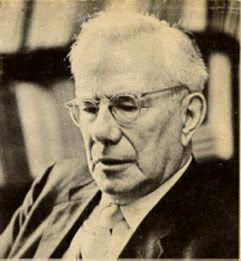

Image hosted by Photobucket.com


We are going to die. We cannot avoid this. This is our ultimate concern and sooner or latter we have to confront it. When we do we realize a sense of transformation that gives us a special realization existentially that life is more than material.

see also My article on Toilet's notion of God as the Ground of Being.

Tillich's concept made into God argument.


As Robert R. Williams puts it:

There is a "co-determinate to the Feeling of Utter dependence.


"It is the original pre-theoretical consciousness...Schleiermacher believes that theoretical cognition is founded upon pre-theoretical inter subjective cognition and its life world. The latter cannot be dismissed as non-cognitive for if the life world praxis is non-cognitive and invalid so is theoretical cognition..S...contends that belief in God is pre-theoretical, it is not the result of proofs and demonstration, but is conditioned soley by the modification of feeling of utter dependence. Belief in God is not acquired through intellectual acts of which the traditional proofs are examples, but rather from the thing itself, the object of religious experience..If as S...says God is given to feeling in an original way this means that the feeling of utter dependence is in some sense an apparition of divine being and reality. This is not meant as an appeal to revelation but rather as a naturalistic eidetic"] or a priori. The feeling of utter dependence is structured by a corrolation with its whence." , Schleiermacher the Theologian, p 4.


The believer is justified in assuming that his/her experiences are experiences of a reality, that is to say, that God is real.


Freedom from the Need to prove.

Schleiermacher came up with his notion of the feeling when wrestling with Kantian Dualism. Kant had said that the world is divided into two aspects of reality the numinous and the phenomenal. The numinous is not experienced through sense data, and sense God is not experienced through sense data, God belongs only to the numinous. The problem is that this robs us of an object of theological discourse. We can't talk about God because we can't experience God in sense data. Schleiermacher found a way to run an 'end round' and get around the sense data. Experience of God is given directly in the "feeling" apart form sense data.

This frees us form the need to prove the existence of God to others, because we know that God exists in a deep way that cannot be estreated by mere cultural constructs or reductionist data or deified phenomena. This restores the object of theological discourse. Once having regained its object, theological discourse can proceed to make the logical deduction that there must be a CO-determinate to the feeling, and that CO-determinate is God. In that sense Schleiermacher is saying "if I have affections about God must exist as an object of my affections"--not merely because anything there must be an object of all affections, but because of the logic of the co-determinate--there is a sense of radical contingency, there must be an object upon which we are radically contingent.

Tuesday, October 12, 2010

That Trick Atheist do with the subject-object Dichotomy.

Photobucket Picasso


This is one of the most important tricks to deal with. We have all heard that refrain "that's subjective." they use that every time anything experiential comes up. Of course they do because that basic reason to bleieve in God is experiential. God must be sought in the heart, the heart (meaning the inner most psychological aspect of the will) is the ground upon which the realization of God's reality happens. If one does not seek God in the heart one cannot find God. Thus the atheist first and most important target is the experiential realm. "That's subjective, you can't trust feelings." "That's not scinece." "Science is math and certifiably and stuff you can prove. you can't prove experiences." That is basically the whole point of the atheist ideology, becuase once they get you to doubting your heart and doubting your ability to seek God through experience you might as well pack it in. It makes no more sense to say "that's subjective, it must be dismissed" than it makes to say "there no scientific proof for God." God is not a scientific question so it makes no sense to demand scientific proof. By the same token, the realization of God has to be experiences as a feeling of utter dependence so it makes no sense to say "that's subjective." It makes less sense when we realize that objectivity is a pretense and there is no other point of view that humans have to approach anything form but the subjective. Dismissing the question of God on the basis of subjectivity makes no more sense than dismissing God on the basis of scinece.

Of course what we have to do is to realize that science is not the only kind of knowledge. This is what I demonstrated with the three posts on the limitations of scinece. I will offer three major arguments:

I. Objectivity is a pretense


II. Experiential and subjective knowledge is not always unreliable


III. Global knowledge 

I.
The great irony here is that the atheists are using objectivity to justify their subjective world view. There is no way they can deny that their world view (atheism) is subjective. It's a world view. By definition world view are subjective. When they talk about their former experiences in the faiths they fell away from they are speaking of feelings, experiences, these are subjective. Those subjective feelings are reliable. You can't tell them what they experienced. Suddenly experiences aren't so bad when they are atheist experiences. The irony is what to back the pretense that because they cheer lead of objectivity that makes them objective, so their world view is factual, they only believe what is based upon by empirical science. So their view s not subjective it's factual. Of cousre the brighter one's among them will stop and reflect that all world views are subjective by definition. Their world cannot be objective if it is a world view. Something is wrong here.

We all know that human beings cannot be objective. Atheists will try to press and demand that scientific facts are "objective facts." Facts can't be objective becasue they are not subjects. Facts don't do the perceiving, people do. Human perception is subjective. The idea that we can get outside of our perceptions and check them is the empiricists dilemma or the epistemological fallacy. We cannot check out perceptions from outside our perceptions. The idea that the atheist world view is scientific and factual is easily disproved. All we need to do is present them with some science that speaks agaisnt their view and see quickly that bit of scientific fact soon becomes unimportance. The selective nature with which they cling to that which supports their view and denounce that which dose not, despite it's good scientific quality, is obvious proof that the objectivity of atheists is a pretense. Example of this are for example the Lourdes miracles. Those are studies with excellent science. They consult the doctors, they have good rules to screen out remission, they only use cases that can be documented through scientific diagnostics they insist upon having all the evidence. I have yet to see an atheist treat these facts with any sort of respect. They say the most outrageous things about Lourdes and refuse to believe there's anything scientific connected with it. There merely goes to show how subjective the atheist view is. Their use of scinece is totally subjective.

Another fine example is the 200 empirical studies from academic journals that show that religious experience has long term positive effects. Architects have everything they can to undermine and discredit these studies except read them! In two years of harping on them they have looked up two studies. They didn't read those. Yet they claim to have  a factual, scientific, objective view point. it's so bleeding obvious that their view is subjective because they are so totally selective about what they embrace as scinece and what they don't accept. They are even willing to accept pseudo scinece. They will treat the religious expediences studies as though they are new age movement garbage done by self appointed shamans while at the same time using phony social scinece studies with crap methodology no study design by anyone with credentials. A major example here is that badly done "study" on atheists in prison compared to how many "Chrsitians" are alleged in prison. The study design on that one is done by a five year old it's so bad. Their protestations about having a fact based world are just poppycock. That's nothing but propaganda.

In response to this atheists will insist upon scientific facts that can't be denied. Sure, on a mundane or trivial level there are facts, but when we start connect them to a big picture, of necessity it becomes a subjective world view.

II.

Subjective knowledge is not necessarily unsealable. Since subjectivity is the only state we are capable of it follows that we can learn ways to minimize the problems of subjectivity. Atheists use that as the ultimate dismissal "that's subjective." That means case closed it's a over, but that's just more rhetorical flourish. Subjective knowledge is part of human experience it's valid too. In addition to subjectivity and objectivity there is also inter-subjectivity. I have never head a single atheist say anything about it and I have never met not one atheist who knows what it is. I say it every time and they just let roll off their backs like water off a duck and say nothing more. This is because they learn their philosophy form atheist websites so they know nothing phenomenology. Inter-subjectivity means a subjective aspect to something that more than one person perceives in a very similar ways. Because there is a perceptual check though the many different minds perceiving the phenomena we can find to minimize the unreliability.

A good example of this the M scale developed by Dr. Ralph H. Hood Jr. of University of Tennessee at Chattanooga. The M scale (mystics scale) is a means of validating the theories of W.T. Stace ho wrote about the mystics of the world. M scale is a means of placing a control upon mystical experience so that it can be determined weather or not one has has had a valid mystical expedience. To determine that it validates the work of Stace who developed a theory about the nature of mysticism based upon the writings of the world's great mystics. The M scale has been validated in about a dozen different cultures with several different faith and has demonstrated that Stace's view is correct and the experiences of modern people conform to those of ancinet mystics. That gives us a comparison by which we can say "this is/is not a mystical experience." Having such control we set up a typology so we understand what the experiences entail. Once we know that we can study the effects of such experiences on the lives of those who have them. In well over 200 studies this has been done and the evidence shows that such experiences have a profound long term positive effect upon those who have them.

(from the Mohan article)


Research studies


For the purpose of          this review of studies relating spirituality with psychological well-being,          studies involving religious influence have also been considered as they          are closely related to spirituality.


Spirituality and well-being


From          time immemorial it is believed that spiritual experiences and practices          have a therapeutic value in so far as they are capable of establishing          an integrated personality. A report (Culligan, 1996) of a 1995 conference          held at Harvard University reflects the new collaborative attempts of          religion and medicine wherein there is a recognition of the power of religion          and spiritual practices in medical treatment. The conference explored          the relationship between spirituality and healing in medicine, with reference          to the major world religions, and it provided a platform to discuss the          physiological, neurological and psychological effects of healing resulting          from spirituality.


Several recent studies          (Allman et al., 1992; Elkins, 1995; Shafranske & Malony, 1990) have          shown that the majority of practicing psychologists though not involved          in organized religion, consider spirituality important not only to their          personal lives but also to their clinical work. In a study Sullivan (1993)          reports findings from a larger qualitative study that is seeking to discover          factors associated with the successful adjustment of former and current          consumers of mental health services. The study concludes that spiritual          beliefs and practices were identified as essential to the success of 48%          of the informants interviewed.


Vaughan (1991) explored          the relevance of spiritual issues for individual psychotherapy among those          motivated by spiritual aspiration and concluded that spirituality underlies          both, personal impulses to growth and healing, and many creative cultural          and social enterprises. Spitznagel (1992) and Sweeney and Witmer (1992)          discussed the spiritual element in the well-ness model approach to work-adjustment          and rehabilitation counselling and said that this holistic concept of          working with clients is generally centred on faith, belief and values.          Westgate (1996) in her review proposed four dimensions of spiritual wellness:          (1) meaning in life (2) intrinsic value (3) transcendence and (4) spiritual          communality. The paper also discussed the implications of these dimensions          for research, counselling and counsellor education.


In a two year exploratory          group study of participants in spiritual healing practices, Glik (1986)          found that the healing which occurred is related to various measures of          psychological wellness defined as the construct of subjective health.          Fehring et al., (1987) correlating studies that investigate the relationship          between spirituality and psychological mood states in response to life          change, found that spiritual well-being, existential well-being and a          spiritual outlook showed a strong inverse relationship with negative moods,          suggesting that spiritual variables may influence well-being.


Over the years numerous          claims have been made about the nature of spiritual/mystical and Maslow’s          “peak experiences”, and about their consequences. Wuthnow (1978) set out          to explore findings regarding peak experiences from a systematic random          sample of 1000 persons and found that peak experiences are common to a          wide cross-section of people, and that one in two has experienced contact          with the holy or sacred, more than eight in ten have been moved deeply          by the beauty of nature and four in ten have experienced being in harmony          with the universe. Of these, more than half in each have had peak experiences          which have had deep and lasting effects on their lives. Peakers are more          likely also, to say they value working for social change, helping to solve          social problems, and helping people in need. Wuthnow stressed the therapeutic          value of these experiences and also the need to study the social significance          of these experiences in bringing about a world in which problems such          as social disintegration, prejudice and poverty can be eradicated. Savage          et al., (1995) provided clinical evidence to suggest that peakers produce          greater feelings of self-confidence and a deeper sense of meaning and          purpose. Mogar’s (1965) research also tended to confirm these findings.


Some researchers in          the recent past have found that life satisfaction correlated positively          with mystical / spiritual experiences, and these experiences were further          found to relate positively to one’s life purpose (Kass, et al., 1991).          In fact researchers are of the view that a positive relation between positive          affect and mystical experiences may not be surprising given that intense          positive affect is often considered to be one of the defining characteristics          of these experiences (Noble, 1985; Spilka, Hood & Gorsuch, 1985).          The few studies that investigated well-being measures, spirituality and          spiritual experience have found that people who have had spiritual experiences          are in the normal range of well-being and have a tendency to report more          extreme positive feelings than others (Kennedy, Kanthamani & Palmer,          1994; Kennedy & Kanthamani, 1995).


Spiritual experiences          are also considered to be exceptional human experiences at the upper end          of the normal range such as creative inspiration and exceptional human          performance, and can be life changing. Fahlberg, Wolfer and Fahlberg (1992)          interpreted personal crises from a developmental perspective that includes          the possibility of self-transcendence through spiritual experience / or          emergency. The authors suggest that health professionals need to recognize,          facilitate and support positive growth experiences.


A study by De Roganio          (1997) content-analyzed and organized into a paradigm case examples found          in themes of 35 lived-experience informants and 14 autobiographers who          represented a wide range of people with physical disability and chronic          illness. It was found that the combined elements of spiritual transformation,          hope, personal control, positive social support and a meaningful energetic          life enabled individuals to improve themselves and come to terms with          their respective conditions. These experiences led many people to realize          their own interest, sense of wholeness and unity, and to experience and          integrate a deeper meaning, sense of self and spirituality within their          lives.      


Some studies have offered          a spiritual approach to addiction problems. Caroll (1993) found that 100          members of Alcoholics Anonymous (AA) benefited from spirituality which          was found to correlate positively with having a purpose in life and the          length of sobriety. Frame and Williams (1996), in their study of religions          and spiritual dimensions of the African-American culture, address the          role of spirituality in shaping identity, and conclude that reconnecting          AA clients to their powerful spiritual tradition may be a crucial catalyst          for personal empowerment and spiritual liberation. The finding was confirmed          in a later study by Wif and Carmen (1996). Another study reported by Green          et al., (1998) described the process of spiritual awakening experienced          by some persons in recovery during the quest for sobriety. The data suggested          that persons in recovery often undergo life altering transformations as          a result of embracing a power higher than one’s self i.e., a “higher power”.          The result is often the beginning of an intense spiritual journey that          leads to sustained abstinence.


In the last few years          investigators in the rapidly growing field of mind-body medicine are coming          across findings that suggest that an attitude of openness to unusual experiences          such as spiritual, transcendental, peak, mystical may be conducive to          health and well-being. For example, Dean Ornish, a heart disease researcher,          believes that “opening your heart” to “experience a higher force” is in          an important component of his programme for reversing heart disease (Ornish,          1990, chapter 9). There are also studies that relate illness with spirituality:          Reese (1997) found in her study of terminally ill adults aged 20-85 years          that, (1) they had a greater spiritual perspective than non-terminally          ill hospitalized adults and adults, (2) their spiritual perspective was          positively related to well-being and (3) a significant larger number of          terminally ill adults indicated a change toward increased spirituality          than did non-terminally ill or healthy adults.


Further, McDowell et          al., (1996) investigated the importance of spirituality among 101 severely          mentally ill and chronically dependent in-patients, and 31 members of          the nursing staff who treated them. It was found that both the patients          and the staff who treated them were equally spiritually oriented, and          that the patients viewed spirituality as essential to their recovery and          they valued the spiritual programme in their treatment more than some          of the more concrete items.


Numerous studies have          found positive relationships between religious beliefs and practices and          physical or mental health measures. Although it appears that religious          belief and participation may possibly influence one’s subjective well-being,          many questions need to be answered such as when and why religion is related          to psychological well-being. A review by Worthington et al., (1996) offers          some tentative answers as to why religion may sometimes have positive          effects on individuals. Religion may (a) produce a sense of meaning, something          worth living and dying for (Spilka, Shaves & Kirkpath, 1985); (b)          stimulate hope (Scheier & Carver, 1987) and optimism (Seligman, 1991);          (c) give religious people a sense of control by a beneficient God, which          compensates for reduced personal control (Pargament et al., 1987); (d)          prescribe a healthier lifestyle that yields positive health and mental          health outcomes; (e) set positive social norms that elicit approval, nurturance,          and acceptance from others; (f) provide a social support network; or (g)          give the person a sense of the supernatural that is certainly a psychological          boost-but may also be a spiritual boost that cannot be measured phenomenologically          (Bergin & Payne, 1993). It is also reported by Myers and Diener (1995)          that people who experience a sustained level of happiness are more likely          to say that they have a meaningful religious faith than people who are          not happy over a long period of time.


A          study by Handway (1978) on religiosity concluded that religion is one          potential resource in people’s lives. More recently Myers and Diener (1995)          in their survey of related studies observe that links between religion          and mental health are impressive and that culture and religiosity may          provide better clues to understanding the nature of well-being. Religious          belief and practice play an important role in the lives of millions of          people worldwide. A review by Selway and Ashman (1998) highlighted the          potential of religion to effect the lives of people with disabilities,          their families and care givers.


These results enable us to trust subjective experience becasue the bottom line of reliability is the concrete effect upon the one experiences it. Since these experiences are so profound and positive it is clearly they are not merely a psychological trick up a real experience and they are indicative of a reality, the content of the experience tells us that the reality is that of the divine. The effects of the experience, because they can be studied and demonstrated to be positive form a control on the reliability of the experience. Atheists can't argue that it's mental illness because that is never long term positive. they can't argue that it's just a trick of the mind because those rarely last. They can't argue that it's unreliable because with the M scale we can show it's an extremely tight correlation. These experiences almost always result in this outcome. Just becasue we can't get into the texture of the experience doesn't' mean it's unreliable as long as we can predict the out come.

III.

We need to use all the knowledge we have. We know there are other kinds of knowledge besides science. There is logic, phenomenology, intuitive sense, experiential, and so on. We need to use all kinds of knowledge and to Taylor the method to the type of question using only the method that is suited to the question. We need to abandon the baron road of reductionism that is nothing more than ideology and expand our understanding to a holistic approach to learning and knowledge. Atheist propaganda has sold its adherents a bill of goods, they have done a bait and switch transposing slective bias and propaganda for real knowledge and learning. Let me give two examples of the way method needs to be taylored:

(1) God arguments.

God is not given in sense data. God is beyond human understanding because God is transcendent. Its' foolish to expect scientific evidence for God because God is not a scientific question. Thus attempt to prove God's existence will be nil if we use scinece. We can use logic, it could have proved by logic but that's very complex whee we deal with issues of the ground of being. It makes a lot more sense to scrap the question "how you prove the existence of God" and say "you don't." You don't need to prove it if you experience the reality of God because then you know. We need, therefore, to argue for a rational warrant. All we need to do is show that it's ratinoal to believe in God, that does not require proving it and it could take on a huge range of different kinds of evidence, from logic to scientific empiricism. See my God argument list for examples.

(2) Poly Symbolic Monotheism

Atheist are always trying to play divide and conquer by saying things like "which God is the one that created the universe." Trying to direct one faith against another. They often make the assumption with so many competing faiths we can never know which one is right therefore none can be. I've never understood the logic of that but the question is moot. We do not need to ask "which one is right" because all of them all They are all also wrong. That doesn't matter because salvation comes in knowing God and that is an individual matter that transcends all man made institutions. Same reality stands behind all religions. So the question we should ask is "how do we understand the reality behind all religions?" The method we need to use, social science, cultural constructs, theology, mystical experience, an understanding of comparative religion.

It is possible to understand the core of mystical and religious and divine truth and to experience the reality of God and know that God is real. Subjectivity you will have with you always, subjectivity is the nature of our species. Subjectivity is human experience, it need not not get in the way.