Showing posts with label Jesus myth. Show all posts

Monday, February 1, 2016

These are the voyages of Jesus myther propaganda... (part 1)


Photobucket


It's five year mission, to seek out new lies and new propaganda slogans, to boldly go where no historians have gone before...

Years ago, way back in 2009 I did a post on this blog about the Jesus project, not seminar but project. They really did have a five year mission. Last week I did a post on the parent organization, the centerpiece of atheist propaganda machine, the center for inquiry (they do skeptical inquiry magazine). What came of that Jesus project? It's five years  were up in 2013. I said that the time:

"Cracking The Jesus Myth Phony Scholarship Code."
Richard Carrier has a couple of articles on his blog about a big conference for the Jesus Project
held at Amherst last December. O it sounds very scholarly. It presents the image of a group of major scholars meeting to mull over the lattes scientific findings that proving that Jesus never existed. This creates the idea that there is a climate of opinion in the academic world to expose the lies about Jesus as fiction and show that he never existed. But if you follow the trail to see where his lie originated, and the trail is clearly marked, one can see clearly that there's nothing scholarly about it. It's nothing more than a put up job, but it's no accident that the Jesus Myth stupidity though exposed time after time as bankrupt lives on and continues to draw in a group suckers who are hood winked into believing that they are on the cutting edge of scientific search for truth.[1]
guess what? They did not go five years. They were shut down in two. Why? First the head of the center resigned. In an article, "Expelled Founder Paul Kurtz Explains His Departure From The Center for inquiry," After going through a lot of "he said she said" about how he was treated it all came down to this:
While I am of course a strong defender of the right to blaspheme, as this is essential to a free society, I was opposed in principle to CFI’s sponsorship of Blasphemy Day and the cartoons contest, for they ridiculed religion and did not appeal to rational arguments. Moreover, I never intended for the organization to mock religion. Humanism has always stood for — among other things — the thoughtful and critical examination of doctrinaire religion. This has especially been true since day one of the founding of Free Inquiry and the Council for Secular Humanism when we stated unequivocally that our aim was to present a “sophisticated analysis of religious inconsistencies and their social consequences.” [2]
Gee now where Have I heard this before? It would seem this blog is vindicated in the assertions, the wild ridiculous conspiracy theory at the mocking and radicle is organized. That might just cast a hint of suspicion over the Jesus Project since it is a creature of the propaganda machine. Heres a dead give away, I have pointed out the Orwellian nature of New Atheism. [3] in the interview Kurtz says:

EV: Isn’t the refusal to publish your position at odds with an organization that calls itself “Center for Inquiry” or an organization that publishes “Free Inquiry“?
PK: It is similar to thought police. Alas! They refused to publish three of my editorials, and they refused to publish my statement regarding my resignation. What a contradiction. Even though I am the founder of the organizations, their position essentially was that I had no right to publicly express my concerns about the direction of the organization or the new management practices adopted under the current leadership — both of which I have grave reservations about. I consider this as similar to a Board of Bishops seeking to control its Founder.
That I Orwellian because in Animal farm the pigs take over and work Ben the sincere horse into ground until he dies, denying him benefits of leadership and excluding him from decisions. He is so committed he never notices. Kurtz is not the only one the New Atheists have hood winked. This get's at the reason the JP shut down. The project was started by John Hoffmann who is a valid scholar and fine historian. His academic credentials are impeccable. He also believes in the historicity of Jesus. Hoffman's own statement about why yhe pulled the plug:

Alas, The Jesus Project itself became a subject for exploitation: news stories, promotional material and the reactions in the blogosphere focused on the Big Question: “Scholars to Debate whether Jesus Really existed.” Given the affections of media, the only possible newsworthy outcome was assumed to be He didn’t. Such a conclusion had it ever been reached (as it would not have been reached by the majority of participants) would only have been relevant to the people April DeConnick ( a participant) has described as “mythers,” people out to prove through consensus with each other a conclusion they cannot establish through evidence. The first sign of possible trouble came when I was asked by one such “myther” whether we might not start a “Jesus Myth” section of the project devoted exclusively to those who were committed to the thesis that Jesus never existed. I am not sure what “committed to a thesis” entails, but it does not imply the sort of skepticism that the myth theory itself invites. [4].
Note that the only newsworthy conclusion was that Jesus didn't exist. That's because that he did exist is not news. So the majority of fellows of the project would have insisted the did exist, and the myther's biased the proceedings. I said the proceedings would be used propaganda for atheism and they apparently were. The real scholars did want to be part of that. I would like to know how they got involved with the Center for Inquiry. I'm sure the majority including Hoffmann did not set out to produce atheist propaganda. The rub, Hoffmann himself sums it up as to why this venture failed and why others like it will fail: "But the chief reason that it is....because they are examples of the perils of false collaboration: an incoherent anthology of opinion derived from the private prejudices and objectives of Jesus-makers." (emphasis mine).


[1] Metacrock,"Cracking The Jesus Myth Phony Scholarship Code." Atheistwatch

[2]  , "Expelled Founder Paul Kurtz Explains His Departure From The Center for inquiry," Dangerous Intersection: Human  Animals at the Crossroads.  ( October 2, 2010 )  blog URL:    http://dangerousintersection.org/2010/10/02/expelled-founder-paul-kurtz-explains-his-departure-from-the-center-for-inquiry/  (accessed 1/28/2016).

[3] I have made several posts on the Orwellian Nature of New Atheism:

[4] R. Joseph Hoffmann, . "Threnody: Rethinking the Thinking behind The Jesus Project", bibleinterp.com, October 2009, URL: http://www.bibleinterp.com/opeds/hoffman1044.shtml
( accessed 1/30/16).
 

Monday, January 4, 2016

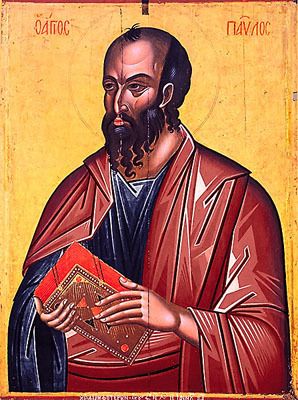
Did anyone exist in the first century? (part 2): Paul


 photo 1PA30_zpsbvsgbcam.jpg


Kenneth Humphreys Is probably the major Paul Myther.I can't find out much about him, but he wrote a Jesus Myth book, The Christos Mythos. See a review by major historian James omerea. His anti-Paul arguments are laid out on a blog: A Fabricated Apostle: Two Different Pauls.

Humphreys has many argumens but I will deal with six, and to summarize them:

(1)Argument from silence on Paul's great acts

(2) Disparities between Epistles and Acts

(3)Conflicts between Paul's Roman citizenship and Jewishness

(4) Paul's conversion story is implausible.

(5)Supposedly parallel passages with Josephus.

(6)No evidence of Paul in Ephesus His First Argument is an Argument from Silence (OF COURSE). There's no record of Paul being assigned to enforce Jewish sanctions against heretics. Moreover, Paul was always meeting Kings and civic dignitaries yet there is no record of it in secular history. "The trail-blazing Christian missionary and apostle, St Paul, appears nowhere in the secular histories of his age (not in Tacitus, not in Pliny, not in Josephus, etc.) Though Paul, we are told, mingled in the company of provincial governors and had audiences before kings and emperors, no scribe thought it worthwhile to record these events."

Humphreys seems to assume that there's some archives to which we can go to look up all that happened in first century Palestine. There is no such place. They did not have a vast governmental achieve, if they did we don't have it now. We have little from the first century. The list of all first century writings that don't mention Jesus (excluding prolific Philo) is so small it's not much bigger than those that do. Any authority granted Paul if even written, would be so totally obscure it's silly to expect to have it.[1] As for meeting with important people a lot of that was due to Paul claiming rights of Roman citizenship when charged with crimes. There's nothing remarkable about that so no reason to expect to find the records. That's like saying "my son [the drug addict] is always talking to layers and judges so he's an important guy." Moreover, Stephan Neil points out that Luke gets the titles of all the functionaries correct in all the different regions.Neil thinks that one of the most impressive aspects of Luke as an historian is that he always gets the titles right. Many of the titles of local officials which Luke provides us with were not validated until modern times. "The writer of Acts knew the correct titles and used them with varying precision. In the words of Ramsey: 'the officials with whom Paul and his companions were brought into contact are those who would be there. Every person is found just where he ought to be; proconsuls in senatorial provinces, asiarchs in Ephesus, strategoi in Philippi, politarchs in Thessolonica, magicians and soothsayers everywhere.' The Most remarkable of these titles is Politarch the ruler of the city used in Acts 17:6...previously this word had been completely unknown except for this passage in Acts. It has now been found in 19 inscriptions dating from he second century..." Neil argues that titles are the hardest things to get right, modern French writers never get English titles right, and this is something that would easily and surely betray an anachronism (147)Historians of the modern day judge Luke a superb historian.This is good evidence that he did make the journey because getting such title's right is very hard to do.[2]It seems the author really was on the trip and thus it's not made up out of whole cloth. He probably knew Paul as well.

His second argumentis that the Pauline Epistles and the book of acts portray widely divergent views of Paul. Paul of the epistles is independent and confident, not intimidated by authority of the Apostles. He confronts Peter (Galatians); the Paul of Acts is cooperative, dedicated to the team, and willing to be commanded and led:

Now part of the brethren ("with them coming in and going out at Jerusalem" - 9.28), he is "managed" by the elders. Disciples "took him" from Damascus (9.25) and Barnabas "brought him" to the apostles (9.27). They "brought him" to Caesarea and then they "sent him" to Tarsus. Barnabas "brought" Paul back to Antioch (11.26) and then with him was "sent" to Jerusalem with famine relief (11.30) – (as it happens, a visit to Jerusalem completely unknown to Paul himself). Eventually the brethren "send" Paul on his first missionary journey (13.4). As a missionary, Paul is very much on the collective message:"And as they went through the cities they delivered them the decrees for to keep that were ordained of the apostles and elders which were at Jerusalem. And so were the churches established." – Acts 16.4,5.

From Thessalonica, Paul is "sent away" to Berea by the brethren (17.10). He is also "sent away" by sea and "brought" to Athens (17.14,15). In Cenchrea, Paul even takes a Jewish vow and shaves his head! (18.18).
On this point there's an ironic but obvious counter. Humphrey's says of the Paul of Acts: "The closest Acts comes to bestowing the title [Apostle] is 14.14 where his name follows Barnabas and the plural is used." Then: "Full of his own importance, in all his letters Paul hammers home the point that he is an apostle and that his appointment comes directly from the divine." Do you see a relationship there? That is certainly not proof that he didn't exist. All it really proves is that once got out on his own he realized how they treated him and decided to do it this own way; more a proof of his historicity because it shows he was human. Moreover the fact of shaving his head means he was in conflict with them. He was commanded to do it, it was a PR move and Paul's own idea. My argument is not that here is no disparity but that Humphreys is making much more out of it than should be made. First you have the difference between Paul's account of himself (ok so he's not Mother Teresa--he has an ego)juxtaposed to Luke's understanding of him. In fact Luke's account might have been recorded and embellished from verbal recollections by a well meaning acolyte. Secondly you have to consider the tine and the on text. Luke is writing to put Paul's life in a light that would flatter him and promote unity, and he was writing in the 80s, 20 years after Paul's death. Paul was writing to churches ad hock about immediate problems confronting. Humprey's argues that Paul, in his letters, doesn't tell them about the things in the book of Acts. Yet he was not writing an auto biography. He also did not tell them about his mother, we can safely assume he had one. At worst all this proves is that the Greek physician was a spin doctor not that Paul did not exist.

In his third argument, implausible and contradictory aspects of Paul's story, Humphrey's real ignorance is showing. He thinks that if Paul was a hotshot student of the major rabbi, there would be some Jewish polemics about it. Then an even more egregious and telling display of how little he really knows: "How likely is it that Paul really studied under the Pharisaic grandee (Acts 22.3)? Paul clearly had difficulty with the Hebrew language: all his scriptural references are taken from the Greek translation of Jewish scripture, the Septuagint." He also compounds the ignorance by questioning if a Roman citizen could have any authority in Judaism and asserts nothing in the texts spell out official authority.

First, Paul's status as a hotshot student. No one ever really said, nor did Paul say, "I was the best student.." He said he learned from Gamaliel he did not say "I was the top student." He said "I was zealous" and he said kept the law he didn't say "I was brilliant I was the best." Of course there is also the possibility that such polemics did exist but are lost to posterity; I've already shown that we have little in the way of documents surviving that era. The Romans may well have destroyed any achieves they had in 70 or in 135. When they destroyed Jerusalem the second time they put Roman temples over Christian and Jewish holy sites such as the site of Jesus' tomb. hy would they not destroy archives?[3]

Secondly, the Septuagint gaff. It is common knowledge that the LXX (Septuagint) was the Bible of the early church. In fact the Jews were so angry that the Christians made so much of the Greek scripture and used it to link Jesus to Messiah that they commissioned a new Greek Translation in 100 AD. Why? Because Palestinian Jews spoke Greek. obviously Paul had no trouble with either language he used LXX because that was the favorite of the people.
This translation became very popular among Jews in the first two centuries before Christ because many Jews in those days did not understand Hebrew. Their ancestors had left Israel centuries before, and generation after generation gradually lost the ability to read the Scriptures in Hebrew.Many of the Jews in Jesus' day used the Septuagint as their Bible. Quite naturally, the early Christians also used the Septuagint in their meetings and for personal reading; and many of the New Testament apostles quoted it when they wrote the Gospels and Epistles in Greek. What is most fascinating is that the order of the books in the Septuagint is the same order in our Bibles today, and not like the Hebrew scrolls....
[4]

As for Roman citizenship in Judaism apparently he doesn't know, what anyone well versed in Paul should know, that the Jews of Asia minor did have Roman citizenship and they were full fledged Jews and had rabbis and everything (Tarsus, where Paul was from, is in Asia minor).[5] The fourth argument with which I will deal is argument from incredulity; has a lot of little parts, part of his spread on implausibility. The doubts the conversion story, saying if Paul was not convinced by Jesus' miracles why would the Damascus road experience.

Perhaps because it happened to him? Let's assume Paul saw Jesus from afar as a member of a huge crowd, a hostile spectator who never said one word tov Jesus. Probably didn't get close. For all we know he could have been back in Cilicia during Jesus ministry, but let's assume he was there. He's watching Jesus surrounded by hundreds, or thousands, of followers what's he going to do attack him? He was smart enough to know he wouldn't get very far. He was a scholar not a son of Hercules. Would he be convinced by Jesus? I imagine he would think of Jesus in the same way that Modern atheists think of faith healers. Having the experience himself could be transformative.

The fifth argument is not one argument but kind of argument he makes many times. He compares passages in Josephus to those in Acts to show that "this is where they got their ideas." This takes an absurd form even counting passages that have nothing more in common than the uses of two names that are the same: John and Silas. Josephus in his Life (auto biography) says (as Humphries summarizes) "Josephus was himself betrayed by 'John', chose an ally named 'Silas', and made a miraculous escape!" While in Acts (16:25-29) Paul sees some reason not to take John and does take Silas. Jo is betrayed by a John, and has an ally named Silas. In a second such example(also from Life but not cited so we don't know where Jo tells Jews not to force circumcision on some gentiles and Paul says the same thing in relation to Timothy.

This is typical of myther thinking (see part 1). Two stories share the same word so one must have copied the other or must be referring to the other. read the parallels see that the stories are not about the same things it's only veg references like negative about a John and Silas is a friend.[6]

The Sixth Argument no evidence of Paul in Ephesus. He argues that all the legends have John founding the church of Ephesus not Paul. Paul was supposed to have lived there for three years a d founded the church there.

Just left our one little thing, mythers have so thoroughly purged the Bible from their consciousness he doesn't even consider it to exist. So he doesn't dawn on them that the txt is an artifact itself, like pot shard. All he can see is the pastoral epistles not written by Paul. But they were written in Ephesus. So why are people in Ephesus trying to attribute works to Paul? Not just because he was important but, perhaps, because he was in Ephesus. Otherwise why attribute the work to someone who was never in that city. What's really odd is that suddenly we trust these legends. The Bible is rubbish and has no authenticity, full of mythys and copied after pagan religion but in this one area the Christian legends (they are really legends) are right that John started the church in Ephesus. Praise God, We found one historical church figure who actually existed! In reality of course we better reason to think Paul was there than was John. On the other hand there is no reason why they both could not have been there. The most up to date scholarship shows us that there ere many Christian communities in Ephesus. There was no on church community that was the true official church.[7] Some were gnostic some had nothing to do with each other. There could have been a core community started by Paul that eventually merged with the Johanine community, if John was even there. Another possibility is that is that Paul could still exist even if he never went to Ephesus.

Even if we accept his major thesis that Acts is a gloss on Paul for propagandistic purposes, that still doesn't prove there was no historical man who wrote Romans and was named Paul, and was from Tarsus. none of these arguments actually prove there was no Paul. The author of Acts could have propagandized weather Paul existed or not. Just for the record, I can accept that Luke did propagandize or spin or gloss to some extent, but Acts is too well verified by Sir William Ramsey not to be a valuable historical source. But that's another blog. I will do a part 3 giving positive reasons to believe that Paul existed. Remember Paul is a source for proving that Jesus existed. see Cadre blog pieces on historicity of Acts (Nov 4, 2007 by BK and one by me against Richard "Bayes Boy" Carrier's views im marfh of 14).

Sources


[1] E.M. Blaiklock, Jesus Christ: Man or Myth? Nashville: Thomas Nelson Publishers, 1984.

Non Christian writings of Roman empire (excluding Philo) that don't mention Jesus. This is all of them, the point being we don't have much first century stuff.

* An amateurish history of Rome by Vellius Paterculus, a retired army officer of Tiberius. It was published in 30 A.D., just when Jesus was getting started in His ministry.
* An inscription that mentions Pilate.
* Fables written by Phaedrus, a Macedonian freedman, in the 40s A.D.
* From the 50s and 60s A.D., Blaiklock tells us: "Bookends set a foot apart on this desk where I write would enclose the works from these significant years." Included are philosophical works and letters by Seneca; a poem by his nephew Lucan; a book on agriculture by Columella, a retired soldier; fragments of the novel Satyricon by Gaius Petronius; a few lines from a Roman satirist, Persius; Pliny the Elder's Historia Naturalis; fragments of a commentary on Cicero by Asconius Pedianus, and finally, a history of Alexander the Great by Quinus Curtius.

Of all these writers, only Seneca may have conceivably had reason to refer to Jesus. But considering his personal troubles with Nero, it is doubtful that he would have had the interest or the time to do any work on the subject.
* From the 70s and 80s A.D., we have some poems and epigrams by Martial, and works by Tacitus (a minor work on oratory) and Josephus (Against Apion, Wars of the Jews). None of these would have offered occasion to mention Jesus.
* From the 90s, we have a poetic work by Statius; twelve books by Quintillian on oratory; Tacitus' biography of his father-in-law Agricola, and his work on Germany. [Blaik.MM, 13-16]

"To this Meier adds [ibid., 23] that in general, knowledge of the vast majority of ancient peoples is "simply not accessible to us today by historical research and never will be." It is just as was said in his earlier comment on Alexander the Great: What we know of most ancient people as individuals could fit on just a few pieces of paper. Thus it is misguided for the skeptic to complain that we know so little about the historical Jesus, and have so little recorded about Him in ancient pagan sources. Compared to most ancient people, we know quite a lot about Jesus, and have quite a lot recorded about Him!"

So there just aren't that many overall sources to go by in the first palce. But why wouldn't more of Jesus' contempoaries write about him?

[2] Stephen Neil, The Interpretation of the New Testament:1861-1961, London: Oxford University press, 1964,143.

[3]G.Cornfeld,Archaeology of The Bible: Book by Book, New York: Harper and Row, 1976, 271-2).

[4] John Barnett, "What Bible Did Jesus Use? "Jesus.org. on line resource URL: http://www.jesus.org/birth-of-jesus/genealogy-and-jewish-heritage/what-bible-did-jesus-use.html

[5] Paul Trebilco, The Early Christians in Ephesus From Paul To Ignatius,Grand Rapids, Michigan: Wm. B. Eerdmans Publishing Co., 2007.

article about Tarsus then and now, archeological excavations and pictures.

[6] compare the two passages
" But when John [of Gichala] was come to the city of Tiberias, he persuaded the men to revolt from their fidelity to me ...

A messenger had come to me from Silas, whom I had made governor of Tiberias ...

Upon the receipt of this letter of Silas, I took two hundred men along with me, and traveled all night ...
"But Paul thought not good to take John with them, who departed from them from Pamphylia ...
And Paul chose Silas, and departed, being recommended by the brethren unto the grace of God.– Acts 15.38,40
" And at midnight Paul and Silas prayed, and sang praises unto God: and the prisoners heard them

" And at midnight Paul and Silas prayed, and sang praises unto God: and the prisoners heard them.


We can see there is almost nothing parallel about these passages. The names are about all they have in common.

[7] Trebilco, op,cit., 2-4.

Wednesday, December 30, 2015

Did Anyone Exist in The First Century? (part 1): The Peter Myth


The Jesus myther thing is funny. They wanted to be totally sure they wouldn't go to hell so they convinced themselves Jesus just didn't exist. Actually they got the idea from 18th and 19th century people such as Bruno Bauer who did not have benefit of more recent scholarly developments. It was an age of unbelieving super liberal scholarship where thinkers like Von Harnack were more common and believing scholars like Lightfoot and Wescott were less common. Atheists are already skeptical of any counter evidence and it's really the final solution of atheism to erase Jesus from history. But Paul proves Jesus existed. He met his brother and some of his best friends, and speaks of his fleshly nature and earthly linage. But not to worry, Paul didn't exist. That's right there is actually a big movement (by Jesus myth standards) to say Paul didn't exist. But Paul is proved to have existed because the author of Peter's epistles, whoever he was, said he did. Guess what? There's a group of peter mythyers. Dare I pointed out that Clement of Rome seemed to suggest that he saw both Peter and Paul, what do you think they would say?

The author of There was no historical Paul the Apostle is a brave skeptic who objectively imposes the most demanding standards of skepticism upon all but his own views. When considering the Bible he bravely informs us to be skeptical and critical think. He forgot to do that with his own stuff. I notice he's an Acharya S-ie.(like a "Moonie")he says:
Acharya is operating basically within the right paradigm, in which all the figures are approached as essentially mythological. Like most scholars, she has only a lower type of grasp of esoteric religion, but she knows that whatever esoteric religion, mysticism, and gnosis amounts to, Christianity was that rather than a literalist scenario. She argues that the apostles are all mythic-only, and more notably, argues that Paul is ahistorical.
Who is Ashara S and what is her Paradigm? She's a major Jesus myth person who was given a very important mission, that of destroying Christianity. Who gave her this a mission? Moscow? No. Castro? No. The Underworld? no,. Little gray space aliens*. That being said I think we skip over the paradigm. The myther movement is full of crack pots and non professional scholars. The most scholarly they have are the band of 19th century people. i'm going to lay out the sources that I think are their best and deal withy them. Since most of us have probably heard a lot of Jesus myth stuff I will deal withy only the Paul and Peter myth stuff.

Something like real scholarship on the Peter myther scene is Arthur Drews (1865-1935) author of The Legend of St. Peter. Historian, Philosopher, representative of Monism in Germany. He was at the tail end of that pack of people who denied Jesus[' existence whom Schweitzer debunked and put to flight..[1] That's why Drews has been described as "forgotten." There's an online version of his Witness to the Historicity of Jesus (1912) is online.[2] I will deal with that one soon, but looks pretty standard. A recent translation of his St. Peter books is available on Amazon...[3]

Despite the fact that Drews was areal scholar his information is out of date because we was working a hundred years ago. Every assumption he made and all of his information it's all horribly out of date. His basic working method is a joke today. I respect him greatly for what he did in his day; that was great learning he was very learned. But in this day it's all so anachronistic. I've always observed that atheists on message boards, so many of their arguments are rooted in the 19th century. Allo of Drews's arguments are based upon a kind of associative word play where if two stories use te same word, such ads "stone," one story must come from the other. Every little nuance is jam packed with hundreds of associations like this so that Peter is called Cephus and Mithra was born from rock, therefore, peter is copied after Mithra. This was the kind of methodology that was used back then because they didn't know as much as we do. They made outmoded assumptions like all religioms are mythical, all religions barrow from each other. Barrowing doesn't happens in ideas it happens in imagery and word play from mythological narrative. Akk of his arguments are like this:

Dupuis was the first scholar to identify St. Peter as Janus [the term janitor, originally keyholder, derives from janus]. Janus in turn derives fron Dianus (>> day), a god of the daylight hours, male form of Diana, the famous lunar- and wildlife deity. Janus was considered the god of all doors, especially responsible for the portal to heaven. The month January is named after Janus.

One star in Virgo is called Janus. This implies astromythical imagery. In the old days, Janus was at the Medium Coeli at sunrise around the winter solstice, thus opening a new year. Janus was not only competent for opening and closing days and years, but also war and peace. Janus was here seen as superior to Jupiter, the father of the gods. As Janus leads the annual circle of the zodiacal signs, St. Peter leads the twelve apostles of Roman Christianity.

Hercules is called a mace bearer, but key and mace can be expressed as synonymous in Latin: Hercules is thus a key holder like Janus.

The regions of the near East get most rain in winter. This leads to the picture of Janus as a ferrymen across the invernal flood. Argo, called the ship of Janus, was back then seen in the medium coeli during rain time. Janus as a ferryman again alludes to Peter's activity as a fisherman.

Janus was depicted not only with the key to heaven, but also with a long staff that can be reinterpreted as the shepherd's staff with which St. Peter watches over the 'sheep' of the Catholic church.

Janus was depicted as two-faced, watching both ahead and back, from horizon to horizon.


This is why the Jesus myth crowd are stuck on the dying rising savior thing and the copy cat savior thesis. They respect these guys, they think they are forgotten geniuses, and they are. There' a reason why they were forgotten. They pend all their time reading this stuff and very few Christians know how to answer it. When they hear Christians say these guys aren't scholars they know better. They were scholars they are just outmoded. Schweitzer said Bauer was a genius. But he also said he was wrong. Atheists spend so much energy shouting that theology is stupid they really think that theology is about this stuff they refuse to learn.

Think about all the things that have changed since Drews wrote. First, since they discovered the Dead Sea Scrolls we can see the New Testament is really a lot more Jewish than they thought. My apologist comrades and I have always wondered why they can't see that all the elements of the Jesus story are in Judaism. Because they are reading stuff from a time when scholars thought that the NT was all Greek and gnostic, The assumption of Gnosticism was because they didn't have Naghammadi to compare to. Now that tendency to see Gnosticism in the NT was alive and well as late as the end of the 20th century with Elaine Peaggles book. But what people don't know is that the scholars were cringing at bad the book I was in the classes of some of those scholars.,

Let's look at some of the specifics of his argument. After an absurd land slide of associative connects that human being thinks in, we have two emblems that link Jesus to pagan gods and they all are given by him to Peter (in the quotation of he summary above): the Shepard's staff, and Keys to the kingdom. In addition he's linked to Mithra because they both have some tangential relation to rocks. Mithra was a Shepard, Peter as Shepard of the church is also linked through Janus as Ferryman and Peter as fisherman. They both have boats. No one thinks this way. No one would say "I'm going to make up a Pal for Jesus and Janus reminds me of Shepherds so I'll have him be a bishop of the church." Notice the association is made to Jesus giving Peter a staff but no such thing happened. Jesus tells Peter, "feed my sheep,' but it says nothing about a staff. It's like James Joyce playing charades. A stream of consciousness mae up of Freud-like associations.

Another unknown in the days of Drews was the real belief system of Mithrism. It began in Persia but Mithra is thought to be a mythological figure from India. The Persian cult traveled to Rome. Even in Drews day they knew that they had no written materials from the cult. They were guessing about the importance of sheep and the comic bull. No proof that the Roman cult had Mithra the Shepard Mithra, the links to Jesus and Peter just evaporate. They that solders in Jerusalem took Christianity back to Rome and thus Christianity influenced Mithraism. The most damaging fact is what they did not know because it was discovered by David Ulancy (Mithra scholar par excellence) in the 1980s: The Roman cult was a front for another cult. They weren't even serious the rock or any of it. That sort of cuts down on thye odds that they would be influencing Jews in Palestine. There are two statements that need to be understood concerning Mithrism and Christianity, the totally disprove the idea that Jesus was patterned after Mithra. The first is by David Ulansey the major scholar of Mithrism:

Owing to the cult's secrecy, we possess almost no literary evidence about the beliefs of Mithraism. The few texts that do refer to the cult come not from Mithraic devotees themselves, but rather from outsiders such as early Church fathers, who mentioned Mithraism in order to attack it, and Platonic philosophers, who attempted to find support in Mithraic symbolism for their own philosophical ideas. "At present our knowledge of both general and local cult practice in respect of rites of passage, ceremonial feats and even underlying ideology is based more on conjecture than fact." [5]
Fanz Cumont was a major scholar, he often shows up on the bibliography of every major Jesus myther (he's on Kane's and Frick and Ghandy). He was a real scholar and a major scholar, but the mythers apparently don't read his entire book:
"There is no real evidence for a Persian Cult of Mithras. The cultic and mystery aspect did not exist until after the Roman period, second century to fourth. This means that any similarities to Christianity probably come from Christianity as the Soldiers learned of it during their tours in Palestine. The Great historian of religions, Franz Cumont was able to prove that the earliest datable evidence for the cult came from the Military Garrison at Carnuntum, on the Danube River (modern Hungary). The largest Cache of Mithric artifacts comes form the area between the Danube and Ostia in Italy." [5][6]
" The connections from Mithrism to Jesus evaporate, and thus the connections from Mithrism to Peter as well. This and much more is carefully documented on my Mithrism pages. There are more big surprises there. It also would not hurt to see my Jesus Christ Copy cat savior? pages, In fact here is my whole Jesus myth menu. My historical Jesus Menu.
I don't know much about Janus but I have researched several of the figures used by mythers for the (alleged) patterns of the Jesus figure. They always evaporate when we move out of tye fairyland of myther books and read real mythology books such as Hamilton and Bullfinch. Not Christian apologists. Real secular schools of myth and folklore.

Nex time I'll deal with a couple more writers whom I consider to be challenging and scholarly and the one tangible bit of evidence outside the NT that documents the existence of both Paul and Peter.

Sources

[1] Albert Schweitzer, The Quest of The Historical Jesus. [2]Author Drews, Witness to the Historicity of Jesus (Joseph McCabe Trans.) Original publication 1912. online URL:http://www.mountainman.com.au/essenes/Witnesses_to_the_historicity_of%20Jesus_AUTHUR_DREWS_1912.htm accessed 12/1/15Atheist Press 1997 [3]____________,and Frank Zindler The Legend of St. Peter. American Atheist Press(Trans. Frank Zindler) 1997 (original 1910). [4] Klaus Schilling's summary of "Die Petruslegende" by Arthur Drews on Theory of ego website. Online resource URL: http://www.egodeath.com/arthurdrewslegendstpeter.htm#_Toc116703882accessed 12/1/15. Thisi a summary of the book. The whole thing reads like that. [5] David Ulansey, Mithraic Studies: Proceedings of the First International Congress of Mithraic Studies. UK:Manchester U. Press, 1975. ,437. [6] (Franz Cumont, The Mysteries of Mithra Chicago: Open Court, 190), 87ff.

* this is from the link to the thing by8 Holding. Radio talk show the subject was extraterrestrials. The calls says clearly he is discussing extra terrestrials. Caller: "Ok Mohammed also met one of them in a cave…a similar type of being. And also in the book of Isaiah, Daniel…all the extra-biblical texts talk of the same type of beings and other cultures talk of the same type of beings. I'm wondering how they all would describe the same thing…"

Acharya: "Well, I can tell you I've had beings around me too and they are telling me to put this information out there. So I'm not disagreeing that there are beings. But it takes a great deal of knowledge and refinement of that knowledge to realize what you're looking at and unfortunately most people don't have the platform from which to be viewing this information necessarily. So they…there's all kinds…The speculation that starts getting in becomes quite tortured…"

see the link at top


Saturday, May 14, 2011

Jesus Mythism: Fear and Lying in seeking escape from truth

Photobucket
Excavation of first century house in Nazareth.

The Jesus myth branch of the atheist movement is the worst in terms of lying and Hate. They are steeped in hate to the point that they actually try to deny the existence of the greatest man in human history. This is a guy whose existence no one ever questioned for 1900 years. Only in the sickness of modern alienation do people fuming with hate seek to deny his existence. The Jesus myth movement has to keep refining their propaganda becasue it's been disproved so many times they are constantly forced to remake it. I found a site is sitll beating the dead horse of the dying rising savior gods BS.

A new site I had never seen before, discovered by accident, "Jesus never existed.com." they exhibit all the typical characteristics of the group.

Melodramatic sense of mission, saving the world in a life or death struggle againt some overwhealming evil they hate. Take the mato on their masthead: "for all who would struggle against the tragedy of religion." The studies show that people who have religious expeirnces do way better in life than those who don't. So their noble cause is to struggle to destroy one of the most important and life-transforming thinks we ever found as a species one of the major things that defines us as human. It makes me wounder if they did succeed in destroying religion how long before they try to destroy art? "For all who struggle agaisnt the tragedy that is drama." Now there's a slogan to conjure with.

The sight exhibits all the usual over done statements of anger and hatred that mark the Jesus myth movement:

Do you really think it all began with a sanctimonious Jewish wonder-worker, strolling about 1st century Palestine? Prepare to be enlightened.

Why is he sanctimonious? Why is it important to point out that he's Jewish? They seem to do that. They are into all the usual lies their ilk have steeped themselves in.

Christianity was the ultimate product of religious syncretism in the ancient world. Its emergence owed nothing to a holy carpenter. There were many Jesuses but the fable was a cultural construct.

There is no evidence of Christianity as synchronicity. That lie was put to bed in the nineteenth century century. on Doxa I show that none of the dying rising savior gods in the real myths fit the bill. I demonstrate over and over again that they lie about the mythology and that one must go to real mythological texts, and what we find there is that None of these figures are much like Jesus. The only source that say they are, are Jesus myther books.

Bruce Metzger in "Methodology in the Study of the Mystery Religions and Early Christianity" (Historical and Literary Studies: Pagan, Jewish and Christian (1968), notes:
"Thus, for example, one must doubtless interpret the change in the efficacy attributed to the rite of the taurobolium. In competing with Christianity, which promised eternal life to its adherents, the cult of Cybele officially or unofficially raised the efficacy of the blood bath from twenty years to eternity "[p. 11].

"Another aspect of comparisons between the resurrection of Christ and the mythological mysteries is that the alleged parallels are quite inexact. It is an error, for example, to believe that the initiation into the mysteries of Isis, as described in Apuleius's The Golden Ass, IS comparable to Christianity. For one thing, the hero, Lucius, had to pay a fortune to undergo his initiation. And as Wagner correctly observes: "Isis does not promise the mystes immortality, but only that henceforth he shall live under her protection, and that when at length he goes down to the realm of the dead he shall adore her . . ." (op. cit., p. 112).

Most of the evidence for mythrism for example comes from after the Christian era was well underway so the narrowing could have come the other way.

But Mithraism was confined to the Roman Legion primarily, those who were stationed in Palestine to subdue the Jewish Revolt of A.D. 66-70. In fact strong evidence indicates that in this way Christianity influenced Mithraism. First, because Romans stationed in the West were sent on short tours of duty to fight the Parthians in the East, and to put down the Jewish revolt. This is where they would have encountered a Christianity whose major texts were already written, and whose major story (that of the life of Christ) was already formed.

"There is no real evidence for a Persian Cult of Mithras. The cultic and mystery aspect did not exist until after the Roman period, second century to fourth. This means that any similarities to Christianity probably come from Christianity as the Soldiers learned of it during their tours in Palestine. The Great historian of religions, Franz Cumont was able to prove that the earliest datable evidence for the cult came from the Military Garrison at Carnuntum, on the Danube River (modern Hungary). The largest Cache of Mithric artifacts comes form the area between the Danube and Ostia in Italy." (Franz Cumont, The Mysteries of Mithra (Chicago: Open Court, 1903), 87ff.)

The Jesus did not exist website people have appreciably read exclusively from myther sources, they tout all the old hysterical early Jesus myth BS that has been long since disproved. One of the great old chestnuts is the idea that Nazareth did not exist.


Nazareth did not exist in the 1st century AD – the area was a burial ground of rock-cut tombs. Following a star would lead you in circles. The genealogies of Jesus are pious fiction. The 12 disciples are as fictitious as their master, invented to legitimise the claims of the early churches. The original Mary was not a virgin. That idea was borrowed from pagan goddesses.

This is a lie. It's proved demonstrable to be a lie.See my pages on Doxa about Nazareth existed in the first century. It is proved to exist by several archaeological excavations the most recent in the 1990's which definitely proved that it was inhabited in the first century. On the same page:

L. Michael White:
Professor of Classics and Director of the Religious Studies Program University of Texas at Austin

Where did Jesus grow up and how would that have affected his world outlook?

Jesus grew up in Nazareth, a village in the Galilee. Now the Galilee, by most of the traditional accounts, is always portrayed as a kind of bucolic backwater ... cherubic peasants on the hillsides. And yet, our recent archaeological discoveries have shown this not to be the case. Nazareth, itself, is a village ... a small village at that. But, it stands less than four miles from a major urban center, Sepphoris. Now, we see Jesus growing up, not in the bucolic backwater, not... in the rural outback, but rather, on the fringes of a vibrant urban life.

And what kind of a city or town was Sepphoris?

Sepphoris was founded as the capitol of the Galilee. And so, it was really invested, much like Caesarea Maritima, with all the trappings of Greek or Roman city life as a major center of political activity for that region of the country. As a result, the excavations at Sepphoris have found extensive building programs, theaters, amphitheaters, and that sort of thing, just like Caesarea.

The other statements it makes about the fictional nature of the Apostels and so on are all conjecture based on their initial false assumption. It's that they make of their most outrageous lies.


Scholars have known all this for more than 200 years but priestcraft is a highly profitable business and finances an industry of deceit to keep the show on the road. "Jesus better documented than any other ancient figure" ? Don't believe a word of it. Unlike the mythical Jesus, a real historical figure like Julius Caesar has a mass of mutually supporting evidence. In a nutshell – Nailing Jesus.


Scholars have known what for 200 years? They did the excavations that prove Nazareth was inhabited in the 30's, 50's and 90s. So obviously if there were scholars who thought it wasn't (as assertion not in evidence) they were wrong. The work to disprove that was not done 200 years ago so saying that is rather foolish. They were wrong if they even thought it but they did not have the evidence to think otherwise. Then it makes santimonious statment about "priestcraft." If you agree with them you are a scholar and if you disagree with them then you are under the sway of priestcraft. That mean evdience can ever count against their view becuase all contrary evidence must be a lie.This the way brain washing makes one think. It's not scientific and it's no logical. If nothing can ever count against your view that proves your view is propaganda rather than proving that it's true.

Then use the old BS fallacy about Cesar had more documentation so therefore Jesus was made up. That's so stupid. The leader of the world empire had more documentation than this in a backwater who was controversial and was of no interested to the world rules becuase they weren't interested in back waters. What does that prove? That's like saying Gorege Bush is better documented than the guy who did the guy who does the Jesus did not exist website. So guess that guy doesn't exist then. They are using to contradict the statement that Jesus is better document but they get the statement wrong in the first place. It's not that there are more sources for Jesus but more personal information supplied about Jesus in the sources we do have of him than in all the sources of Caesar. That's true, just becuase we have many sources telling us Cesar existed doesn't mean each source tells us more about him. It's not even an important point anyway.

Yet another statement of buffoonery:

Still holding to the idea that some sort of holy man lies behind the legend? Better check out

Godman – Gestation of a Superhero

It is intuitively satisfying to think that someone was behind the towering legend. Yet like the worship of Horus or Mithras a human life was neither necessary nor helpful. As it happens, we have an excellent witness to events in Judaea in the first half of the first century AD: Philo of Alexandria (c25 BC-47 AD). Yet Philo says not a word about Jesus or Christianity!

This is nothing but a bald faced lie. In all of this garbage they are quoting they quote no actual schoalrs only Jesus mythers. The fact is scholars say we don't have good evidence of first century, not at all. Philo was not in Jerusalem during the time of Christ's ministry he was in southern Europe. So he was not there and that's a good reason why he didn't write about Jesus.The fact remains we don't have many first century sources.

In my Doxa article overview on historical Jesus.
form JP Holding--Teckton Apologetics]


"A final consideration is that we have very little information from first-century sources to begin with. Not much has survived the test of time from A.D. 1 to today. Blaiklock has cataloged the non-Christian writings of the Roman Empire (other than those of Philo) which have survived from the first century and do not mention Jesus. These items are":

* An amateurish history of Rome by Vellius Paterculus, a retired army officer of Tiberius. It was published in 30 A.D., just when Jesus was getting started in His ministry.

* An inscription that mentions Pilate.

* Fables written by Phaedrus, a Macedonian freedman, in the 40s A.D.

* From the 50s and 60s A.D., Blaiklock tells us: "Bookends set a foot apart on this desk where I write would enclose the works from these significant years." Included are philosophical works and letters by Seneca; a poem by his nephew Lucan; a book on agriculture by Columella, a retired soldier; fragments of the novel Satyricon by Gaius Petronius; a few lines from a Roman satirist, Persius; Pliny the Elder's Historia Naturalis; fragments of a commentary on Cicero by Asconius Pedianus, and finally, a history of Alexander the Great by Quinus Curtius.

Of all these writers, only Seneca may have conceivably had reason to refer to Jesus. But considering his personal troubles with Nero, it is doubtful that he would have had the interest or the time to do any work on the subject.

* From the 70s and 80s A.D., we have some poems and epigrams by Martial, and works by Tacitus (a minor work on oratory) and Josephus (Against Apion, Wars of the Jews). None of these would have offered occasion to mention Jesus.

* From the 90s, we have a poetic work by Statius; twelve books by Quintillian on oratory; Tacitus' biography of his father-in-law Agricola, and his work on Germany. [Blaik.MM, 13-16]

"To this Meier adds [ibid., 23] that in general, knowledge of the vast majority of ancient peoples is "simply not accessible to us today by historical research and never will be." It is just as was said in his earlier comment on Alexander the Great: What we know of most ancient people as individuals could fit on just a few pieces of paper. Thus it is misguided for the skeptic to complain that we know so little about the historical Jesus, and have so little recorded about Him in ancient pagan sources. Compared to most ancient people, we know quite a lot about Jesus, and have quite a lot recorded about Him!"

So there just aren't that many overall sources to go by in the first palce. But why wouldn't more of Jesus' contempoaries write about him?


The Jesus myth mania can be taken out very easily with two points that invalidate their entire thesis. Once you know that the dying/rising savior god theory depends upon a lie about the mythical sources, then you can take up the web of deceptions. There's a true web of history and it binds together all the basic facts of eye witnesses and people who knew eye witnesses and so on. This can be proved and demonstrated through strict attention to scholarship. There are two kinds of proofs here: one deals with the actual claims of those who knew eye witnesses and the other with the overall verification of the texts. The mythers make a big deal of redaction and writing lots of texts, and they make the assumption that it's all just a made up lie. This is reflected in the Jesus did not exist website:

There are actually some 200 gospels, epistles and other ancient documents concerning the life of Jesus Christ. Writing such material was a popular literary form, particularly in the 2nd century. The pious fantasies competed with Greek romantic fiction. Political considerations in the late 2nd century led to the selection of just four approved gospels and the rejection of others.

That is invalidated by textual criticism which can be traced back and demonstrated an early version of the basic story that included the empty tomb and was circulating by AD 50. I have demonstrated eight layers of verification that textual critics have search through in tracing back to this proto Gospel story. This is a source that was circulating in writing at AD 50 0r so, and that was used and coped and became part of the four Gospels and the Gospel of Peter. That's just 18 years after the original events. These eight layers demonstrate it's not just a simple matter of one guy makes something up and starts being copied. its' show eight different tragediennes form the same era from which we find mutually reinforcing evidence flowing in terms of eye early witness. So that's the first point that destroys the Jesus myth propaganda. Their understanding of scholarship is non existent and their claims are disproved by the facts: the orignial communities that produced the gospels were the witness. The web of historicity proves that the claims of those communities are verified because they come from eight different trajectories of witness.

The second point is the witness of Celsus and what he tells us about Jesus proves that Jesus was a historical figure. Clesus tells us he got his information on the "truth" about Jesus from Jews. What he says coincides with what's in the Talmud form the early strand that goes back to the first century. These two points destroy the whole theory. The site in question is quite inferior. They have done no real research but just read a bunch of mythers stuff that confirms their prejudices and without thinking crank out a bunch of galling hateful statements.


_______________
here's the list of sources of real mythology books I used to check the real myths the way they were actually presented. You will find these are very different than the way the Jesus mythers tell them. None of the figures were crucified and one resurrected. that includes mythra. These are lies told by the Jesus myth cult. The list of sources has no Christian books. Just scholars o mythology not religious. You find Cumont who the mythers love to quote but he actually does not back up their thesis.


Conze, Edward. Buddhist Scriptures, ,Penguin:1959.:35)
Cumont, Franz. The Mysteries of Mithra. New York: Dover, 1950.
Gordon, Richard. Image and Value in the Greco-Roman World. Aldershot: Variorum, 1996.
Hamilton, Edith. Mentor edition, original copywriter 1940 Mythology, 172). See also World Book Encyclopedia, "Hercules" 1964)
Klausner, Joseph. From Jesus to Paul (New York: Macmillan, 1943), 104
Kramer, S.N. Bulletin of the American Schools of Oriental Research, No. 183 [1966],
Mithraic Studies: Proceedings of the First International Congress of Mithraic Studies. Manchester U. Press, 1975.
La 'resurrection' d'Adonis," in Melanges Isidore Levy, 1955, pp. 207-40).
Meyer, M. (editor) The Ancient Mysteries : A Source Book , San Francisco: Harper, 1987, pp.170-171).
Robinson, Herbert Spencer. Myths and Legends of all Nations, New York: Bantum Books, 1950, 13-16
Seltman, The Twelve Olympians, New York: Thomas Y. Corwell Company, 1960.p 176).
Ulansey, David. Cosmoic Mysteries of Of Mithras (website).
________________.The Origins of the Mithraic Mysteries: Cosmology and Salvation in the Ancient World. New York: Oxford U. Press, 1989.
World Book Encyclopedia, "Hercules" 1964

Sunday, December 5, 2010

Nazareth Part II: Examinging Humphrey's Work

Photobucket


I noted that Humphreys doesn't include Pfann in his sources, nor does he give any indication that he's read about his excavation, he does speak of it to some extent. His arguments are picky and not well thought out. Of cousre he has no expertise so it's an untrained armature trying to disprove the work a professional archaeologist. I find that his approach is very much like an atheist on a message board. I mean that literally becuase I think he has gone on a message board and done his thing agaisnt me personally.
This guy uses and different name so I can't prove it. I do think it's him by the arguments and the writing style. Be that as it may let's look at Hurphreys' sight. First he deals dishonestly with Baggotti whom he dubs "Christian hero number one." he quotes Crossan to imply that Crossan doubts the existence of Naz. as a inhabited site. But it's doubtful that Crossan doubts that. Crossan doesn't believe in Jesus myth theory and he specifically lambastes Doherty. What he says that Humphry's quotes does not indicate that Naz did not exist, only that it's very small, which everyone admits: Humrphreys says:
Yet one point is inescapable: the Jewish disposition towards the 'uncleanliness' of the dead. The Jews, according to their customs, would not build a village in the immediate vicinity of tombs and vice versa. Tombs would have to be outside any village.
then quotes Crosson

"The tombs, both those discovered by Bagatti and others known from earlier explorations, would have been placed outside the village and serve, in fact, to delimit its circumference for us. Looking at their locations on the plans drawn up by Bagatti (1.28) or Finegan (27), one realizes just how small the village actually was ..."

–J.D. Crossan (The Historical Jesus)

Notice how the quote from Crossan positions in such a way as to seem like the back up for his statement, does not say what he wants it to. It does not say the town could not be Jewish, it say i would be a real small village. Skeptics have always made too much of this idea that they can't live near bodies. That doesn't mean they have to be miles away. The presence of burial sites is proof in itself that the site had to be inhabited by living people. More on that in part III.

The way he deals with Pfann's excavation is childish, amateurish and dishonest. He's already marked him out as the enemy, the only real aspect he deals with is amateurish carping about various artifacts, pitting his own lack of training against Pfann's expertise.

Humphreys

With typical Christian zeal Pfann was able to conclude that 'Nazareth was tiny, with two or three clans living in 35 homes spread over 2.5 hectares'. It was just unfortunate that all evidence of the homes was razed by later invaders.

In truth, the scanty evidence is consistent with the site being used as a single family farm over many centuries – and a single family farm does not make a village.

He's wrong in his untrained assertion that one family doesn't make a village. He's thinking of a nuclear family as we have in Modern America, but in th middle of the first century they had extended family. He was quotes Pfann's assessment 35 homes, that's a village. At this point he starts making assertions about the town based upon material from the fourth century, this would tell us nothing about the first century. That's really all he says about Pfann's work, which is idiotic becuase that's the major excavation which clearly proved that it was inhabited in the first century. Notice he quotes no scholars about that. But a bushel basket full of scholars accept Pfann's work. The archaeologists who discovered the house in 2009 agree with Pfann.

Humphrey's goes through a series of shallow cults on various artifacts. He has way too many fallacies, dishonest moves and mistakes to work out. He makes so many stupid assumptions. In painting a scenario for how various famous chruch theologians such as Origin who in real life took no hand in creating Holy places, or Jerome who described a pilgrim's journey, created the legend as a pilgrimage spot. He asserts that because Nazareth is not on the pilgrim path in the fourth century then it must not have existed until Helena and Constantine and other such notables created it. So he must have invented it with the help of people like Jerome. He asserts that because Helena found "Mary's well" a hole in the ground, that's how the site came to be associated with Mary. He shows that from the historical source, itinerary of the Anonymous Pilgrim of Bordeaux – "is the earliest description left by a pious tourist" he tells us, (dated to 333 AD) Nazareth is not on the tail. He asserts from this that no one lived there in 4BC -33 AD becuase in 333 a certain pilgrim didn't go there. First of all, he does not document that pilgrimages were all that common before that time. The oldest such description is from 333 then they weren't being made much before. To say it's not on his itinerary means Nazareth didn't exist is a pretty big leap. Besides, in part 1 I quoted Hegesippus who was writing in late second century (180) speaks of the relatives of Jesus still living in Nazareth.

Fragements of Hegesippus
on Peter Kirby's site:
Early Christian Writings

Concerning the relatives of our saviour.6

There still survived of the kindred of the Lord the grandsons of Judas, who according to the flesh was called his brother. These were informed against, as belonging to the family of David, and Evocatus brought them before Domitian Caesar: for that emperor dreaded the advent of Christ, as Herod had done.


Humphreys writes: "The 1955/68 Excavation at Nazareth – storage pits & votive lamps – enough for Franciscan archaeologists to declare Nazareth 'the village of Jesus, Mary & Joseph and the site of 'uninterrupted veneration' by Christians." What he's calling storage pits and votive lamps is seen in this graphic he uses and I used as well on my earlier site.

Photobucket

The foundation pictured may not be a house, it may have been industrial but it's still evidence of habitation.

Roman I (Herodian, 37 BC- 70 AD)

The remains from this period possibly include 6-10 oil lamps. (But they may date as late as 150 AD).

Of these, 4 are from Tomb 70 (near the Church of the Annunciation), 2 were found under the Church's 'grottos', and 4 are from nearby places.

Pfann did not base the concept of habitation in the Roman period on a few oil lamps and couple of pot shards. He clearly saw the whole agricultural system as part of this era. The watch tower, the wine press, the water system, the house is first century. The infrastructure of the habitation is within that time frame. He cleared missed a lot by not reading Pfann. There's much he found that is not reflected in Hurphrey's critique. he makes it sound like the only evidence for Jesus era habitation are a few oil lamps and some pots form a tomb, that is far from the case.

Excavation and Research at Nazareth
University of Holy Land

A survey of the area was conducted in February 1997 by CSEC’s archaeological staff. Four seasons of excavation, licensed by the Israel Antiquities Authority and under the joint direction of Ross Voss and S. Pfann, have been carried out by CSEC, with the help of students and local volunteers. These excavations have confirmed the land to be a complete Roman Period terrace farm with a winepress, watchtowers, olive crushing stones, irrigation systems, and an ancient quarry, and have illuminated previously unknown aspects of terrace farming in the Galilee.


Why would the site be occupied from the middle stone age to after the Romans and the early 4th century and yet they go away in the first century and come back in the late second? The whole site is clearly inhabited going back way into the stone age and way up into the current day. Humphreys does not quote a scholarly source saying that the only place Pfann finds coins, lamps or pots is in tombs. He's asserting that's the case. The new find of the house would help tend to disprove the assertion of no habitation.

Most of what he says on his site is coping about Christmas and tourism and insinuating that Christianity has to be false because some make money off it. Every little that he has to say really deals with the archaeological issues of Nazareth.


(2) There are tombs in Nazareth

Jews had a law that forbade them to live by tombs. This argument is also summarized and dealt with by couchman. The argument is little stronger. There are caves in Nazareth used as homes and also as storage facilities. The caves are also used as tombs. That is taken by atheists as a problem. It's important because all ancinet towns have tombs near by. They have to bury the dead relatively close to town (no pun). No town, no bodies, no cemetery. They didn't trek way into the wilderness to bury their dead. We can see that from research on the Church of the Holy Sepulcher as the site of Jesus' tomb. The site of the chruch was just outside the city gates in Jesus day. The site is now in the middle of town as over 2000 years the city grew up around it. It's in the Christian quarter so Jews don't live right up against it or the ancinet burial site. Yet they are within walking distance. If Jesus' family farm was in Walking distance of the tombs at Nazareth we can still say he lived in Nazareth.

The Jewish Encyclopedia tells us that they did live fairly near their dead.


Single burial was customary in ancient times, as is still the case among many peoples and in many lands. The most natural method was to bury one's dead near the house on one's own land, as is clear from 1 Samuel 25:1 and 1 Kings 2:3, while the latter passage, which refers to Joab, shows that this custom was not restricted to the burial of kings and prophets, as Winer ("B. R." i. 444) has supposed. The custom of interring Jewish kings in their castles, close to the Temple wall, is severely condemned by the prophet (Ezekiel 43:7-9), this criticism showing that graves were considered unclean, and were therefore not to be made near human habitations (Numbers 19:16). Graves were, accordingly, outside the cities (Luke 7:12; John 11:30), or, according to rabbinical precepts, fifty ells from the town (B. B. ii. 9).
also quoted by Couchman. In summarizing the article he says:

However, this article does not support the suggestion that because there were tombs at Nazareth, there could not have been people there:

  • The article itself says that 'The most natural method was to bury one's dead near the house on one's own land.'
  • It is at least possible that the reference in Ezekiel is not talking about burying bodies at all, but about idols. Contemporary English translations reflect this uncertainty.
  • The encyclopedia article talks about a distance of fifty ells. Apparently an ell was a distance of two feet, so fifty ells would have been around a hundred feet, or thirty metres. This is hardly a large enough distance to establish the point that if there were tombs there could not have been people living in the same neighbourhood.

Conclusion

It is a fact that there are tombs in the area. This does not mean that the area was uninhabited. In fact, there must have been people living in the area to provide the bodies to go in the tombs.


(3) The geography is wrong.

In the Gospels is says that Jesus tried to read a prophetic scroll and implied his own identity as Messiah and they tried to throw him off a cliff. There are no cliffs in the area.


Humphreys says:

Nazareth, in fact, is located in a depression, set within gentle hills. The whole region is characterized by plains and mild rises with no sharp peaks or steep cliffs. The terrain is correctly understood as a high basin, for in one direction is the much lower Plain of Esdraelon. But there is no disguising Nazareth is built in a valley and not on a mountain. Even the mediaeval town sat below the summit – protected from the wind. Beginning only in 1957, the Jewish suburb called 'Nazerat Illit' ('Upper Nazareth') was built to the top of the hills to the east of the city.

I know from previous research that there is a high place to throw him off of 2.5 miles. Humphreys' asserts they could not carry him that far, I don't know what not. He also solves the problem himself by suggested they roll him down the incline. It's a very rocky roll and if they threw him with enough force it could do some damage. This issue is really far too weak to disprove the existence of Nazareth. It's just picky. You can tell from the topography in the graphic above that it's amid hills and steep heights.

Was Nazareth Inhabited in the Time of Christ? Examination of Arugments by Kenneth Humphreys

Part I

Photobucket

excavation of house discovered in Naz. 2009

Back around 2001 when I really made a major commitment of my time and resources to internet apologetic, or whatever this is I do, there was a huge presence of an argument that Nazareth was not inhabited in the time of Christ, so Jesus could not have grown up there, therefore, this lends credence to the idea that Jesus didn't exist. I wrote one of the few major responses, a page backed by my actual contact with the major archaeologist who excavated the stie in that in the late 90s or so (there's a new version on Doxa but no new material). With much publicity of my page the issue sort of faded into the background. Now it's back. There is more Jesus myth propaganda being made of this issue than ever before. The issue is still as hallow and the proof of Nazareth's existence still as obvious as ever.

There are three major atheist arguments:

(1) No historical mention of Nazareth.

(2) Tombs near by Preclude Jewish Habitation


(3) The Geography is wrong.

In this first section I will deal with argument one.

The argument always seemed silly to me becuase if you are going to make up a fictional guy and pass him off as historical, my have him come from a fictional town? To this atheists answer, writers always put fictional characters in real places. That's quite common. Exactly! Why invent the place he comes from? They did it with Superman but he's not being passed off as real. What is the major atheist evidence that Nazareth didn't exist? It's based upon argument from silence of course. No, actually there are two major arguments one is based on silence and the other is positive.

(1) no record of Nazareth being inhabited until the middle of the second century.

from a reader to blog "Facing the Challenge:"

To say that there is no proof that something does not exist as a way to support the supposed truth of the bible is misleading. The burden of proof is on you, the believers. You say Jesus and God exist. Show us.
How about the embarrassing fact that the town now called Nazareth, contains no artifacts to suggest habitation in the area until at least midway through the second century? But wasn't Jesus born and raised there? You'd think we would have found some of their wares lying around. Not only that, but the caves in the area had previously been used as a necropolis, or city of the dead. Jewish law prohibits followers to live adjacent to a necropolis.
David Couchman (facing the challenge)
summarizes atheist argument:

According to the Bible, Jesus grew up in Nazareth. There is no evidence that the town now called Nazareth was inhabited before the middle of the second century - that is, more than a hundred years after Jesus was supposed to live there.


My foil in this discussion shall be one of the major atheist websites on the Issue: Nazareth the Town that Theology Built." The sight is by a Kenneth Humphreys, it's a chapter from his book Jesus Never Existed. His page is par to of the website of the same title and it's basically his book on the web.

Here's where argument from silence comes in:

Humphreys argues that Nazareth is not listed anywhere as a city in that era. As though there could never a place so small and obscure that there can't be a record of it. Of closure just as there are millions of people in first century Palestine we will never know existed, there are probably hundreds of villages we will never know existed. To prove this point he quotes (actually just alludes without even footnoting or documenting) (1) Joshua (as though if it wasn't inhabited before the exile it could never be) the (2) The Talmud (he doesn't document that he even looked at the Talmud--of course he can't show evdience that something it's there, without making us read the whole thing, he should at least foot note the source of the Talmudic the looked in so we have some idea that he at least got a copy). (3) Paul doesn't mention it. Then he claims (4) No ancient historian mentions it. This is clearly argument from silence because there's no positive reason to think it wasn't inhabited, the only reason is that the sources are silent.

As we will see the summary of those sources is more than just silent it's inaccruate. It is not true that no ancient historian mentions it.


Two mentions in antiquity

"Despite the Hellenization of the general region and the probability that Greek was known to many people it seems likely that Nazareth remained a conservative Jewish village. After the Jewish war with the Romans from AD 66-70 it was necessary to re-settle Jewish priests and their families. Such groups would only settle in unmixed towns, that is towns without Gentile inhabitants. According to an inscription discovered in 1962 in Caesarea Maritima the priests of the order of Elkalir made their home in Nazareth. This, by the way, is the sole known reference to Nazareth in antiquity, apart from written Christian sources... (next paragraph) Some scholars had even believed that Nazareth was a fictitious invention of the early Christians; the inscription from Caesarea Maritima proves otherwise." Paul Barnett[BSNT], Behind the Scenes of the New Testament, IVP:1990, p.42:

Patristic writer Heggespius, a Jewish-Christian writers of the second half of hte second century writes about it:

Patristic Evidence

Franciscan cyerspot

http://christusrex.org/www1/ofm/san/TSnzarc2.html

(this sorce no longer works) (visisted 2001-04)

Even the judeo-christian historian Hegesippus (late second century) gives witness to these next-of-kin of the Lord when speaking about a persecution of the Christians by Emperor Domiziano (81-96 AD) and whose writings are quoted by Eusebius (IV cent. AD) in his History of the Church (III,19.20,1-6). Jiulius the African (250 AD) mentions how the descendents of Jesus were jealous in keeping alive the memory of their forefathers (a passage quoted by Eusebius in his History of the Church I,7,13-14). During the persecution in Asia Minor of Emperor Decius (249-251) a christian maryr, Conon, is brought to trial and he proclaims in judgement: "I am from Nazareth of Galilee, I am descendent of Christ to whom I give worship since my forefathers". The Apochryphal writings too expand this vision about the next-of-kin of the Lord. They gather the oral traditions of the first Church about Jesus' family, especially his childhood years, Mary's and Joseph's daily life with Jesus amongst them.

Notice Humphreys begins dating the habitation of Naz. at late second century. This is in harmony with the standard Myther time table, but it also counters Heggisepius. Although it's not logical to think that the place would have sprang up from nothing in parallel to the life and times of the guy who mentions it.

Now Humphreys demonstrates his incredibly bad logic. He tries to aruge that the NT wirters were somehow biased because they don't mention a major metropolis which is just four miles away (I know it's four miles from the PBS website from Jesus to Christ, linked site by UT professor White discusses the excavations).

Humphreys on website--(link above)

None of this would matter of course if, rather like at the nearby 'pagan' city of Sepphoris, we could stroll through the ruins of 1st century bath houses, villas, theaters etc. Yet no such ruins exist.
caption to picture
reads:
No, not Nazareth but Sepphoris, a 45 minute walk away – and which does not get a mention in the gospels!

[Humphreys continues]

In short order, Christian apologists fall over themselves to explain 'But of course, no one had heard of Nazareth, we're talking of a REALLY small place.' By semantic downsizing, city becomes TOWN, town becomes VILLAGE, and village becomes 'OBSCURE HAMLET'.

Yet if we are speaking of such an obscure hamlet the 'Jesus of Nazareth' story begins to fall apart.

The reasons this is horrible logic, while he's constructing this would be brilliant analysis of the dishonesty of Gospel writers, what he's ignoring is the obvious fact that here is a major city right next to the village, just a few miles away, and there's hardly a mention in history of that era! We didn't' know much about it until we excavated it. He tries to sell it as some kind of plot implying that Jesus grew up in Sepphoris and this was transfomred into tiny Nazareth for some really stupid reason because it just makes it all the more difficult to ground Jesus in fact if his home town is made up too. Why do it? He assumes a place could not be so small on one wants to talk about it. He's also assuming a small place can't be next to a big place. Also notice how whining his arguments are. He's basically just whining because we don't have good ruins to prowl though, as though the fact of Nazareth being small proves it couldn't exist.

My evidence for the recent nature of our knowledge on Sepphoris comes from a site, the URL of which has changed. PBS, Frontline, From Jesus to Christ. I visited their site on this point backin 2006.


From Jesus to Christ: Frontline, PBS

http://www.pbs.org/wghb/pages/frontline/shows/religion/maps/arch/

Tradition pictures the world of Jesus as a peaceful and pastoral place, governed by the ancient rhythms of field and farm. But recent archaeological evidence has revealed a different environment, one influenced by city life and marked by political unrest and protest.

These discoveries began to emerge twenty-five years ago, when a team of archaeologists, including Eric and Carol Meyers, began to excavate a city located less than four miles from Nazareth, easily accessible in an hours walk. The city is Sepphoris. It was destroyed in a political feud in about 4 BCE -- the approximate date of the birth of Jesus -- and it was rebuilt during the time that Jesus was growing up nearby. Known as the "ornament of the Galilee", Sepphoris was wealthy, sophisticated and predominately Jewish. An elaborate system of water works kept residents supplied with fresh water; satellite villages such as Nazareth may have kept it supplied with food.

The quotes are now gone from the site. They do talk about the city, however, Eric Meyers of Duke says he believes it wasn't as developed in Jesus' day. As Jew Jesus would have been excluded from much that the city had to offer. Meyers believe the theater wasn't there and that the city did not reflect a Roman flavor until the time of Herod Antipas, after Jesus.

Humphreys does not includ Dr. Pfann in list of sources. This is a serious mistake, it shows us that he has not actually read anything Pfann other than my page.He does deal with Pfann even though he doesn't make clear what he read. He demonstrates a total lack of objectivity and a real adversarial approach, not only in refusing to list him in the sources but labeling him "christian hero no 2" (Baggatti is no 1). I'll get to that in a minute. What is it that Pfann says that makes his work so important that leaving him out is a crucial mistake? Pfan was the archaeologist who excavated Nazareth in the last major excavation, which was in the late 90s. He proved beyond doubt that Nazareth was inhabited in the time of Christ.. Before him there was a previous excavation by the Franciscans (Father Bellarmino Bagatti) in the 50s that also proved it was inhabited.


Photobucket
Dr. Stephen Pfann


occupied since 7th century BC

"Despite Nazareth's obscurity (which had led some critics to suggest that it was a relatively recent foundation), archeology indicates that the village has been occupied since the 7th century B.C., although it may have experienced a 'refounding' in the 2d century b.c. " ([MJ]A Marginal Jew--Rethinking the Historical Jesus, (vol 1), p.300-301)...cites Meyers and Strange, Archeology, the Rabbis, and Early Christianity, Abingdon:1981. pp.56-57

Galyaah Cornfeld, Archaeology of The Bible Book by Book .(NY: Harper and Row 1976) p. 284 "What concretely about first century Nazereth? In the first two centuries AD it was a modest village built on Rocky soil in a valley far from the main trade routes [this was before Sarapis was discovered]...Two excavations, one led by Fther P. Viaud the other by Bagatti led to the discovery of the traditional site of the annunciation to Mary and the place which Jesus frequented as a growing lad...excavations of inscriptions there bear witness to a Jewish Christian cult of Mary from the very earliest times..." Some of those inscriptions also go back to the middle of the first century and identfy the place as the that of Jesus' boyhood home!


There have been a wave of excavations since the 1730,Brother Benedict Vlaminck 1982,889 and 1907-l909, Father Prosper Viaud, O.F.M., directed further excavations.Bellarmino Bagatti 1955. "Excavations in fact not only revealed the sanctity of the site but also the remains of the ancient village of Nazareth with its silos, cisterns and other cave-dwellings. No construction survived the impetus of time." (Franciscan Cybrespot: Nazareth, Basilica of the Annunciation Archaeological excavations). So even the 55 expedition found evidence of habitation.

Franciscan Cybresopt
Among these architectural remains the archaeologists found various graffiti and among them one of special interest. Scratched on the base of a column appeared the greek characters XE MAPIA (read: Ch(air)e Maria). Translated as: "Hail Mary". Recalling the angel's greeting to the Virgin, this inscription is the oldest of its kind known to us. It was written before the Council of Ephesus (431) where devotion to Mary received its first universal impulse. Other graffiti, all jelously conserved at the adjacent museum, confirm the Marian nature of the shrine. One in armenian reads "beautiful girl" (referred to Mary) and another one in greek reads "on the holy site of M(ary) I have writen".
Significant because it places the connection with Mary before the crusaders. The Jewish Christians would not have gone out into the desert to create a shrine to Mary in the second century. There would already have to be something to cause pilgrims to connect to Mary.

Neverthless it was Dr. Pfann who really did the one modern, major, professotional excavation of the habitations. The excavation began with expossed ground by a hospital. Pfann found an ancient wine press, agricultural terraces. Clealry signs of habitation. No one goes out into the desert far from everything to agricultural terraces and a wine press. Pot shards (always clear evidence of habitation) date from early to late Roman period, (2nd Century BC to 1st Century AD). The excavations began 1997, they lasted four successive years. They also found in irrigation system, watch tower and a quarry. No one would go put these things in the middle of nowhere and list long distances from them.The Stone quarry was probably of a latter era and used to build the chruch. Pfann theorizes that these comprise a single families farm that produced a variety of crops. Humphreys uses this phrase about the single farm to assert that it's not valid, it's just one family. He conjures up images of four people. Two parents, two kids (although he doesn't actually use a number). Pfann is talking about an extended family like in the ancient near east, living in a string of different units and everyone is a cousin. He's talking about like 30 family groups all related as one extended family.

University of the Holy land sponsors a site that shows photographs of the major highlights of the excavation and the city today. This site points out that the major problem that leads to criticism of the findings is the lack to housing discovered. That is connected to the discovery of the quarry and the church.

The problem comes when one paints the picture, as has been done, of a town of two hundred and fifty inhabitants who lived in the caves of a rocky hill (bringing into question the feasablity of the synagogue of the Gospel story). Why is the evidences for walled houses and buildings virtually lacking from the earlier excavations if recent excavations have revealed first century quarries which provided cut stones for building the town? The answer lies in the construction of the Byzantine Church. The ruins of Roman period Nazareth were the most available source of stone for building the Byzantine Church. After the stones were robbed out from the ruins, all that was left behind was one of the best preserved set of basement systems found in the Galilee. For the evidence in Nazareth itself see this powerpoint.

The official final publication of these excavations has just appeared recently in the Bulletin of the Anglo-Israel Archaeological Society vol. 25 (2007) pp. 19-79: S. Pfann, R. Voss, Y. Rapuano, “Surveys and Excavations at the Nazareth Village Farm (1997–2002): Final Report”. The summary of the ceramic finds from this rather lengthy article has been provided by Antonio Lombatti here. (Ibid, see above link)

Archaeologists have no found a house at the site that dates to Jesus' era.

By Diaa Adid | HuffingtonPost.com
2009
The humble dwelling is the first dating to the era of Jesus to be discovered in Nazareth, then a hamlet of around 50 impoverished Jewish families where Jesus spent his boyhood.
The Jews of Nazareth dug camouflaged grottos to hide from Roman invaders, said archaeologist Yardena Alexandre, excavations director at the Israel Antiquities Authority. But the hamlet was so far off the beaten path that the caves were apparently not needed, she said.

Based on clay and chalk shards found at the site, the dwelling appeared to house a "simple Jewish family," Alexandre added, as workers carefully chipped away at mud with small pickaxes to reveal stone walls.
Pfann was not involved in this dig, it was conducted by
Yardenna Alexandre.

Bible. org
A recent Israel Antiquities Authority excavation in Nazareth has resulted in the discovery of a residential building dating to the time of Jesus. The site is located next to the Church of the Annunciation, and was discovered as archaeologists carried out excavations in preparation for the construction of the International Marian Center of Nazareth. During the course of excavations, researchers discovered the remains of an early Roman-period structure, as well as several artifacts including pottery fragments and pieces of chalk vessels.

The fragments of chalk vessels that were discovered are particularly important, as these indicate that the residents were Jewish—chalk vessels were only used by Jews in this period because such pieces were unsusceptible to becoming ritually unclean. The discovery of this structure is the first such residential structure to be discovered in Nazareth from this period. Further examination of the structure is expected to shed light on daily life in the Jewish village during the time of Jesus.


In Part 2 I'm going to go through Humphrey's site and show how he deal with Pfann's work. We will see his approach is immature, biased, adversarial and un-scholarly.