Wednesday, January 13, 2016

Photobucket


  (1) All contingent things have causes
(2) All contingencies require necessities to ground them.
(3) All natural things are contingent
(4) the universe is natural, therefore, the universe is contingent
(5) the universe requires a necessity upon which its existence is grounded, Therefore, the origin of the universe must be necessary.
(6)Since the origin of the universe must be necessary (from 2,4 and 5) and not contingent the origin cannot have a cause.
(7)The origin of universe is necessary and must be eternal and first cause, since this is the definition of God (see Rational Warrant page) then the origin of the universe must be God.

This version understands Necessity and contingency largely in causal terms. The necessity that creates the universe must be understood as eternal and uncaused for two reasons: (1) The impossibility of ICR, there has to be a final cause or nothing would ever come to be, (2) empirically we know the universe is not eternal. See the supporting material. Atheists will often argue that this kind of argument doesn't prove that God is the necessity that causes the universe. but being necessary and creator and primary cause makes it the sources of all thins we can rationally construe that as God.
I do not claim to "prove the existence of God." God is not just another thing in the cosmos. God is being itself, the basis upon which reality coheres. This is beyond our understanding so it is beyond empirical proof. I argue that God arguments prove that belief is rationally warranted, The do not prove that God exists nor do they have to. ultimately belief will not be decided based upon such matters but they may help to clear away the clutter.

Below are links to essays showing the Christian nature of this idea of being itself.


Please join me in the comment section


Being itself source of consciousness
http://religiousapriori.blogspot.com/2009/01/ground-of-being-as-source-of.html


Bible God and the Depth of Being
http://religiousapriori.blogspot.com/2009/01/the-bible-god-depth-of-being.html

Monday, January 11, 2016

Major Contradictoin At the Heart of Atheism no 1


Photobucket


On the one hand you tell me that laws of physics are just descriptive and they don't determine anything. On the other hand you say that there is natural world that extends beyond our space/time, presumably to anything physical? So you see the dichotomy of nature/spirit as physical, tangleable, visible vs "in" and "un" and "non" versions of these, intangeable, inviable, non physical.
But how can it be that "nature" extends all over existence beyond the realm of all we know to all other realms anywhere and yet there are no prescriptive physical laws? It seems to be that to be able say that you would have to have a set of laws that delimit what can happen. Otherwise how can you passably know there is not a universe in which all existence is immaterial?

Here are some quotes about Big bang cosmology. They are from major physicists and some obscure physicists and the major upshot of them is we have no physics to explain the big bang.

No Physics to explain something from nothing.


John Mather, NASA's principal investigator of the cosmic background radiation's spectral curve with the COBE satellite, stated: "We have equations that describe the transformation of one thing into another, but we have no equations whatever for creating space and time. And the concept doesn't even make sense, in English. So I don't think we have words or concepts to even think about creating something from nothing. And I certainly don't know of any work that seriously would explain it when it can't even state the concept."[John Mather, interview with Fred Heeren on May 11, 1994, cited in his book Show Me God (1998), Wheeling, IL, Searchlight Publications, p. 119-120.]

That is describing the excepted theory, that the universe seems to pop up from nothing, yet physicists just accept it and assume that its possible even with no physics to explain it. That is a total paradigm shift.

*Multi verse is unscientific metaphysics.

Sten Odenwald, Gaddard, Nasa: http://image.gsfc.nasa.gov/poetry/ask/a11215.html

"yes there could be other universes out there, but they would be unobservable no matter how old our universe became...even infinitly old!! So, such universes have no meaning to science because there is no experiment we can perform to detect them."

John Mather, NASA's principal investigator of the cosmic background radiation's spectral curve with the COBE satellite, stated:

"We have equations that describe the transformation of one thing into another, but we have no equations whatever for creating space and time. And the concept doesn't even make sense, in English. So I don't think we have words or concepts to even think about creating something from nothing. And I certainly don't know of any work that seriously would explain it when it can't even state the concept."[John Mather, interview with Fred Heeren on May 11, 1994, cited in his book Show Me God (1998), Wheeling, IL, Searchlight Publications, p. 119-120.]That is describing the excepted theory, that the universe seems to pop up from nothing, yet physicists just accept it and assume that its possible even with no physics to explain it. That is a total paradigm shift. "yes there could be other universes out there, but they would be unobservable no matter how old our universe became...even infinitely old!! So, such universes have no meaning to science because there is no experiment we can perform to detect them."


Some physicists, such as Oldenwald, are aware of this, but that doesn't stop the the materialists from continuing the assumption. So if it is religious metaphysics its bad, but if its metaphysics the materialist can use it's "ok."


We have no physics to explain the bb and yet you want to argue that know what it is and how works and that is material. dilemma


(1) if physical laws are not prescriptive then you must explain how everything can be the same all over all existence

(2) if physical laws are not prescriptive

.....(a) believe in miracles there no barrier to them

.....(b) it could be that some worlds are supernatural. It's only if you have a delimiting set of laws that you can clearly define natural from supernatural (if you go by the degraded concept most of you try to defend)

Second dilemma


(1) if there is a physics to explain bb then it's seems physical laws are prescriptive

(2) if there is no physics to explain it then it doesn't opporate by natural law we can well think of the bb as supernatural. Or even magic.

Tuesday, January 5, 2016

Peter Kirby's Straw Man arguments: Joephus


 photo josephusPictureLestrange_zpscvlt84sr.jpg


Peter Kirby is a gifted armature in Biblical research. He knows an incredible amount for a message board poster. He also runs an impressive message board and he prevents it from being contaminated by Christians and people who disagree with him by removing their posts under the guise of cleaning up the board. This is how he got me off the board when my presence there threatened him since he was unable to combat my superior knowledge. I've been running message boards for 15 years and I've never found too many posts to be a problem,. I also find it odd that he just happened to take off all the posts that he could not answer,

Little did he know that in so doing he has called down upon himself the wrath of Atheistwatch! When the readers of this blig learn this, both of them will be very angry, Kirby had made the statement that the case for Jesus' historicity is very weak and that his bog piece, The Best Case for Jesus:
 Historical Jesus, proves this. That is pretty arrogant because it assumes that he can make the best case. So let's look at what he missed. "Fair’s fair. Let’s try to make the best possible case for the historical existence of Jesus. One never learns about an issue completely unless they are willing to look at it from more than one angle..."[1]

He Starts with extra biblical sources, the most important first: Josephus.He alludes to F. Bermejo-Rubio  exemplary argument for the historicity of Jesus as his starting point. His first argument, drawing upon this source, argues based upon Josephus' use of the term Christ:  "It is scarcely imaginable, first of all, that Josephus would introduce the very word for the concept of “Christ” here, so assiduously avoided elsewhere in his many volumes of Jewish history, without something by way of an explanation, particularly one with the goal of creating distance and disavowal." He goes on:
 Nor, secondly, should we imagine that this passage of credal simplicity (so Hopper) emanates from the pen of Josephus, who would surely have managed to make some kind of explicit comment regarding the preaching and execution of Jesus or the movement called the Christians. We can see this in comparison with Josephus’ treatment of similar figures such as John the Baptist, Judas the Galilean, Theudas, or Honi the Circle-Drawer, who all elicit enunciated statements of approval or disapproval from Josephus.
So essentially, treat this as one argument, is saying "if ere Jo I would have written it differently." Really it's a bit more of a serious argument than that, saying uncharacteristic of Jo's writings. Since it comes in a passage argued by some to be forged then it is only logical to compare it to his usual style Is it really so out of character for him? First of all, most scholars admit the passage has been tweaked. That means some things are added, but the whole passage is not made up by a forger, there's core of Josephus' actual writing.[2] perhaps the word Christ is one of them. That doesn't mean the basic existence of Jesus is in question because there is a core passage that most scholars accept. James Tabor understands that core to be this:

Now there was about this time Jesus, a wise man IF IT BE LAWFUL TO CALL HIM A MAN, for he was a doer of wonders, A TEACHER OF SUCH MEN AS RECEIVE THE TRUTH WITH PLEASURE. He drew many after him BOTH OF THE JEWS AND THE GENTILES. HE WAS THE CHRIST. When Pilate, at the suggestion of the principal men among us, had condemned him to the cross, those that loved him at the first did not forsake him, FOR HE APPEARED TO THEM ALIVE AGAIN THE THIRD DAY, AS THE DIVINE PROPHETS HAD FORETOLD THESE AND THEN THOUSAND OTHER WONDERFUL THINGS ABOUT HIM, and the tribe of Christians, so named from him, are not extinct at this day" (Antiquities 18:63-64).[3]

Of course the blue represents the forgery. If we take that out:
Now there was about this time Jesus a wise man. . He drew many after him  When Pilate, at the suggestion of the principal men among us, had condemned him to the cross, those that loved him at the first did not forsake him,, and the tribe of Christians, so named from him, are not extinct at this day" (Antiquities 18:63-64).
Kirby says he should have mentioned "the preaching and execution of Jesus or the movement called the Christians." he does two out of three. He may not have used the word Christ. Perhaps it's a bit uncharacteristic of Jo not include some of his teachings, although he may not have known them. But we can't base the whole issue on that one detail,

Now Kirby is supposed to be giving us the best case for Jesus, but it's a "left hand shake," he's using a poor defense to give himself a good straw man to attack. His defense uses the emendation argument that I justvgave to save the TF from the criticisms he just made, then he concludes in favor of interpolation rather than "amendation," (his word--what I call "Tweaking." ?The balance of actual evidence, in my estimation, points to the interpolation, rather than amendation,"  So he basically argues that the best defense would be explaining why Jo doesn't tlk about Jesus, This is so obviously a straw man, he's made the case as week as possible calling it "argument from silence." Glossing over the fact that the whole Jesus myther thing is an argument from silence.

Now he says something extremely telling as far as building the straw man. "Such an argument for the silence of Josephus regarding Jesus and the Christians was a commonplace of scholarship in the early twentieth century and speaks well of the critical acumen of these scholars, who did not confuse a need to find evidence for their conclusions with a need to find evidence where it cannot be found." he admires the scholars who rejected the TF because they are being honest, how honest is he? If he really read them he would see how their rejection of the TF was totally ideological. Alioce Whealy an important scholar from Berkeley tells us:
Twentieth century controversy over the Testimonium Flavianum can be distinguished from controversy over the text in the early modern period insofar as it seems generally more academic and less sectarian. While the challenge to the authenticity of the Testimonium in the early modern period was orchestrated almost entirely by Protestant scholars and while in the same period Jews outside the church uniformly denounced the text's authenticity, the twentieth century controversies over the text have been marked by the presence of Jewish scholars for the first time as prominent participants on both sides of the question. In general, the attitudes of Protestant, Roman Catholic, Jewish and secular scholars towards the text have drawn closer together, with a greater tendency among scholars of all religious backgrounds to see the text as largely authentic. On the one hand this can be interpreted as the result of an increasing trend towards secularism, which is usually seen as product of modernity. On the other hand it can be interpreted as a sort of post-modern disillusionment with the verities of modern skepticism, and an attempt to recapture the sensibility of the ancient world, when it apparently was still possible for a first-century Jew to have written a text as favorable towards Jesus of Nazareth as the Testimonium Flavianum.[4]

Pete probably knows  about the quote[5] Then we come to his anemic conclusion:

 If Josephus wrote that James, the brother of Jesus called the Christ, was executed, he did so because James identified himself as the brother of Jesus called the Christ. And if that is a fact, then we should leave it to others more obtuse than us to scribble about how his brother yet did not exist.In conclusion, Josephus is conclusive evidence for the historicity of Jesus if the references are authentic, and Josephus is valuable evidence of the non-historicity of Jesus if the references are inauthentic (by way of an argument from silence that is not without force). The literature justly focuses on this question, but it cannot be the only question we ask. There is other evidence available to us, and any balanced conclusion must rest on the balance of evidence.
His summary is like saying: "I guess maybe if the argument is proven then it's true but probably not." Notice how he asserts the value of argument from silence which is almost never forceful. The cased I make for Josephus is a lot stronger than this. For one thing he doesn't discuss much of the textual attestation to the passage.

It is crucial to note that we have other readings that have the same core information about Jesus but lack the same emminadations, because this proves that Eusbius didn't make up the core information about Jesus. It also proves that previous readings existed which lacked the emmindations but which did not lack the mention of Jesus. That builds the probability that Jospehus really did mention Jesus. That probality is very high.Professor Shlomo Pines found a different version of Josephus testimony in an Arabic version of the tenth century. It has obviously not been interpolated in the same way as the Christian version circulating in the West:"
"At this time there was a wise man who was called Jesus, and his conduct was good, and he was known to be virtuous. And many people from among the Jews and the other nations became his disciples. Pilate condemned him to be crucified and to die. And those who had become his disciples did not abandon their loyalty to him. They reported that he had appeared to them three days after his crucifixion, and that he was alive. Accordingly they believed that he was the Messiah, concerning whom the Prophets have recounted wonders."[6]
 Syriac text.

Alice Whealy, Berkely Cal.The TF controversy from antiquity to present

In the second major twentieth century controversy over the authenticity of the Testimonium Flavianum, the erudite Near Eastern studies scholar, Shlomo Pines, tried to argue that the paraphrase of the Testimonium that appears in a Christian Arabic chronicle dating from the tenth century might be more authentic than the textus receptus Testimonium. 21 Reaction to Pines' thesis was mixed, but the most important piece of evidence that Pines' scholarship on Christian Semitic sources brought to light was not the Arabic paraphrase of the Testimonium that he proposed was more authentic than the textus receptus, but the literal Syriac translation of the Testimonium that is quoted in a twelfth century chronicle compiled by the Syrian Patriarch of Antioch (1166-1199). 22 It is this version of the Testimonium, not the Arabic paraphrase of it, that has the greatest likelihood of being, at least in some ways, more authentic than the textus receptus Testimonium because, as noted earlier, this version of the text agrees with Jerome's Latin version of the text in the same crucial regard. The medieval Syriac Testimonium that Pines uncovered is very strong evidence for what many scholars had argued since birth of the controversy over the text in the Renaissance, namely that Jerome did not alter the Testimonium Flavianum to read "he was believed to be the Christ" but rather that he in fact knew the original version of the Testimonium, which he probably found in Eusebius' Historia Ecclesiastica , which read "he was believed to be the Christ" rather than "he was the Christ. [7]


No textual evidence supports the charge that Origin or Eusbius made up the passage.All copies we have contain the quote.If it had been forged we should have some copies that don't contian it.

New Advent Encyplopidia:
"all codices or manuscripts of Josephus's work contain the text in question; to maintain the spuriousness of the text, we must suppose that all the copies of Josephus were in the hands of Christians, and were changed in the same way.


 Passage known prior to Eusebius

Nor is it ture that our first indication of the existence of the Passage begins with Eusebuis:


Again, the same conclusion follows from the fact that Origen knew a Josephan text about Jesus, but was not acquainted with our present reading; for, according to the great Alexandrian doctor, Josephus did not believe that Jesus was the Messias ("In Matth.", xiii, 55; "Contra Cels.", I, 47).
Silence of Early writters is explained
Second, it is true that neither Tertullian nor St. Justin makes use of Josephus's passage concerning Jesus; but this silence is probably due to the contempt with which the contemporary Jews regarded Josephus, and to the relatively little authority he had among the Roman readers. Writers of the age of Tertullian and Justin could appeal to living witnesses of the Apostolic tradition. (Ibid)[8]

Theb rother passage is rarely questioned. That in itself proves the historicity of Jesus.. The reasons for accepting th TF are overwhelming. If we need three such solid proofs we have the Talmud and Paul. We have more. but all of that latter.


[1] Peter Kirby, "The Best Case for Jesus: Historical Jesus," Peter Kiby (blog) (Jan 22 2015)
http://peterkirby.com/the-best-case-for-jesus.html
All references to Kirby will be from this source unless otherwise noted.

[2] Louis H. Feldman in "The Testimonium Flavianum: The State of the Question" in Christological Perspectives, Robert F. Berkey and Sarah A. Edwards (New York: Pilgrim, 1982) there are liberal scholars who leave the entire passage intact! (e.g. A.M. Dubarle, the French scholar). Feldman's count: 4 scholars regard as completely genuine, 6 mostly genuine; 20 accept it with some interpolations, 9 with several interpolations; 13 regard it as being totally an interpolation.
also see my page on Doxa.So, according Feldman, the vast majority of scholars (75 %) favor partial authenticity of the Testimonium. Some scholars who accepts that Josephus wrote something about Jesus: Lane Fox, Michael Grant, Crossan, Borg, Meier, Tabor, Thiessen, Frederiksen, Flusser, Charlesworth, Paul Winter, Feldman, Mason

[3] James Tabor, "Josephus on Jesus," Jewish  Roman World of Jesus, Josephus’ Testimony to Jesus, (Testimonium Flavianum)"Josephus, Antiquities 18. 63-64, Website URL:
https://clas-pages.uncc.edu/james-tabor/ancient-judaism/josephus-jesus/  (access 1/5/2016). 
 
 [4] Alice Whealey, Josephus on Jesus: The Testimonium Flavianum Controversy from Late Antiquity to Modern Times, Peter Lang Publishing (2003).

Alice Whealey is an independent historian specializing in the intellectual history of Europe, she received an M.A. in history in 1988, A M.A. in Demography in 1992, and Ph.D. in history in 1998 from U.C. Berkeley
 
 [5] It was discussed on his message board and rejected with better reason than that it contradicts their ideology: http://www.earlywritings.com/forum/viewtopic.php?f=3&t=612&sid=7700c624556a3a24f7d1328c8586ac78&start=20

"Philosopher Jay" whoever he is asserts after a ranting mock;

She mentions the challenge to the authenticity of the Testimonium in the early modern period was orchestrated almost entirely by Protestant scholars" and "Jews outside the church" who "uniformly denounced the text's authenticity." Apparently she believes the Protestant Pope was orchestrating some kind of challenge to the Catholic Pope and he tricked the "Jews outside the church" into going along. In fact, it was just about every scholar outside the Catholic Church who found the text wanting. I read the subtext here as saying that there was some kind of conspiracy of Protestants and Jews against the Catholic Church. One could just as easily say that in early modern times the Catholic Church held to its dogmatic position that the Good Catholic Eusebius was not an historical forger, while everybody else who was somewhat disinterested and impartial saw the clear evidence that TF was a forgery.
In the Twentieth Century, the change was that even Catholics admitted the document contained some important changes that Josephus could not have written. Instead of saying that the Catholic scholars, 300 years late, finally joined other scholars in questioning the document, (just as they were 300 years late in admitting that the Earth went around the Sun) she changes things around and blames secularism for the defection of catholic scholars to the "Academic world."

She then imagines that post-modernism is a rejection of modernism (instead of its triumph) and imagines that some kind of new consensus somehow supports her belief that "a first century Jew" wrote "a text as favorable towards Jesus of Nazareth as the Testimonium Flavianum." These a few of her logical gymnastics.
This dumbass thinks postmodernism is not an attack on modernism. Enough said. The usual cast of characters is involved in that, I am part of that train wreck. Kirby doesn't comment that I can see but it's his board.

[6]

[7] Whealey, op cit

[8] New Advent Catholic Encyclopedia, "Early Historical Documents on Jesus Christ," on line resource URL: http://www.newadvent.org/cathen/08375a.htm accessed 1/4/2916.

there is a misconception that New Advent was done in 1910 but/s work is on going.


The work is entirely new, and not merely a translation or a compilation from other encyclopedia sources. The Editors have insisted that the articles should contain the latest and most accurate information to be obtained from the standard works on each subject. Contributors have been chosen for their special knowledge and skill in presenting the subject, and they assume the responsibility for what they have written. Representing as they do Catholic scholarship in every part of the world, they give the work an international character. [NA homepage]


Monday, January 4, 2016

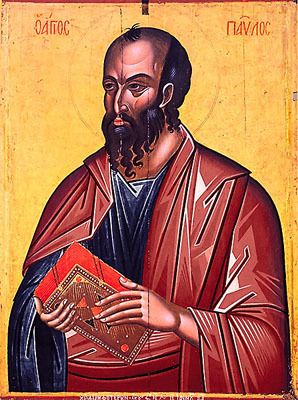
Did anyone exist in the first century? (part 2): Paul


 photo 1PA30_zpsbvsgbcam.jpg


Kenneth Humphreys Is probably the major Paul Myther.I can't find out much about him, but he wrote a Jesus Myth book, The Christos Mythos. See a review by major historian James omerea. His anti-Paul arguments are laid out on a blog: A Fabricated Apostle: Two Different Pauls.

Humphreys has many argumens but I will deal with six, and to summarize them:

(1)Argument from silence on Paul's great acts

(2) Disparities between Epistles and Acts

(3)Conflicts between Paul's Roman citizenship and Jewishness

(4) Paul's conversion story is implausible.

(5)Supposedly parallel passages with Josephus.

(6)No evidence of Paul in Ephesus His First Argument is an Argument from Silence (OF COURSE). There's no record of Paul being assigned to enforce Jewish sanctions against heretics. Moreover, Paul was always meeting Kings and civic dignitaries yet there is no record of it in secular history. "The trail-blazing Christian missionary and apostle, St Paul, appears nowhere in the secular histories of his age (not in Tacitus, not in Pliny, not in Josephus, etc.) Though Paul, we are told, mingled in the company of provincial governors and had audiences before kings and emperors, no scribe thought it worthwhile to record these events."

Humphreys seems to assume that there's some archives to which we can go to look up all that happened in first century Palestine. There is no such place. They did not have a vast governmental achieve, if they did we don't have it now. We have little from the first century. The list of all first century writings that don't mention Jesus (excluding prolific Philo) is so small it's not much bigger than those that do. Any authority granted Paul if even written, would be so totally obscure it's silly to expect to have it.[1] As for meeting with important people a lot of that was due to Paul claiming rights of Roman citizenship when charged with crimes. There's nothing remarkable about that so no reason to expect to find the records. That's like saying "my son [the drug addict] is always talking to layers and judges so he's an important guy." Moreover, Stephan Neil points out that Luke gets the titles of all the functionaries correct in all the different regions.Neil thinks that one of the most impressive aspects of Luke as an historian is that he always gets the titles right. Many of the titles of local officials which Luke provides us with were not validated until modern times. "The writer of Acts knew the correct titles and used them with varying precision. In the words of Ramsey: 'the officials with whom Paul and his companions were brought into contact are those who would be there. Every person is found just where he ought to be; proconsuls in senatorial provinces, asiarchs in Ephesus, strategoi in Philippi, politarchs in Thessolonica, magicians and soothsayers everywhere.' The Most remarkable of these titles is Politarch the ruler of the city used in Acts 17:6...previously this word had been completely unknown except for this passage in Acts. It has now been found in 19 inscriptions dating from he second century..." Neil argues that titles are the hardest things to get right, modern French writers never get English titles right, and this is something that would easily and surely betray an anachronism (147)Historians of the modern day judge Luke a superb historian.This is good evidence that he did make the journey because getting such title's right is very hard to do.[2]It seems the author really was on the trip and thus it's not made up out of whole cloth. He probably knew Paul as well.

His second argumentis that the Pauline Epistles and the book of acts portray widely divergent views of Paul. Paul of the epistles is independent and confident, not intimidated by authority of the Apostles. He confronts Peter (Galatians); the Paul of Acts is cooperative, dedicated to the team, and willing to be commanded and led:

Now part of the brethren ("with them coming in and going out at Jerusalem" - 9.28), he is "managed" by the elders. Disciples "took him" from Damascus (9.25) and Barnabas "brought him" to the apostles (9.27). They "brought him" to Caesarea and then they "sent him" to Tarsus. Barnabas "brought" Paul back to Antioch (11.26) and then with him was "sent" to Jerusalem with famine relief (11.30) – (as it happens, a visit to Jerusalem completely unknown to Paul himself). Eventually the brethren "send" Paul on his first missionary journey (13.4). As a missionary, Paul is very much on the collective message:"And as they went through the cities they delivered them the decrees for to keep that were ordained of the apostles and elders which were at Jerusalem. And so were the churches established." – Acts 16.4,5.

From Thessalonica, Paul is "sent away" to Berea by the brethren (17.10). He is also "sent away" by sea and "brought" to Athens (17.14,15). In Cenchrea, Paul even takes a Jewish vow and shaves his head! (18.18).
On this point there's an ironic but obvious counter. Humphrey's says of the Paul of Acts: "The closest Acts comes to bestowing the title [Apostle] is 14.14 where his name follows Barnabas and the plural is used." Then: "Full of his own importance, in all his letters Paul hammers home the point that he is an apostle and that his appointment comes directly from the divine." Do you see a relationship there? That is certainly not proof that he didn't exist. All it really proves is that once got out on his own he realized how they treated him and decided to do it this own way; more a proof of his historicity because it shows he was human. Moreover the fact of shaving his head means he was in conflict with them. He was commanded to do it, it was a PR move and Paul's own idea. My argument is not that here is no disparity but that Humphreys is making much more out of it than should be made. First you have the difference between Paul's account of himself (ok so he's not Mother Teresa--he has an ego)juxtaposed to Luke's understanding of him. In fact Luke's account might have been recorded and embellished from verbal recollections by a well meaning acolyte. Secondly you have to consider the tine and the on text. Luke is writing to put Paul's life in a light that would flatter him and promote unity, and he was writing in the 80s, 20 years after Paul's death. Paul was writing to churches ad hock about immediate problems confronting. Humprey's argues that Paul, in his letters, doesn't tell them about the things in the book of Acts. Yet he was not writing an auto biography. He also did not tell them about his mother, we can safely assume he had one. At worst all this proves is that the Greek physician was a spin doctor not that Paul did not exist.

In his third argument, implausible and contradictory aspects of Paul's story, Humphrey's real ignorance is showing. He thinks that if Paul was a hotshot student of the major rabbi, there would be some Jewish polemics about it. Then an even more egregious and telling display of how little he really knows: "How likely is it that Paul really studied under the Pharisaic grandee (Acts 22.3)? Paul clearly had difficulty with the Hebrew language: all his scriptural references are taken from the Greek translation of Jewish scripture, the Septuagint." He also compounds the ignorance by questioning if a Roman citizen could have any authority in Judaism and asserts nothing in the texts spell out official authority.

First, Paul's status as a hotshot student. No one ever really said, nor did Paul say, "I was the best student.." He said he learned from Gamaliel he did not say "I was the top student." He said "I was zealous" and he said kept the law he didn't say "I was brilliant I was the best." Of course there is also the possibility that such polemics did exist but are lost to posterity; I've already shown that we have little in the way of documents surviving that era. The Romans may well have destroyed any achieves they had in 70 or in 135. When they destroyed Jerusalem the second time they put Roman temples over Christian and Jewish holy sites such as the site of Jesus' tomb. hy would they not destroy archives?[3]

Secondly, the Septuagint gaff. It is common knowledge that the LXX (Septuagint) was the Bible of the early church. In fact the Jews were so angry that the Christians made so much of the Greek scripture and used it to link Jesus to Messiah that they commissioned a new Greek Translation in 100 AD. Why? Because Palestinian Jews spoke Greek. obviously Paul had no trouble with either language he used LXX because that was the favorite of the people.
This translation became very popular among Jews in the first two centuries before Christ because many Jews in those days did not understand Hebrew. Their ancestors had left Israel centuries before, and generation after generation gradually lost the ability to read the Scriptures in Hebrew.Many of the Jews in Jesus' day used the Septuagint as their Bible. Quite naturally, the early Christians also used the Septuagint in their meetings and for personal reading; and many of the New Testament apostles quoted it when they wrote the Gospels and Epistles in Greek. What is most fascinating is that the order of the books in the Septuagint is the same order in our Bibles today, and not like the Hebrew scrolls....
[4]

As for Roman citizenship in Judaism apparently he doesn't know, what anyone well versed in Paul should know, that the Jews of Asia minor did have Roman citizenship and they were full fledged Jews and had rabbis and everything (Tarsus, where Paul was from, is in Asia minor).[5] The fourth argument with which I will deal is argument from incredulity; has a lot of little parts, part of his spread on implausibility. The doubts the conversion story, saying if Paul was not convinced by Jesus' miracles why would the Damascus road experience.

Perhaps because it happened to him? Let's assume Paul saw Jesus from afar as a member of a huge crowd, a hostile spectator who never said one word tov Jesus. Probably didn't get close. For all we know he could have been back in Cilicia during Jesus ministry, but let's assume he was there. He's watching Jesus surrounded by hundreds, or thousands, of followers what's he going to do attack him? He was smart enough to know he wouldn't get very far. He was a scholar not a son of Hercules. Would he be convinced by Jesus? I imagine he would think of Jesus in the same way that Modern atheists think of faith healers. Having the experience himself could be transformative.

The fifth argument is not one argument but kind of argument he makes many times. He compares passages in Josephus to those in Acts to show that "this is where they got their ideas." This takes an absurd form even counting passages that have nothing more in common than the uses of two names that are the same: John and Silas. Josephus in his Life (auto biography) says (as Humphries summarizes) "Josephus was himself betrayed by 'John', chose an ally named 'Silas', and made a miraculous escape!" While in Acts (16:25-29) Paul sees some reason not to take John and does take Silas. Jo is betrayed by a John, and has an ally named Silas. In a second such example(also from Life but not cited so we don't know where Jo tells Jews not to force circumcision on some gentiles and Paul says the same thing in relation to Timothy.

This is typical of myther thinking (see part 1). Two stories share the same word so one must have copied the other or must be referring to the other. read the parallels see that the stories are not about the same things it's only veg references like negative about a John and Silas is a friend.[6]

The Sixth Argument no evidence of Paul in Ephesus. He argues that all the legends have John founding the church of Ephesus not Paul. Paul was supposed to have lived there for three years a d founded the church there.

Just left our one little thing, mythers have so thoroughly purged the Bible from their consciousness he doesn't even consider it to exist. So he doesn't dawn on them that the txt is an artifact itself, like pot shard. All he can see is the pastoral epistles not written by Paul. But they were written in Ephesus. So why are people in Ephesus trying to attribute works to Paul? Not just because he was important but, perhaps, because he was in Ephesus. Otherwise why attribute the work to someone who was never in that city. What's really odd is that suddenly we trust these legends. The Bible is rubbish and has no authenticity, full of mythys and copied after pagan religion but in this one area the Christian legends (they are really legends) are right that John started the church in Ephesus. Praise God, We found one historical church figure who actually existed! In reality of course we better reason to think Paul was there than was John. On the other hand there is no reason why they both could not have been there. The most up to date scholarship shows us that there ere many Christian communities in Ephesus. There was no on church community that was the true official church.[7] Some were gnostic some had nothing to do with each other. There could have been a core community started by Paul that eventually merged with the Johanine community, if John was even there. Another possibility is that is that Paul could still exist even if he never went to Ephesus.

Even if we accept his major thesis that Acts is a gloss on Paul for propagandistic purposes, that still doesn't prove there was no historical man who wrote Romans and was named Paul, and was from Tarsus. none of these arguments actually prove there was no Paul. The author of Acts could have propagandized weather Paul existed or not. Just for the record, I can accept that Luke did propagandize or spin or gloss to some extent, but Acts is too well verified by Sir William Ramsey not to be a valuable historical source. But that's another blog. I will do a part 3 giving positive reasons to believe that Paul existed. Remember Paul is a source for proving that Jesus existed. see Cadre blog pieces on historicity of Acts (Nov 4, 2007 by BK and one by me against Richard "Bayes Boy" Carrier's views im marfh of 14).

Sources


[1] E.M. Blaiklock, Jesus Christ: Man or Myth? Nashville: Thomas Nelson Publishers, 1984.

Non Christian writings of Roman empire (excluding Philo) that don't mention Jesus. This is all of them, the point being we don't have much first century stuff.

* An amateurish history of Rome by Vellius Paterculus, a retired army officer of Tiberius. It was published in 30 A.D., just when Jesus was getting started in His ministry.
* An inscription that mentions Pilate.
* Fables written by Phaedrus, a Macedonian freedman, in the 40s A.D.
* From the 50s and 60s A.D., Blaiklock tells us: "Bookends set a foot apart on this desk where I write would enclose the works from these significant years." Included are philosophical works and letters by Seneca; a poem by his nephew Lucan; a book on agriculture by Columella, a retired soldier; fragments of the novel Satyricon by Gaius Petronius; a few lines from a Roman satirist, Persius; Pliny the Elder's Historia Naturalis; fragments of a commentary on Cicero by Asconius Pedianus, and finally, a history of Alexander the Great by Quinus Curtius.

Of all these writers, only Seneca may have conceivably had reason to refer to Jesus. But considering his personal troubles with Nero, it is doubtful that he would have had the interest or the time to do any work on the subject.
* From the 70s and 80s A.D., we have some poems and epigrams by Martial, and works by Tacitus (a minor work on oratory) and Josephus (Against Apion, Wars of the Jews). None of these would have offered occasion to mention Jesus.
* From the 90s, we have a poetic work by Statius; twelve books by Quintillian on oratory; Tacitus' biography of his father-in-law Agricola, and his work on Germany. [Blaik.MM, 13-16]

"To this Meier adds [ibid., 23] that in general, knowledge of the vast majority of ancient peoples is "simply not accessible to us today by historical research and never will be." It is just as was said in his earlier comment on Alexander the Great: What we know of most ancient people as individuals could fit on just a few pieces of paper. Thus it is misguided for the skeptic to complain that we know so little about the historical Jesus, and have so little recorded about Him in ancient pagan sources. Compared to most ancient people, we know quite a lot about Jesus, and have quite a lot recorded about Him!"

So there just aren't that many overall sources to go by in the first palce. But why wouldn't more of Jesus' contempoaries write about him?

[2] Stephen Neil, The Interpretation of the New Testament:1861-1961, London: Oxford University press, 1964,143.

[3]G.Cornfeld,Archaeology of The Bible: Book by Book, New York: Harper and Row, 1976, 271-2).

[4] John Barnett, "What Bible Did Jesus Use? "Jesus.org. on line resource URL: http://www.jesus.org/birth-of-jesus/genealogy-and-jewish-heritage/what-bible-did-jesus-use.html

[5] Paul Trebilco, The Early Christians in Ephesus From Paul To Ignatius,Grand Rapids, Michigan: Wm. B. Eerdmans Publishing Co., 2007.

article about Tarsus then and now, archeological excavations and pictures.

[6] compare the two passages
" But when John [of Gichala] was come to the city of Tiberias, he persuaded the men to revolt from their fidelity to me ...

A messenger had come to me from Silas, whom I had made governor of Tiberias ...

Upon the receipt of this letter of Silas, I took two hundred men along with me, and traveled all night ...
"But Paul thought not good to take John with them, who departed from them from Pamphylia ...
And Paul chose Silas, and departed, being recommended by the brethren unto the grace of God.– Acts 15.38,40
" And at midnight Paul and Silas prayed, and sang praises unto God: and the prisoners heard them

" And at midnight Paul and Silas prayed, and sang praises unto God: and the prisoners heard them.


We can see there is almost nothing parallel about these passages. The names are about all they have in common.

[7] Trebilco, op,cit., 2-4.

Wednesday, December 30, 2015

Did Anyone Exist in The First Century? (part 1): The Peter Myth


The Jesus myther thing is funny. They wanted to be totally sure they wouldn't go to hell so they convinced themselves Jesus just didn't exist. Actually they got the idea from 18th and 19th century people such as Bruno Bauer who did not have benefit of more recent scholarly developments. It was an age of unbelieving super liberal scholarship where thinkers like Von Harnack were more common and believing scholars like Lightfoot and Wescott were less common. Atheists are already skeptical of any counter evidence and it's really the final solution of atheism to erase Jesus from history. But Paul proves Jesus existed. He met his brother and some of his best friends, and speaks of his fleshly nature and earthly linage. But not to worry, Paul didn't exist. That's right there is actually a big movement (by Jesus myth standards) to say Paul didn't exist. But Paul is proved to have existed because the author of Peter's epistles, whoever he was, said he did. Guess what? There's a group of peter mythyers. Dare I pointed out that Clement of Rome seemed to suggest that he saw both Peter and Paul, what do you think they would say?

The author of There was no historical Paul the Apostle is a brave skeptic who objectively imposes the most demanding standards of skepticism upon all but his own views. When considering the Bible he bravely informs us to be skeptical and critical think. He forgot to do that with his own stuff. I notice he's an Acharya S-ie.(like a "Moonie")he says:
Acharya is operating basically within the right paradigm, in which all the figures are approached as essentially mythological. Like most scholars, she has only a lower type of grasp of esoteric religion, but she knows that whatever esoteric religion, mysticism, and gnosis amounts to, Christianity was that rather than a literalist scenario. She argues that the apostles are all mythic-only, and more notably, argues that Paul is ahistorical.
Who is Ashara S and what is her Paradigm? She's a major Jesus myth person who was given a very important mission, that of destroying Christianity. Who gave her this a mission? Moscow? No. Castro? No. The Underworld? no,. Little gray space aliens*. That being said I think we skip over the paradigm. The myther movement is full of crack pots and non professional scholars. The most scholarly they have are the band of 19th century people. i'm going to lay out the sources that I think are their best and deal withy them. Since most of us have probably heard a lot of Jesus myth stuff I will deal withy only the Paul and Peter myth stuff.

Something like real scholarship on the Peter myther scene is Arthur Drews (1865-1935) author of The Legend of St. Peter. Historian, Philosopher, representative of Monism in Germany. He was at the tail end of that pack of people who denied Jesus[' existence whom Schweitzer debunked and put to flight..[1] That's why Drews has been described as "forgotten." There's an online version of his Witness to the Historicity of Jesus (1912) is online.[2] I will deal with that one soon, but looks pretty standard. A recent translation of his St. Peter books is available on Amazon...[3]

Despite the fact that Drews was areal scholar his information is out of date because we was working a hundred years ago. Every assumption he made and all of his information it's all horribly out of date. His basic working method is a joke today. I respect him greatly for what he did in his day; that was great learning he was very learned. But in this day it's all so anachronistic. I've always observed that atheists on message boards, so many of their arguments are rooted in the 19th century. Allo of Drews's arguments are based upon a kind of associative word play where if two stories use te same word, such ads "stone," one story must come from the other. Every little nuance is jam packed with hundreds of associations like this so that Peter is called Cephus and Mithra was born from rock, therefore, peter is copied after Mithra. This was the kind of methodology that was used back then because they didn't know as much as we do. They made outmoded assumptions like all religioms are mythical, all religions barrow from each other. Barrowing doesn't happens in ideas it happens in imagery and word play from mythological narrative. Akk of his arguments are like this:

Dupuis was the first scholar to identify St. Peter as Janus [the term janitor, originally keyholder, derives from janus]. Janus in turn derives fron Dianus (>> day), a god of the daylight hours, male form of Diana, the famous lunar- and wildlife deity. Janus was considered the god of all doors, especially responsible for the portal to heaven. The month January is named after Janus.

One star in Virgo is called Janus. This implies astromythical imagery. In the old days, Janus was at the Medium Coeli at sunrise around the winter solstice, thus opening a new year. Janus was not only competent for opening and closing days and years, but also war and peace. Janus was here seen as superior to Jupiter, the father of the gods. As Janus leads the annual circle of the zodiacal signs, St. Peter leads the twelve apostles of Roman Christianity.

Hercules is called a mace bearer, but key and mace can be expressed as synonymous in Latin: Hercules is thus a key holder like Janus.

The regions of the near East get most rain in winter. This leads to the picture of Janus as a ferrymen across the invernal flood. Argo, called the ship of Janus, was back then seen in the medium coeli during rain time. Janus as a ferryman again alludes to Peter's activity as a fisherman.

Janus was depicted not only with the key to heaven, but also with a long staff that can be reinterpreted as the shepherd's staff with which St. Peter watches over the 'sheep' of the Catholic church.

Janus was depicted as two-faced, watching both ahead and back, from horizon to horizon.


This is why the Jesus myth crowd are stuck on the dying rising savior thing and the copy cat savior thesis. They respect these guys, they think they are forgotten geniuses, and they are. There' a reason why they were forgotten. They pend all their time reading this stuff and very few Christians know how to answer it. When they hear Christians say these guys aren't scholars they know better. They were scholars they are just outmoded. Schweitzer said Bauer was a genius. But he also said he was wrong. Atheists spend so much energy shouting that theology is stupid they really think that theology is about this stuff they refuse to learn.

Think about all the things that have changed since Drews wrote. First, since they discovered the Dead Sea Scrolls we can see the New Testament is really a lot more Jewish than they thought. My apologist comrades and I have always wondered why they can't see that all the elements of the Jesus story are in Judaism. Because they are reading stuff from a time when scholars thought that the NT was all Greek and gnostic, The assumption of Gnosticism was because they didn't have Naghammadi to compare to. Now that tendency to see Gnosticism in the NT was alive and well as late as the end of the 20th century with Elaine Peaggles book. But what people don't know is that the scholars were cringing at bad the book I was in the classes of some of those scholars.,

Let's look at some of the specifics of his argument. After an absurd land slide of associative connects that human being thinks in, we have two emblems that link Jesus to pagan gods and they all are given by him to Peter (in the quotation of he summary above): the Shepard's staff, and Keys to the kingdom. In addition he's linked to Mithra because they both have some tangential relation to rocks. Mithra was a Shepard, Peter as Shepard of the church is also linked through Janus as Ferryman and Peter as fisherman. They both have boats. No one thinks this way. No one would say "I'm going to make up a Pal for Jesus and Janus reminds me of Shepherds so I'll have him be a bishop of the church." Notice the association is made to Jesus giving Peter a staff but no such thing happened. Jesus tells Peter, "feed my sheep,' but it says nothing about a staff. It's like James Joyce playing charades. A stream of consciousness mae up of Freud-like associations.

Another unknown in the days of Drews was the real belief system of Mithrism. It began in Persia but Mithra is thought to be a mythological figure from India. The Persian cult traveled to Rome. Even in Drews day they knew that they had no written materials from the cult. They were guessing about the importance of sheep and the comic bull. No proof that the Roman cult had Mithra the Shepard Mithra, the links to Jesus and Peter just evaporate. They that solders in Jerusalem took Christianity back to Rome and thus Christianity influenced Mithraism. The most damaging fact is what they did not know because it was discovered by David Ulancy (Mithra scholar par excellence) in the 1980s: The Roman cult was a front for another cult. They weren't even serious the rock or any of it. That sort of cuts down on thye odds that they would be influencing Jews in Palestine. There are two statements that need to be understood concerning Mithrism and Christianity, the totally disprove the idea that Jesus was patterned after Mithra. The first is by David Ulansey the major scholar of Mithrism:

Owing to the cult's secrecy, we possess almost no literary evidence about the beliefs of Mithraism. The few texts that do refer to the cult come not from Mithraic devotees themselves, but rather from outsiders such as early Church fathers, who mentioned Mithraism in order to attack it, and Platonic philosophers, who attempted to find support in Mithraic symbolism for their own philosophical ideas. "At present our knowledge of both general and local cult practice in respect of rites of passage, ceremonial feats and even underlying ideology is based more on conjecture than fact." [5]
Fanz Cumont was a major scholar, he often shows up on the bibliography of every major Jesus myther (he's on Kane's and Frick and Ghandy). He was a real scholar and a major scholar, but the mythers apparently don't read his entire book:
"There is no real evidence for a Persian Cult of Mithras. The cultic and mystery aspect did not exist until after the Roman period, second century to fourth. This means that any similarities to Christianity probably come from Christianity as the Soldiers learned of it during their tours in Palestine. The Great historian of religions, Franz Cumont was able to prove that the earliest datable evidence for the cult came from the Military Garrison at Carnuntum, on the Danube River (modern Hungary). The largest Cache of Mithric artifacts comes form the area between the Danube and Ostia in Italy." [5][6]
" The connections from Mithrism to Jesus evaporate, and thus the connections from Mithrism to Peter as well. This and much more is carefully documented on my Mithrism pages. There are more big surprises there. It also would not hurt to see my Jesus Christ Copy cat savior? pages, In fact here is my whole Jesus myth menu. My historical Jesus Menu.
I don't know much about Janus but I have researched several of the figures used by mythers for the (alleged) patterns of the Jesus figure. They always evaporate when we move out of tye fairyland of myther books and read real mythology books such as Hamilton and Bullfinch. Not Christian apologists. Real secular schools of myth and folklore.

Nex time I'll deal with a couple more writers whom I consider to be challenging and scholarly and the one tangible bit of evidence outside the NT that documents the existence of both Paul and Peter.

Sources

[1] Albert Schweitzer, The Quest of The Historical Jesus. [2]Author Drews, Witness to the Historicity of Jesus (Joseph McCabe Trans.) Original publication 1912. online URL:http://www.mountainman.com.au/essenes/Witnesses_to_the_historicity_of%20Jesus_AUTHUR_DREWS_1912.htm accessed 12/1/15Atheist Press 1997 [3]____________,and Frank Zindler The Legend of St. Peter. American Atheist Press(Trans. Frank Zindler) 1997 (original 1910). [4] Klaus Schilling's summary of "Die Petruslegende" by Arthur Drews on Theory of ego website. Online resource URL: http://www.egodeath.com/arthurdrewslegendstpeter.htm#_Toc116703882accessed 12/1/15. Thisi a summary of the book. The whole thing reads like that. [5] David Ulansey, Mithraic Studies: Proceedings of the First International Congress of Mithraic Studies. UK:Manchester U. Press, 1975. ,437. [6] (Franz Cumont, The Mysteries of Mithra Chicago: Open Court, 190), 87ff.

* this is from the link to the thing by8 Holding. Radio talk show the subject was extraterrestrials. The calls says clearly he is discussing extra terrestrials. Caller: "Ok Mohammed also met one of them in a cave…a similar type of being. And also in the book of Isaiah, Daniel…all the extra-biblical texts talk of the same type of beings and other cultures talk of the same type of beings. I'm wondering how they all would describe the same thing…"

Acharya: "Well, I can tell you I've had beings around me too and they are telling me to put this information out there. So I'm not disagreeing that there are beings. But it takes a great deal of knowledge and refinement of that knowledge to realize what you're looking at and unfortunately most people don't have the platform from which to be viewing this information necessarily. So they…there's all kinds…The speculation that starts getting in becomes quite tortured…"

see the link at top


Tuesday, December 29, 2015

speak up

I need to know there are people out there reading this stuff. stat talking! I've opened up postingg to all and removed moderation.

Sunday, December 27, 2015

Defection of a Christian Apologist


 photo bizarro_atheists.jpg


Kyle Roberts, Professor of Theology at  United Theological Seminary of the Twin Cities, writes about "Dr. Steven Davis, Christian apologetics professor who, after becoming an atheist, recently resigned his position at Manhattan Christian College. He had been at MCC for 15 years and prior to that was a pastor for 14 years." [1] There is an interview of  Davis in which he enumerates five guiding principles that helped him decide  for abandoning the faith. I will comment on these reasons and upon the observation Roberts makes about them.  First, Roberts expresses admiration for Davis in that he had the guts to own up to his true feelings about his life's career and commitment of faith that has grown cold. Roberts expresses the notion that this is more honest than living a lie. Of course it is and I have to kind of admire that too, although he threw away security, his income and someth9ing he worked away his youth to achieve in the first place. Why did he seem convinced about God in the first place. Think of 1st John, "they went out from among us because they were not really of us."

On the other hand it's heart breaking to see this happen. It's always easy to answer other people's doubts, not so easy to get them to accept the answers, It's also easy to think "all he had to do was read my book." Really all the answers, facts, and logic are of no avail when someone wants to leave the faith., Who are we to say their reasons are not equal to my answers? Years ago (sometime around 2001-04) when the CADRE [2] was still just a band of message board warriors, we lost an apologist, gave up the faith right in the middle of our heated battles. The irony was he had been touted by a member who brought him into the group. "my friend is a fine apologist, he'll give those atheists what for..." Our arguments were getting better, the atheists were getting stupider (to hear us tell it) and so on. This guy just gives up. Why? He had personal reasons we did not know about, and I suspect that's the case with most such cases. Atheist like to flatter themselves that they are paragons of reason, I would be willing to bet that true reasoning rarely decides the matter either way.

The first of Davis's principles:

(1) “The Truth has Nothing to Fear.”  "We should seek 'unadorned truth,' no matter the cost or no matter where it leads." Sure no one says "I just want to be wrong, hopefully falling prey to deceptions." Truth may have nothing to fear but deception not so much. What happened to the truth he accepted as the Gospel before? He is going to play a game with this concept of truth, as we will see, It seems his hidden assumption is that if he is seeking the truth he can't be deceived but there was a time when he thought Jesus was truth.

(2) 'Humans are Not Objective.'
Rather, we are interpreting beings who operate on the basis of received assumptions about the way the world really is. He doesn’t use this word, but my assumption is that by being “not objective,” he is simultaneously acknowledging that humans are thoroughly subjective creatures–people whose subjectivity shapes, influences, limits, and colors our perception of reality.  Thus, there is no reality as such (unmediated, pure, “objectively” accessible); rather, there is only reality as it appears to me. I’m saying more than Davis said there, perhaps, so he can correct me if I’ve imported something he doesn’t say or believe.  
Note that saying 'there is no truth' and 'we are subjective' are not the same things. There has to be a nature of the case if there is any semblance of reason or order in reality. If there is not then what the hell are all of these atheists doing talking about science? There could be truth but we can't find it. Then which general direction is closer to it might become the paramount issue. This means one could go in a better or worse direction; if we equate truth with 'better.' So the fact that we are subjective does not mean there is no truth or that it does not matter in which way we turn. I've preached  for years that there is no objective truth (meaning from human perspective) I also accept the correspondence theory of truth [3] so there is a "nature of the case," then it matters how close we can come to understanding that nature, or the correspondence to reality.

I think he will find that atheists do not appreciate the notion of subjective truth. It is my experience from 15+ years of message boarding that, even though there are different kinds of atheists a hallmark of the "new atheists" (aka Dawkamentalists, or "Dawkies,") is their fear of subjectivity. They need to believe that science gives them the objective truth. They tend to equate subjectivity with emotionalism which they see as the worst aspect of life, they seem to equate it with sheer stupidity. There is also the concept of inter-subjectivity. [4] By this notion we can correlate our subjective experiences with each other. Paul Tillich had a major aspect of his theological method that was based upon the correlation between scripture and doctrine, scientific data, an d personal experience. Tillich holds that understanding the human condition is a philosophical task the Philosopher must draw upon interpretive materials from all realms and aspects of culture, this includes science. This vast array of material is given focus by one central question "what does it mean to exist?" Science cannot deal with this issue. Science does not deal with questions of meaning, that is a philosophical issue. Such a question is totally beyond the domain of science. [5]

(3)  “Religious beliefs have been socially constructed.”
He refers there to The Social Construction of Reality by Berger and Luckmann, making the point that religions are disseminated, passed on, through the mechanisms of cultural inheritance and social influence. The problem is that many people are not quite aware of the way religious beliefs get passed on to them (or of how they come to believe this or that) and so they have naive assumptions about and unfounded certainty in those beliefs. And this is no doubt true.
.I have not read Berger and Luckman but this notion of social constructs is all over postmodernism. One of the major influences is Derrida, and it probably goes back to structuralism or post structuralism. [6] A lot of people seem to equate "construct" with "made up." Construct does not mean fictional. It means that a concept is understood in cultural terms. Everything is a construct even true things are constructed in that our concepts of them are filtered through cultural understanding. One example is the idea of separate restrooms for men and women. It is not a fact of nature than the sexes should segregate what the commercials call "the go." A compound construct (my term) is the idea of representing the restrooms by pictorial symbols such as a butterfly and a crab. Which is which? I bet every readers knows: men = crab, women = butterfly. How do we know? Our culture has so construed the difference and communicated it to us in so many subtle ways that we just know. That is a construct.

Why would that equate to falsehood? If our concept of God is constructed and taught to us though culture, does that make it untrue? How else would it be passed on? What he's missing is the fact that science itself is a pile of constructs. Science works by paradigm shifts paradigms are nothing but constructs

The claim that the consensus of a disciplinary matrix is primarily agreement on paradigms-as-exemplars is intended to explain the nature of normal science and the process of crisis, revolution, and renewal of normal science. It also explains the birth of a mature science. Kuhn describes an immature science, in what he sometimes calls its ‘pre-paradigm’ period, as lacking consensus. Competing schools of thought possess differing procedures, theories, even metaphysical presuppositions. Consequently there is little opportunity for collective progress[7]. 

One of the most crucial concepts in science is cause and effect. This Davis wants to call himself an "empiricist" and apparently he hasn't read Hume (the most important empiricist), because the concept of cause as Hume construed it is nothing but a construct. He says we don't see causes the whole point of empiricism is the construal of cause based upon tight correlation and how that feeds into probability in the construction of inductive methods in science.[8] If he is scraping belief in God because it's s construct and he's becoming an empiricist because he thinks that guarantees a factual approach free from constructs, I have some sad news for him. Empiricism is itself a construct. If he argues that he doesn't think empiricism guarantees objectivity but it's closer than belief in God, I still have news; I not only can remain a Christian and use empirical scientific data  to bolster my view, but I have done so in my book, The Trace of God: Rational Warrant for Belief (available on Amazon).[9] 


(4) “the necessity of critical thinking.” Roberts quotes Davis:,

"My doctoral program in adult education introduced me to the specifics of critical thinking. I came to realize that adopting and implementing a critical thinking strategy would provide me with the best methodology for applying guiding principles 1 and 2."  He needed a doctoral program to tell him to use critical thinking? Roberts adds:
By applying the skills of critical thinking, one can “accurately assess his social construct” and “discover, challenge, and expose inaccurate assumptions.” This makes sense. As a theology professor myself, I extoll the merits of critical reflection and “deconstruction” of inherited assumptions. This is all part of the educational, formational, and theological process. 
Had he done that he wouldn't have ditched one construct for another under the guise of being more objective.

(5) “apologetics requires engaging counter-arguments.”

"The apologist can’t keep her head in the sand, but must bravely face all “comers”–otherwise the apologist is basically admitting defeat." Shall I repeat myself Calling yourself an empiricist without reading Hume might qualify as keeping your head in the sand, or someplace...

As Roberts reports he doesn't really pin down a reason why he changed his assumption that Christianity was true. He could defend it in spite of its constructed nature as long as he assumed it was true. For some reason he changed that assumption. He seems to be setting himself up for the same probablematic in assuming that there is nothing beyond the material. Roberts observes a contradiction between the assumption of human subjectivity vs, scientific empiricism.
Should we really trust our critical thinking to give us something like “objective” truth, particularly when it comes to the question of whether there is a God/god/gods or not? 
Davis now calls himself a “Rational-Empiricist.” He defines this as, “the epistemological position and methodological approach of modern science.” and believes it to be “the best way humanity has for discovering, understanding, and anticipating facts about our world is when reason and experience (empirical data) work together.”
Someone should send Davis a copy of  Stephen J. Gould. Science and religion do not compete. They pertain to different sphere's of influence (magisteria). They exist for different purposes and they answer different questions. Even in areas where they seem to overlap they don't. The most contested area is literal reading of Genesis vs. evolution. That's just a case of the literalist not understanding that her literalism transgresses upon the scientific domain, Why? Because the question is about understanding physical nature not about how to be saved.

One can use scientific evidence to bolster one's faith, as Tillich discusses with his method if coloration (see aboveaa0. That's what I did in my book, Through the arguments that I make backed up by a huge body of scientific research from peer reviewed journals there is no reason to give up the faith due to some ill-conceived need for scientific objectivity. See my article on the universal nature of mystical experience. The evidence resulting from Professor Hood's studies using the mysticism scale indicates that mystical experiences are universal to all faiths. Since religious beliefs are cultural constructs this can't be because they are the result of human brain structure. The constructed nature of belief means the symbols that communicate religion are culturally relative. That would imply that to be universal they would have to be the result of an objective external object which is being experienced inter-subjectively. The M scale has been used in cultures as far ranging as Iran and Sweden and Japan, with the same results; when the specific names and doctrinal references are taken out the experiences themselves are the same. These studies are discussed in my book. The argument from universal mystical experience can be read on the Trace of God blog.[10]


Sources


[1] Kyle Roberts," Losing God: From Christian Apologetics Professor to Skeptical Atheist,"     , Unsystematic theology, November 6, 2015, (blog) URL: http://www.patheos.com/blogs/unsystematictheology/2015/11/losing-god-from-christian-apologetics-professor-to-skeptical-atheist/#sthash.hmbfXTID.dpuf


Roberts: (PhD) is Associate Professor of Public and Missional Theology at United Theological Seminary of the Twin Cities (beginning in fall of 2014). Roberts has published essays on Kierkegaard and modern theology, including several essays in the series Kierkegaard Research: 2014-10-14 10.26.51Sources, Reception and Resources (Ashgate / University of Copenhagen) and other collected volumes on various topics, including Pietism, Karl Barth, and Christian spirituality. Roberts has published Emerging Prophet: Kierkegaard and the Postmodern People of God (Cascade, 2013) and is currently co-authoring a theological commentary on the Gospel of Matthew (Eerdmans).


[2] CADRE: "The Christian Cadre," an apologetics group started way back around 2001. The group reached it's zenith about 2009. It evolved from merely being a lose knit gang of Christians on CARM who where just trying help each other argue with atheists, to a somewhat renowned apologetics group with a huge website (Christiancadre.org) and a prestigious and active blog (cadre comments). We also conducted campaigns to invade various atheist boards other than CARAM  such as secular web. We where somewhat successful for a couple months. At least one atheist remarked "where did all these Christians come from all of a sudden."

[3] David, Marian, "The Correspondence Theory of Truth", The Stanford Encyclopedia of Philosophy (Fall 2015 Edition), Edward N. Zalta (ed.), URL = .

Narrowly speaking, the correspondence theory of truth is the view that truth is correspondence to, or with, a fact—a view that was advocated by Russell and Moore early in the 20th century. But the label is usually applied much more broadly to any view explicitly embracing the idea that truth consists in a relation to reality, i.e., that truth is a relational property involving a characteristic relation (to be specified) to some portion of reality (to be specified). This basic idea has been expressed in many ways, giving rise to an extended family of theories and, more often, theory sketches.
[4] Webster 
Definition of intersubjective. 1 : involving or occurring between separate conscious minds ;intersubjective communication; 2 : accessible to or capable of being established for two or more subjects : objective ;intersubjective reality of the physical world.

[5] Guyton B. Hammond, "An Examination of Tillich's Method of Correlation," Journal of Bible and Religion, Vol. 32, No. 3 (Jul., 1964), Published by: Oxford University Press, 248-251

Stable URL: http://www.jstor.org/stable/1460502 (accessed 26 Dec 2015).   

[6] Definitions of Anthropological Terms, Anthropological Resources, Updated:Wednesday, 26-Dec-2012 18:00:08 PST. Website URL
http://oregonstate.edu/instruct/anth370/gloss.html  (accessed Dec 27, 2015)

cultural construct - the idea that the characteristics people attribute to such social categories as gender, illness, death, status of women, and status of men is culturally defined

[7] Bird, Alexander, "Thomas Kuhn", The Stanford Encyclopedia of Philosophy (Fall 2013 Edition), Edward N. Zalta (ed.), URL = .

http://plato.stanford.edu/cgi-bin/encyclopedia/archinfo.cgi?entry=thomas-kuhn


[8] Morris, William Edward and Brown, Charlotte R., "David Hume", The Stanford Encyclopedia of Philosophy (Spring 2016 Edition), Edward N. Zalta (ed.), forthcoming URL = http://plato.stanford.edu/archives/spr2016/entries/hume/.

[9] Joseph Hinman, The Trace of God, Rational: Warrant for Belief. Colorado Springs: Grand Viaduct 2014. Available on Amazon

[10] ____________, "The M Scale and the Universal Nature of Mystical Experience," The Trace of God Blog, no date given. URL
http://traceofgod.blogspot.com/2015/08/the-m-scale-and-universal-nature-of.html (accessed Dec. 26, 2015).
The M scale or Mysticism scale was invented by Ralph Hood Jr. Ph.D. professor in psychology of religion at University of Tennessee at Chattanooga.  The M scale is a survey but it is constructed in such a way as to test theory of W/T.l Stace. See the article.