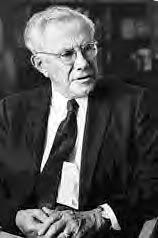
The other day I was answering the atheist attack on CARM that said I
don't know anything about Tillich. In looking for online docs about him I
found a remarkable thing: atheists are making use of Tillich in one way
or another. They either try to reduce him to being a sort of cowardly
atheist who couldn't actually admit he didn't believe in God, or they
try to just assault his views of God straight out much as the CARM
atheists have done for years against my arguments; that's not the image
of God in the bible so it's unchristian. I really kind of feel that it's
a mark of Tillich's growing popularity among theists and I like to kid
myself into thinking I had a lot to do with it becuase of this blog. On
the other there's enough of it going around that it's probably time to
answer the assertions.
.......First of all another blogger Thomas Adams on
"Without Authority" writes
"Was Paul Tillich An Atheist?"
Of cousre that article was up in (March 9) 2009 before I ever talked
about Tillich on this blog. O well. In any case he quotes some character
named Lenard F. Wheat who says that "Tillich's chief claim to fame will
be that he fooled a lot of people...
Tillich is a complete atheist who lost his belief while completing his
higher education. Intellectually he despises Christianity ..." He goes
on to deal with Daniel Dennett and Sam Harris, atheist gurus, who write
that the world of believers can be reduced to fundamentalists are closet
atheists who dont have the guts to own up. Thus all the intelligent
well educated believers are int he latter category so any true belief is
stupidity and atheists don't have to listen to the more rational kind
of theist. Having reduced all rational theism to atheism then of cousre
Tillich falls in.
......Adams goes on:
As the quote at the top of this post shows, such
atheists frequently take aim at Paul Tillich, who represents, for them,
the epitome of the "atheist theologian." They've referred to Tillich's
theology as "semantic hocus-pocus", "strictly bogus", a "bold
masquerade", and "nonsensical hokum and claptrap". But do the charges
stick? Was Paul Tillich really an atheist? The following quotes of his
would seem to say yes:
"God does not exist. He is being-itself beyond essence and existence. Therefore to argue that God exists is to deny him."
"God is the symbol for God"
"The God of theism is dead"
Apparently
he saw atheists taking aim at Tillich back then, thus another cherished
illusion is shattered. Still, I've seen a lot of them doing it recently
this may a mark of Tillich's rising popularity, regardless of what
produced it. Of course in the phrase that God does not exist Tillich is
not saying there's no God. To think that he is saying that (in the
recent may-lay on CARM some did try to argue this) is a classic mistake
and shows immediately that one has not read Tillich. He uses the phrase
"exist" in relation to contingent things only.So for Tillich existence
is a lesser state than being and denotes dependence upon being. God is
not contingent but is being
itself. God demarcates the higher state upon which existing thins (which are contingent) depend.
.......An
example of an Atheist taking on Tillich straight out is one I've
covered on Atheistwatch before, the "Camels with Hammers" blog by
Daniel Fincke. On December 21, 2011 he posted an article "The Impossible God of Paul Tillich." The one thing that marked this blog when I reviewed it on AW was his ignorance. We see it in action:
Tillich says he’s a Christian. But here it’s worth pointing out that
Tillich’s “God” is so far from the God of the Bible (and traditional
Christian theology) that it’s hard to take his claim of being Christian
very seriously. And Tillich has widely been criticized by Christians as
offering a strange new theory of the divine. Some might say that
Tillich was a Christian atheist. Anyway, here are some relevant points
from Tillich:
1. God is being-itself. Tillich wrote: “The being of God is
being-itself. The being of God cannot be understood as the existence
of a being alongside others or above others. . . . Whenever infinite or
unconditional power and meaning are attributed to the highest being, it
has ceased to be a being and has become being-itself.” (1951: 235).
And he affirms again that “God is being itself, not a being” (1951:
237). Since God is not a being, Tillich famously affirms that God does
not exist (1951: 205, 237).
2. God is the power of being.
Tillich says “the concept of being as being, or being-itself, points to
the power inherent in everything, the power of resisting nonbeing.
Therefore, instead of saying that God is first of all being-itself, it
is possible to say that he is the power of being in everything and above
everything, the infinite power of being” (1951: 236)
3. God is transcendent.
Tillich affirms the transcendence of God when talks about God as being
above all things. He writes that God is “the power of being in
everything and above everything”(1951: 236). And he
says that “As the power of being, God transcends every being and also
the totality of beings – the world” (1951: 237).
These
are good quotes but he doesn't try to learn what they mean. These are
all things I've said here on this blog. They are not hard to grasp if
one does of background research, he doesn't. He assumes that these are
just high tone words designed to hide his unbelief, the reason being
this is not the Christian stuff Fincke learned when he was Christian.
.......Of
course if he really doesn't know that much about it he would probably
still be one. So all he's really telling us is that that doesn't know
anything about the real Christian view of God held by the great
theologians of the past because all he ever learned about was the usual
fundamentalist Biblical literalism. He accuses Tillich of having to
"pull himself back from the brink of paganism." That's becuase for
Fincke the real Christian view expounded by the great theologians of the
Orthodox church seems like paganism becuase he knows nothing about it.
For example he makes the specific charge that Tillich is a pantheist. He
attirbutes his escape from pantheism to belief in God's transcendence.
As though some passage in the Bible say " thou shalt not be a pantheist"
and any understanding of God as present in nature is pantheism and any
theological point of view that separates Christianity from pantheism is
some sort of trick. Fist of all what is he calling Pantheism? Pantheism
is either the belief that God is the sum total of all things, or (old
school) a personification of nature; nature as a force is worshiped as
deity. Neither one of these options is implied in anything Tillich says.
.......Stanford Encyclopedia of Philosophy defines Pantheism thus:"At its most general, pantheism may be understood positively as the view
that God is identical with the cosmos, the view that there exists
nothing which is outside of God, or else negatively as the rejection of
any view that considers God as distinct from the universe."
[1]
The article goes on to say that philosophical opinion on the subject is
too divided to be more specific. Yet if that is a valid interpretation
than the transcendence issue would divide a pantheist form a non
pantheist since the definition would say there's nothing outside of God,
and saying that God is transcendent of all things would be the
contrary.It is from
Webster that I get my view that patheism sees God as nature, or the sum total of all things:
1
: a doctrine that equates God with the forces and laws of the universe
2
: the worship of all gods of different creeds, cults, or peoples indifferently; also : toleration of worship of all gods (as at certain periods of the Roman empire)
— pan·the·ist noun[2]
Certainly
the second definition is not used anymore. The first one would not
apply to Tilllich. Forces and laws of nature are seen as products of
God's mind but not synonymous with God.
.......Another
great jewel form Fincke that Tillich's God is impossible becuase it's
impossible for God to be both immanent and transcendent:
For Tillich, God is both “the power of being in everything and above
everything”. I’d say that’s absurd – for Tillich, God is both immanent
and transcendent. But it’s impossible to be both immanent and
transcendent. To be sure, if Tillich wants to claim to remain within
Christianity, then he’s got to affirm the transcendence of
being-itself. But it makes very little sense to do so. Much of
Tillich’s first volume of Systematic Theology looks like a pantheistic
or pagan theology onto which a superficial layer of exhausted Christian
ideology is painted. That paint peels off easily.
This
first phrase "the power of being in everything and above everything" is
one of Tillcih's most profound and powerful concepts. Fincke tosses it
aside as though it means nothing because he doesn't understand it. He
does see that it implies transcendence but does he see that it really
disproves his earlier notion? His comment about Tillich's Systematic vol
1 looking like a pantheism handbook truly reveals his ignorance because
nothing could be less so. Tillich even has a section on why he's not
pantheistic and he shows that Pantheism violates his basic canon and
would reduce God to a thing in creation. In fact Tillich makes this same
argument. It's the transcendent nature of God (which contradicts
pantheism) that makes Tillich a pan
ENtheist. God in and beyond creation.
.......Fricke
merely demonstrates his ignorance of historical Christianity, as do all
who try to argue that Tillich's notion is "not the Christian God." The
basis of Christianity really formed up in the seven ecumenical coucils
of the Orthodox chruch. Tillich's mission in life was to bring that era
of theology into the modern world. His notions of God as being itself
are not only echoed by the Orthodox church but in History of Christian
Thought He grounds them in the Trinitarian doctrine of
homoucisos.[3]
Thus the great expositor of the Orthodox chruch to the west, Timothy
Ware writes that the Orthodox understand God as being "on the order of
being itself."
[4]
[1] Mander, William, "Pantheism",
The Stanford Encyclopedia of Philosophy (Winter 2012 Edition), Edward N. Zalta (ed.),
URL = .
[2] Merriam Webster's online Dictionary. URL: http://www.merriam-webster.com/dictionary/pantheism
[3] Paul Tillich,
A History of Christian Thought. Touchstone Books 1972.
[4] Timothy Ware,
The Orthodox Church, Penguin books, 1963, 65


